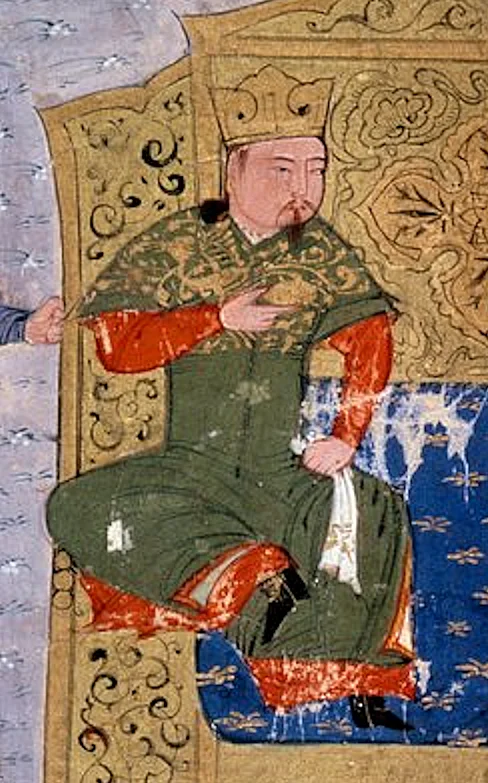
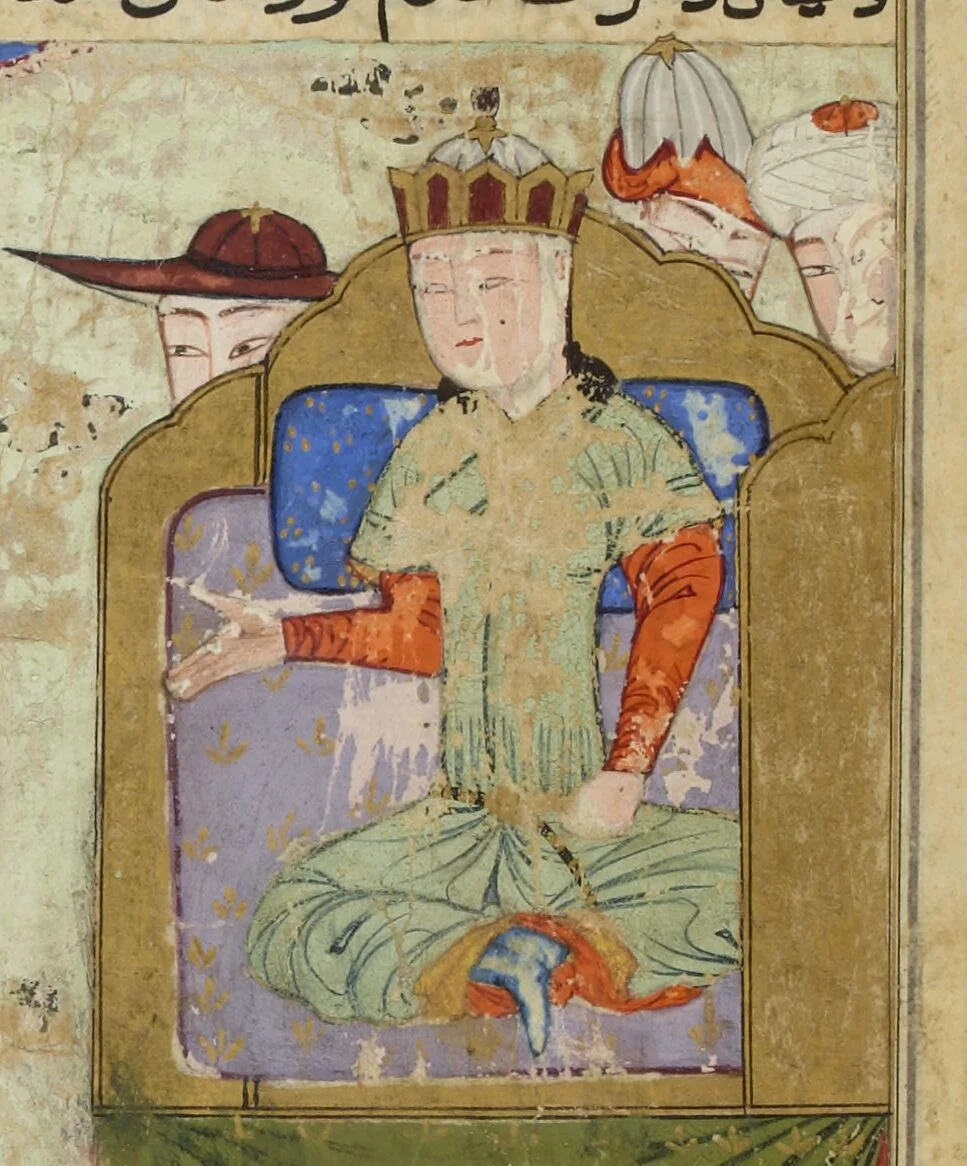
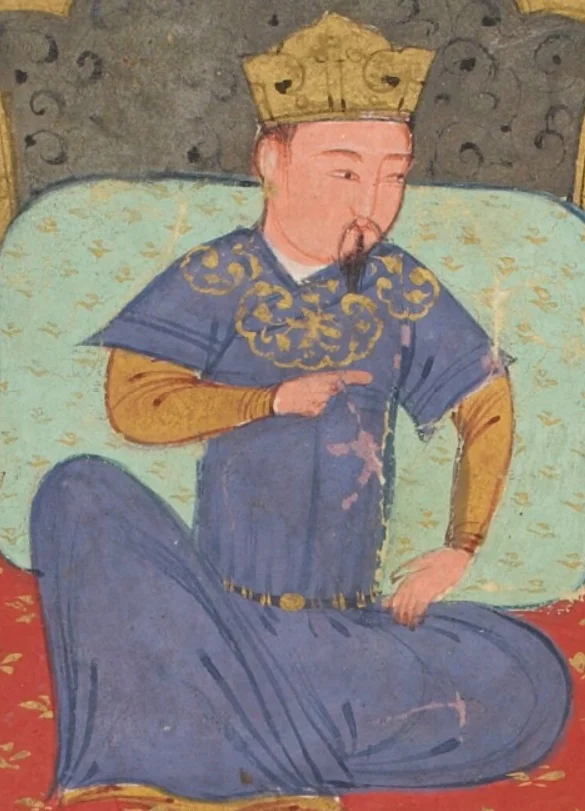
In 1251, following a decade of internal succession disputes, Möngke Khan - The fourth Great Khan of the Mongol Empire (1209–1259), who centralized the imperial administration and launched massive parallel expansion campaigns. He ruled from 1251 until his death at age 50 during the military campaign in Sichuan. ascended the Mongol throne. Eager to project his authority, he planned dual campaigns of conquest: one targeting the Southern Song Dynasty in China, and the other aimed at expanding influence over Southwestern Asia. He entrusted the western campaign to his younger brother, Hulagu Khan - A Mongol ruler and commander who founded the Ilkhanate in Persia and led the historic Siege of Baghdad in 1258. Grandson of Genghis Khan, he expanded the empire into much of Western Asia, destroying the Abbasid Caliphate and the Assassin sect before his advance was halted by the Mamluks., providing him with a vast force drawn from one-fifth of all eligible Mongol soldiers, as well as thousands of Chinese military engineers proficient in gunpowder and siege weaponry.
Hulagu's first major obstacle was the Nizari Ismaili state, commonly known as the Assassins, who controlled a network of formidable fortresses atop the Alborz Mountains. For generations, they had carried out targeted assassinations against various regional rulers, relying on their mountain strongholds which were widely considered impregnable. However, the Mongol advance was methodical. Using massive siege engines and coordinated attacks, Hulagu surrounded and systematically captured the Assassin strongholds. In late 1256, the Assassin grand master yielded the fortress of Alamut, bringing a swift and total end to their state.
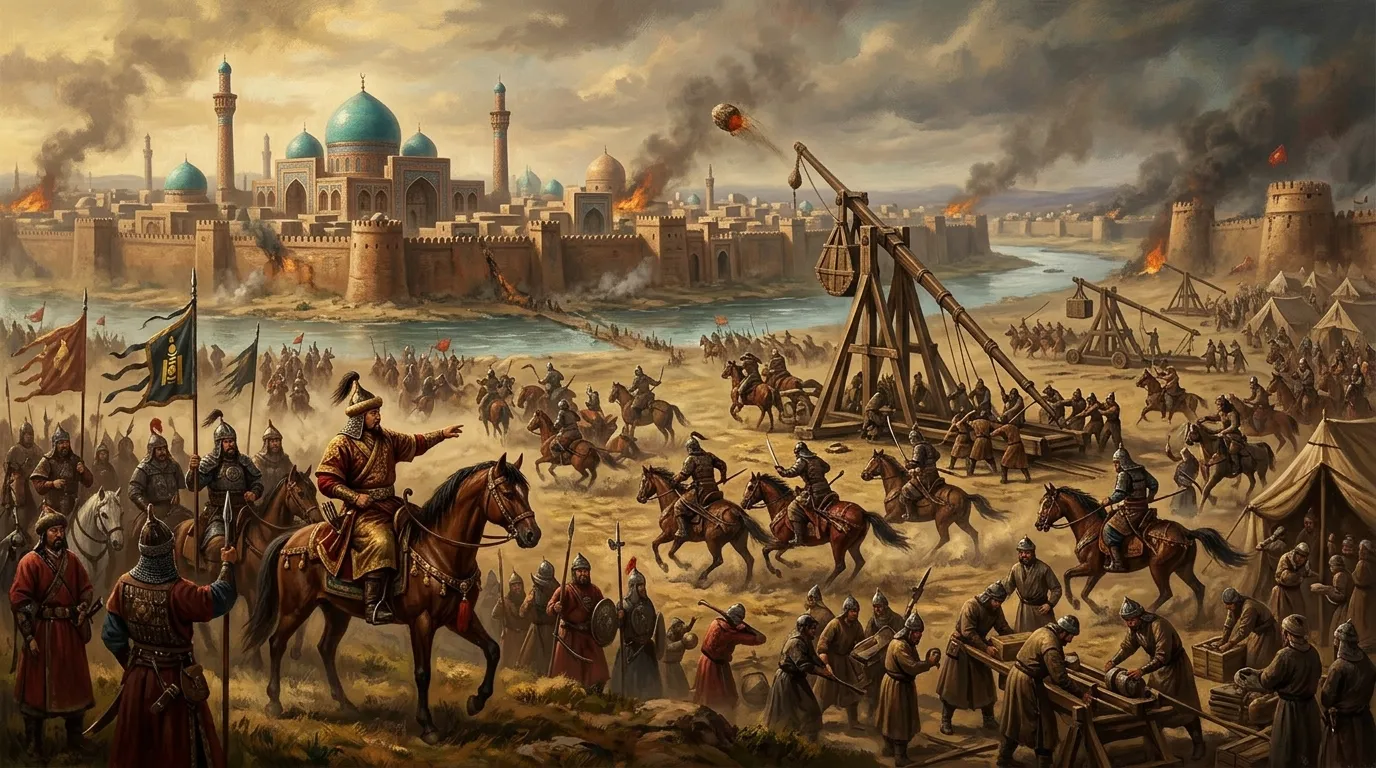
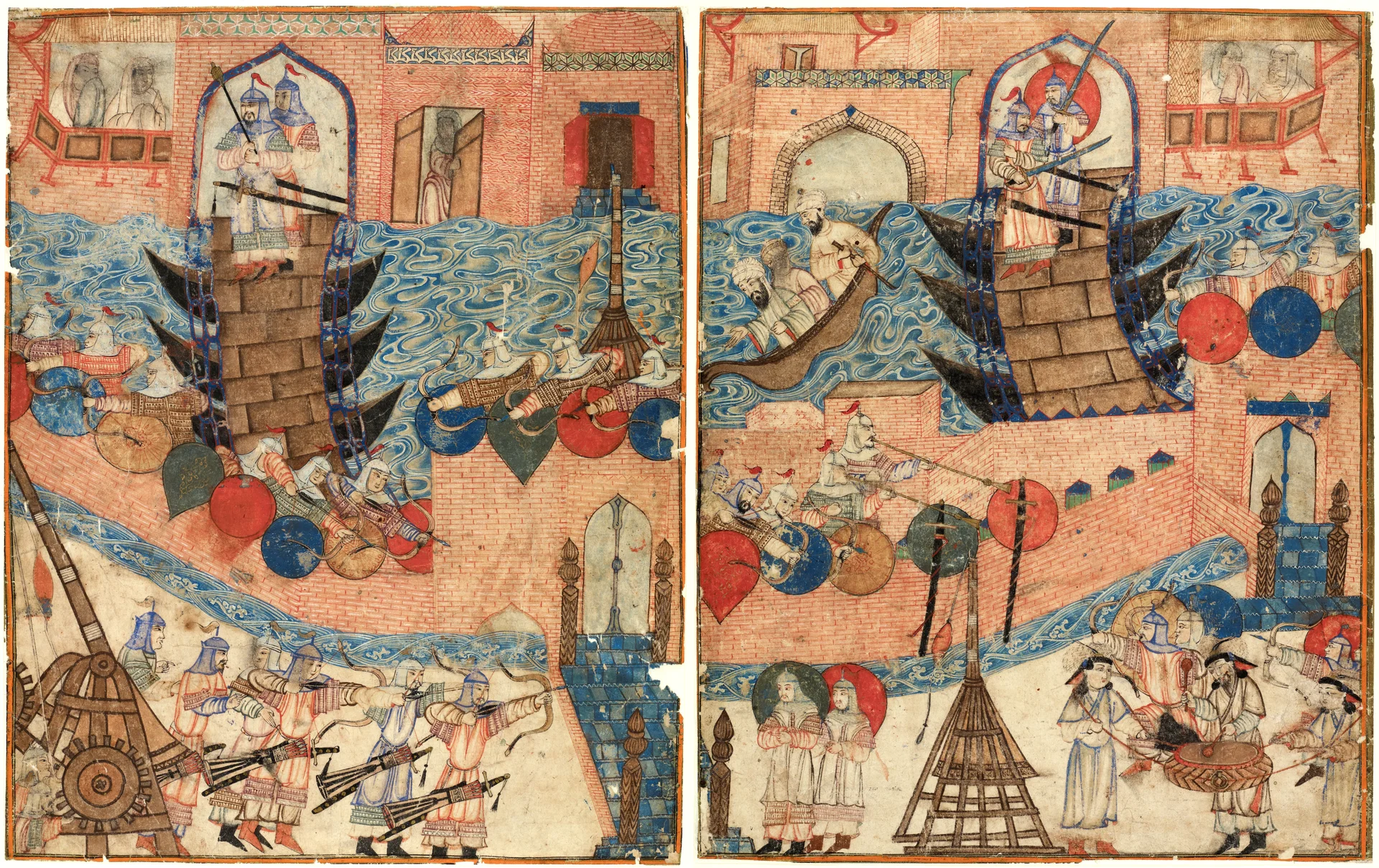
The primary target, however, was Baghdad - Founded in 762 CE as the capital of the Abbasid Caliphate, Baghdad became a global center of learning, culture, and trade. Known as the 'City of Peace,' it was home to the House of Wisdom and was one of the largest and most sophisticated cities in the world during the Islamic Golden Age. Its capture and destruction by the Mongols in 1258 marked a profound turning point in Islamic history., the storied capital of the Abbasid Caliphate - The Abbasid Caliphate was the third Islamic caliphate to succeed the Islamic prophet Muhammad. It was established by a dynasty descended from Muhammad's uncle, Abbas ibn Abd al-Muttalib. They overthrew the previous Umayyad Caliphate in the historic Abbasid Revolution. The coup was fueled by widespread dissatisfaction with the Umayyads, who favored Arab Muslims over non-Arab converts. By promising equality for all Muslims regardless of their ethnicity, the Abbasids successfully united various groups and established a new capital in Baghdad, Iraq. Baghdad was designed as a unique, perfectly circular city, often referred to as the Round City, which quickly grew into the cultural and intellectual hub of the medieval world. This era initiated the renowned Islamic Golden Age, a period where science, mathematics, philosophy, literature, and technology flourished dynamically. The caliphs believed that knowledge was the greatest treasure, prompting them to establish the House of Wisdom, a massive library and translation center in Baghdad. Scholars from all over the world, regardless of their religion, gathered here to translate ancient Greek, Persian, Indian, and Chinese texts into Arabic. Through this collective effort, major intellectual breakthroughs were achieved. For instance, the famous mathematician al-Khwarizmi laid the foundations of algebra (a word derived from al-jabr) and his latinized name gave us the word algorithm, which forms the basis of modern computer science. Scholars also accurately calculated the circumference of the Earth, advanced medicine, and introduced paper-making technology from China to the West. A famous legendary figure from this magnificent era is Caliph Harun al-Rashid, whose reign marked the zenith of Abbasid wealth and power. He is prominently featured in the folklore of the One Thousand and One Nights, a collection of Middle Eastern folk tales and magical myths. According to the legends, Harun al-Rashid would frequently disguise himself in the simple clothes of a commoner and roam the night streets of Baghdad alongside his vizier, aiming to witness the true conditions of his subjects and deliver justice directly to those in need. Stories of magical jinns, flying carpets, and hidden caves filled with treasures, such as the adventures of Aladdin and Ali Baba, were inspired by the vibrant, cosmopolitan atmosphere of Baghdad under Abbasid rule. Although the caliphate gradually weakened over centuries and finally came to a tragic end during the Mongol sack of Baghdad in 1258, its legacy remains one of the most brilliant and peaceful chapters in human intellectual history, leaving behind a wealth of knowledge that helped shape the modern world. and the center of the Islamic Golden Age. When the last Caliph, Al-Musta'sim, refused Hulagu's demands for tribute and submission, the Mongol army laid siege to the city in early 1258. The Mongols - The Mongol Empire existed during the 13th and 14th centuries and was the largest contiguous land empire in history. Originating in present-day Mongolia in East Asia, the Mongol Empire at its height st... breached the city's defenses in less than two weeks. What followed was a week of catastrophic destruction; the grand libraries, including the legendary House of Wisdom, were thrown into the Tigris River, and hundreds of thousands of citizens were killed. The Caliph himself was rolled in a wool rug and trampled to death by horses, a method chosen to avoid spilling royal blood on the earth according to Mongol custom, bringing an end to the 500-year-old caliphate.
Following the fall of Baghdad, Hulagu pushed further west into Syria, capturing Aleppo and Damascus. The expansion toward Egypt seemed likely until late 1259, when news arrived of Möngke Khan's death in China. Hulagu withdrew the bulk of his forces to participate in the succession politics, leaving behind a small occupation force of about 10,000 men under General Kitbuqa. In September 1260, the Egyptian Mamluks - The Mamluk Sultanate was a powerful medieval state that ruled Egypt, Syria, and the western Arabian Peninsula (the Hejaz) from 1250 to 1517. The word Mamluk literally translates to owned, referring to military slaves of Turkic and Kipchak origin who were purchased to serve as elite palace guards and cavalry forces. Renowned for their superb martial skills and strong solidarity, these military slaves eventually revolted against their Ayyubid masters, seized power, and founded their own dynasty in Cairo. Under their rule, Cairo became one of the wealthiest and most populous cities in the world, serving as a vibrant center for Islamic scholarship, trade, and culture. The sultanate played a pivotal role in world history, most notably during the Mongol invasions. In 1260, after sacking Baghdad, the unstoppable Mongol war machine marched toward Egypt. At the Battle of Ain Jalut, the legendary Mamluk general Baibars and Sultan Qutuz employed a feigned retreat tactic to lure the Mongol vanguard into an ambush, scoring a decisive victory. This battle marked the first time a Mongol advance had ever been permanently halted in close combat, saving Cairo from destruction and securing the Islamic holy sites of Mecca and Medina. Baibars, who later became sultan, was celebrated as a hero of Islam. He adopted the lion as his royal crest, stamping it onto coins and bridges. His daring campaigns and combat exploits against both the Mongols and the Crusaders became the source of grand heroic legends and oral folk epics, passed down through generations in the Arab world. Although the sultanate was eventually conquered by the Ottoman Empire in 1517, its long military dominance remains a remarkable chapter in Middle Eastern history. under Sultan Qutuz and General Baibars defeated the remaining Mongols at the Battle of Ain Jalut in Palestine, halting the Mongol advance and establishing the westernmost boundary of their conquests.