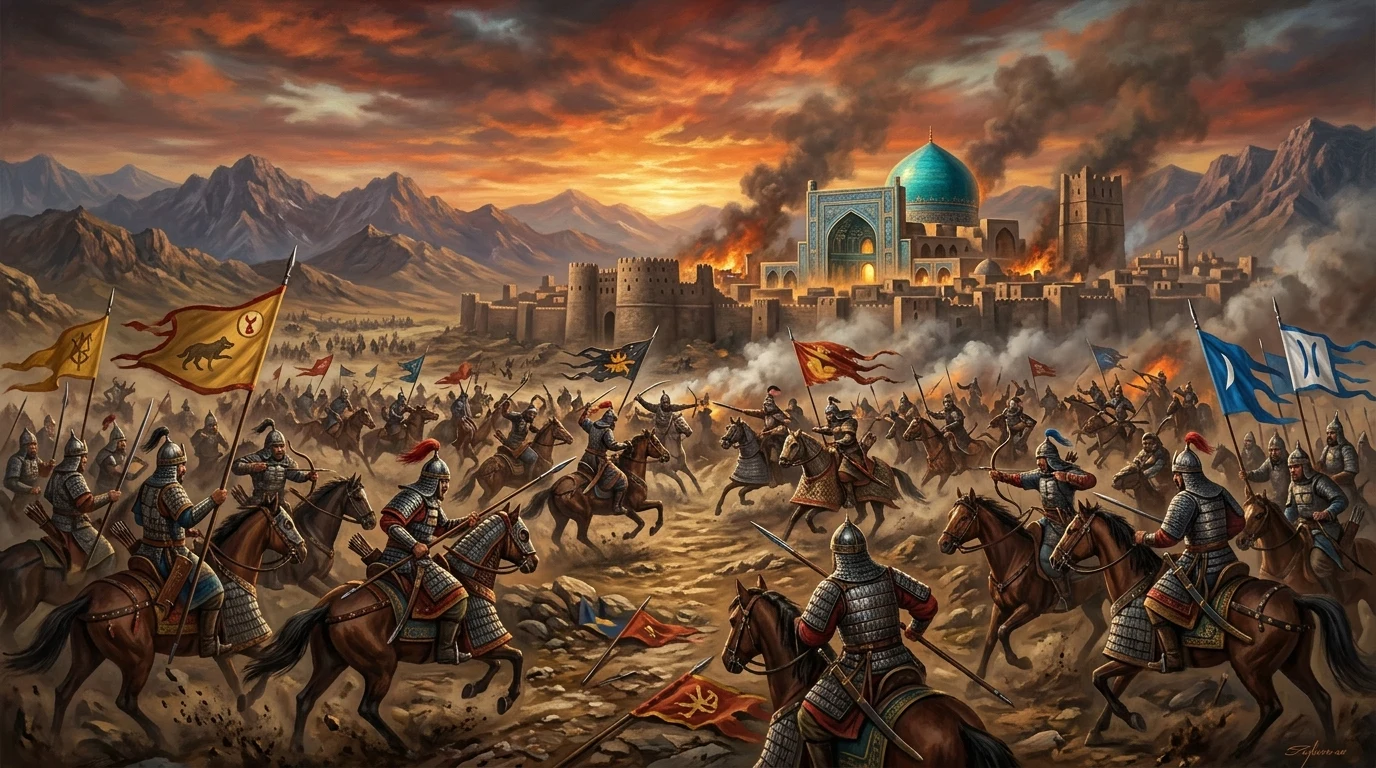
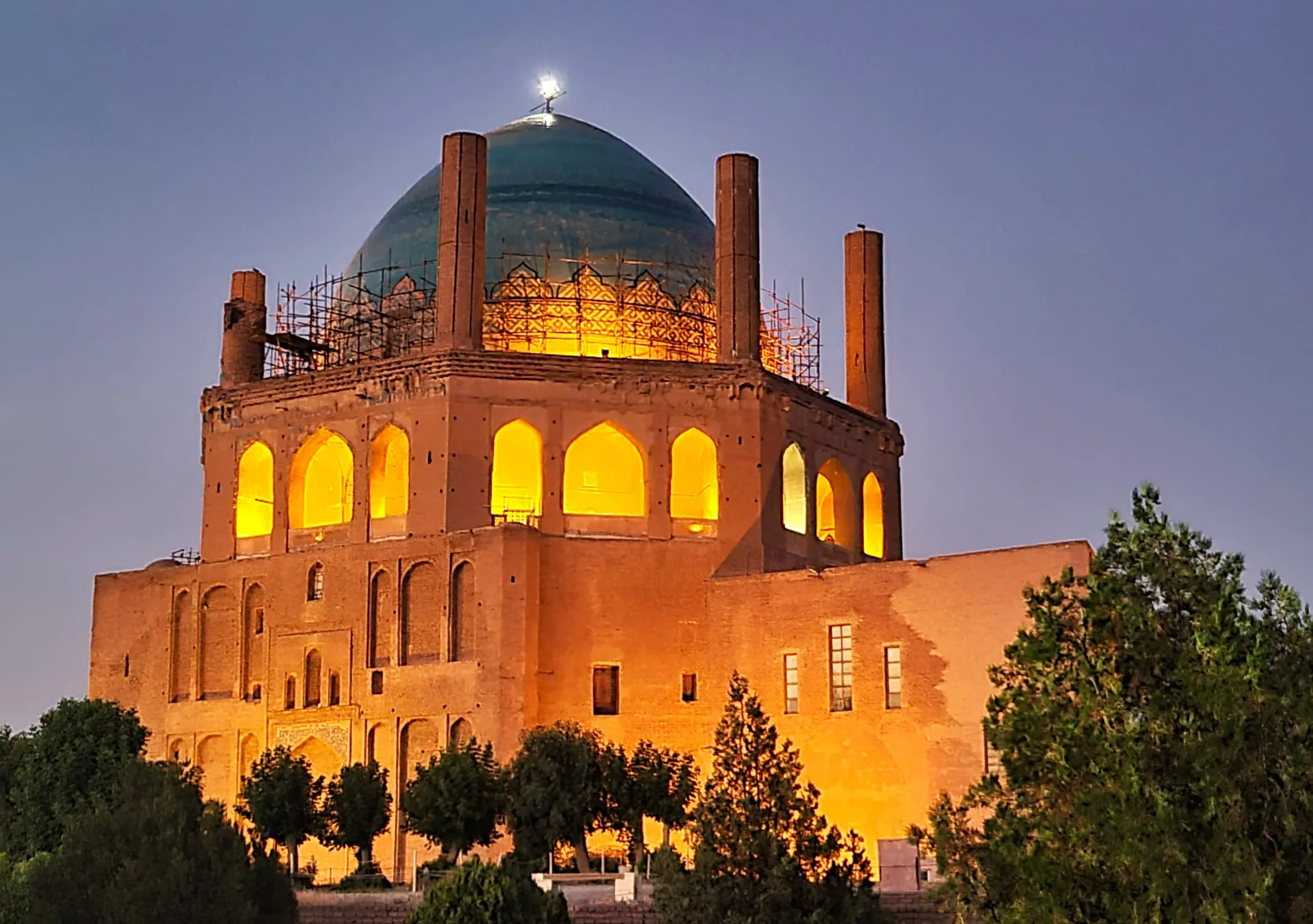
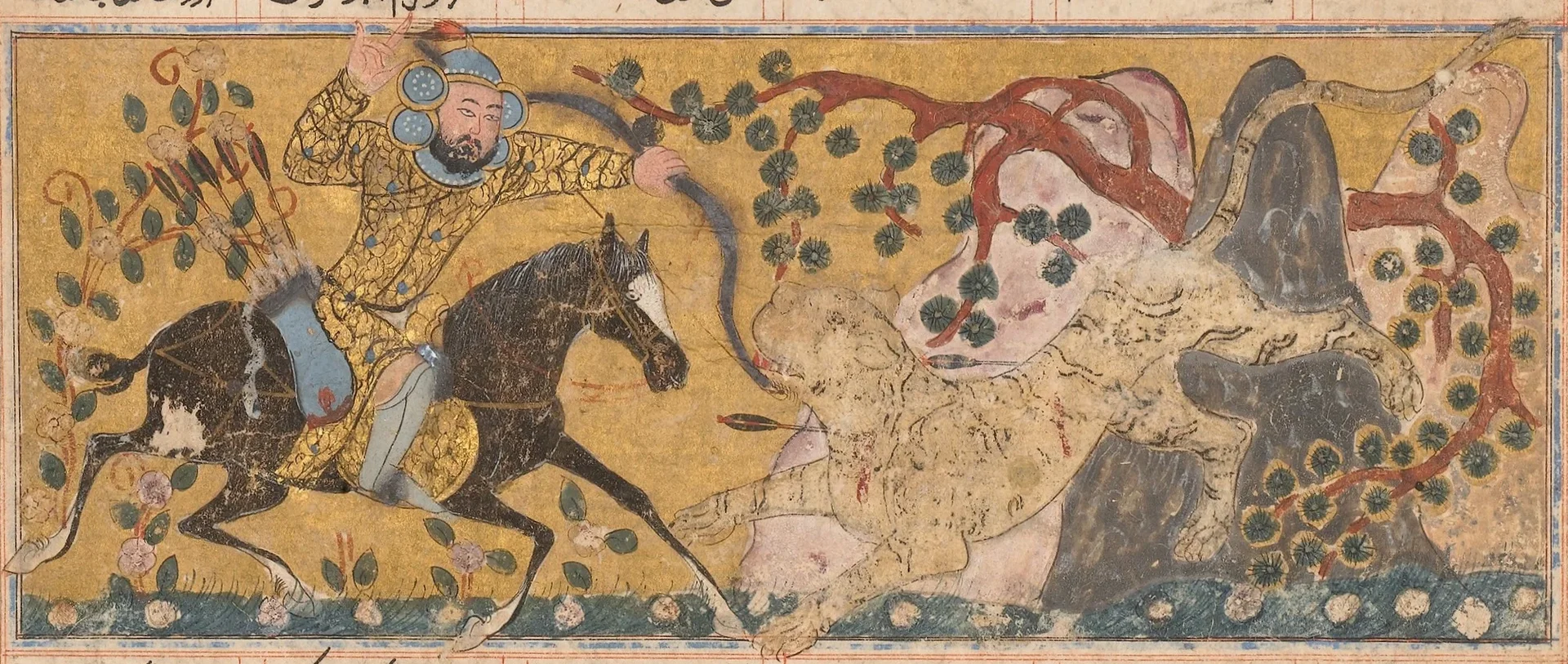
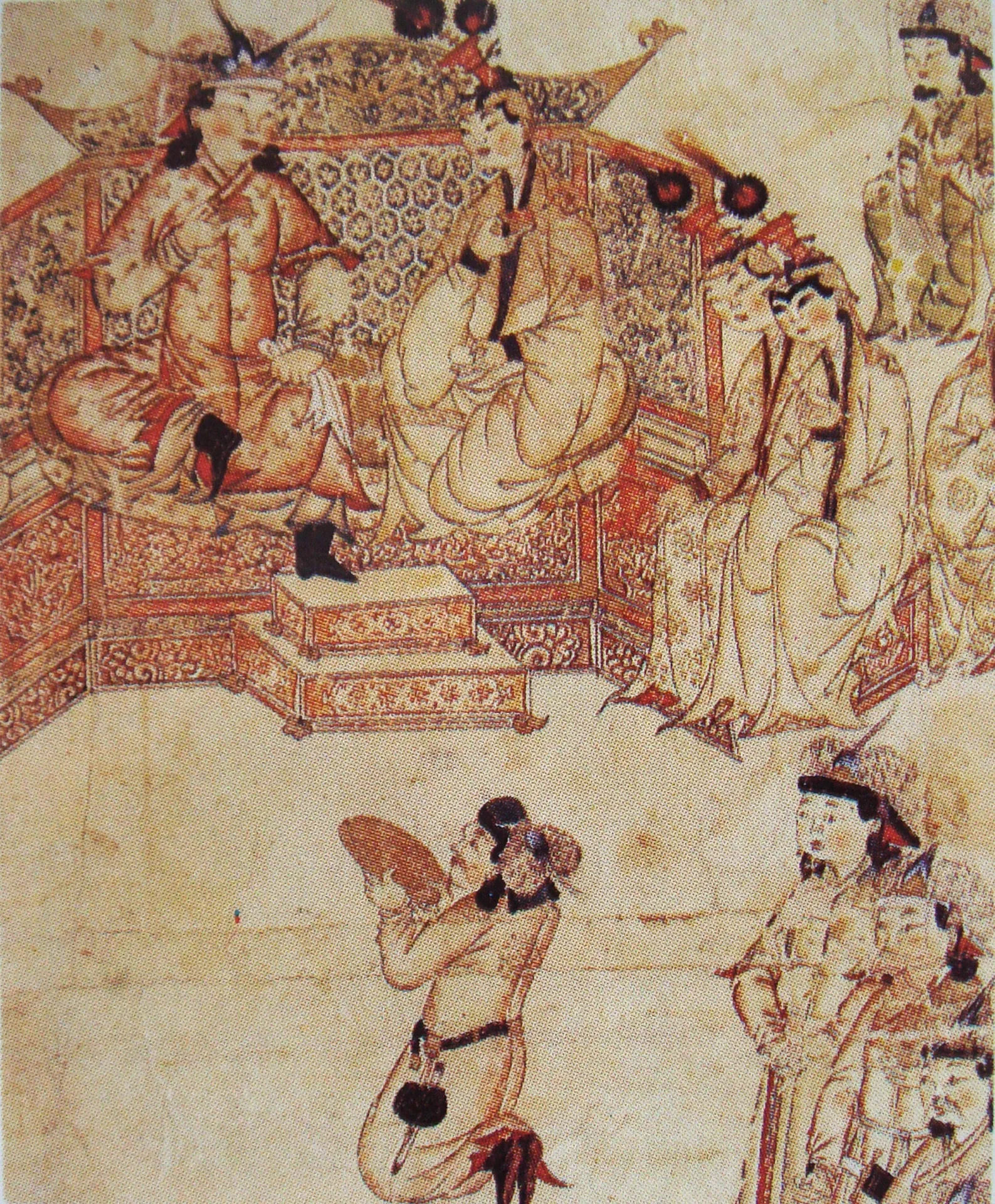
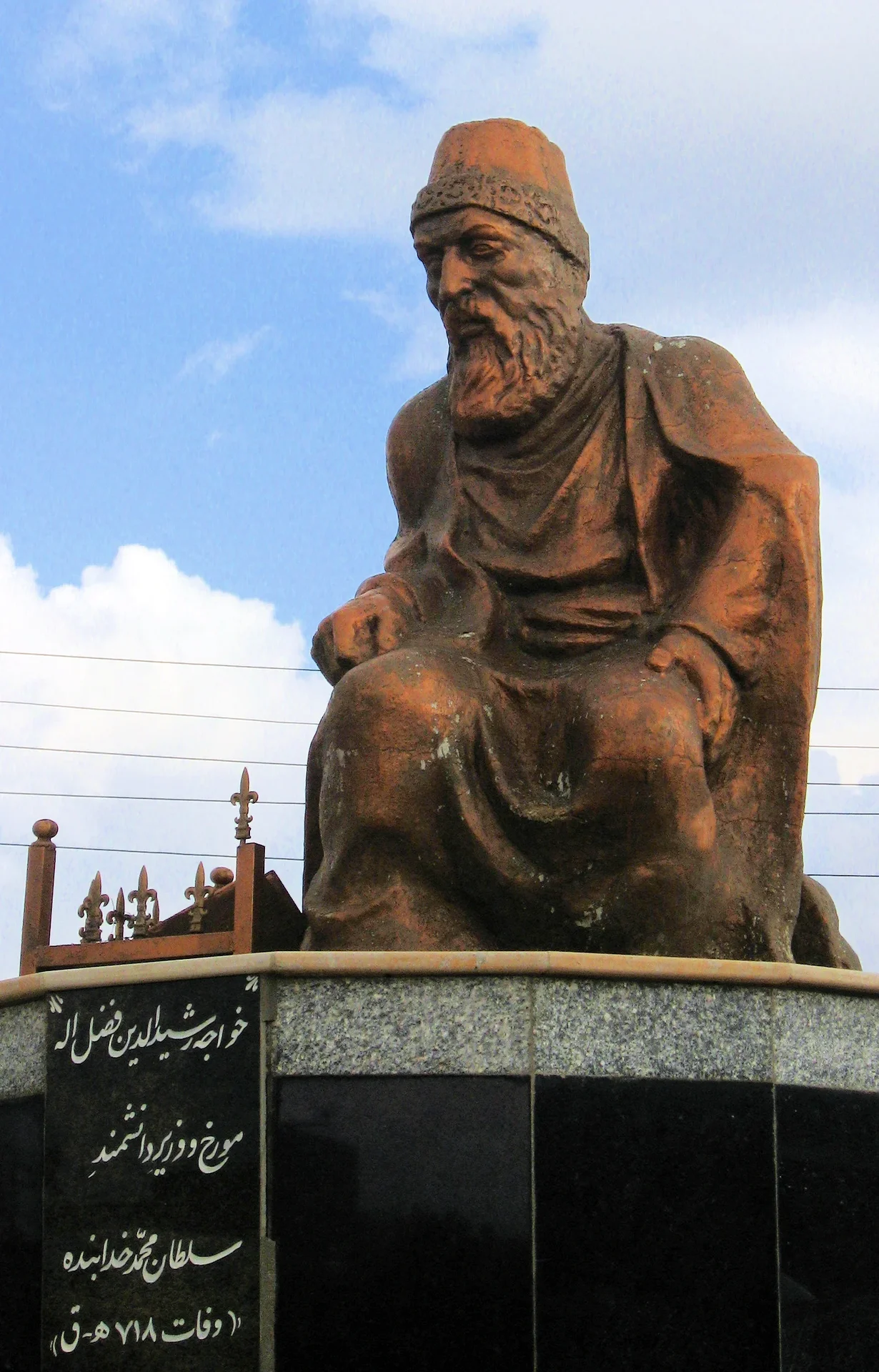
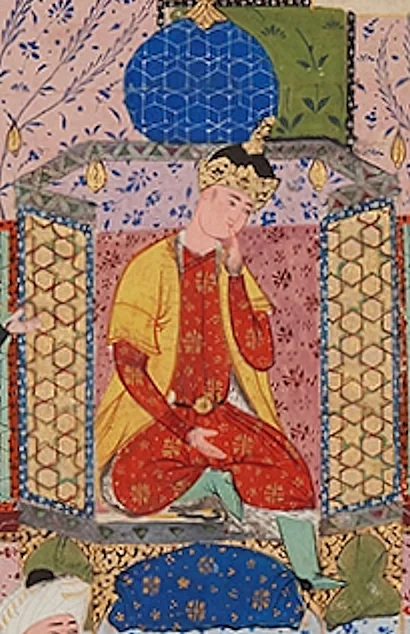
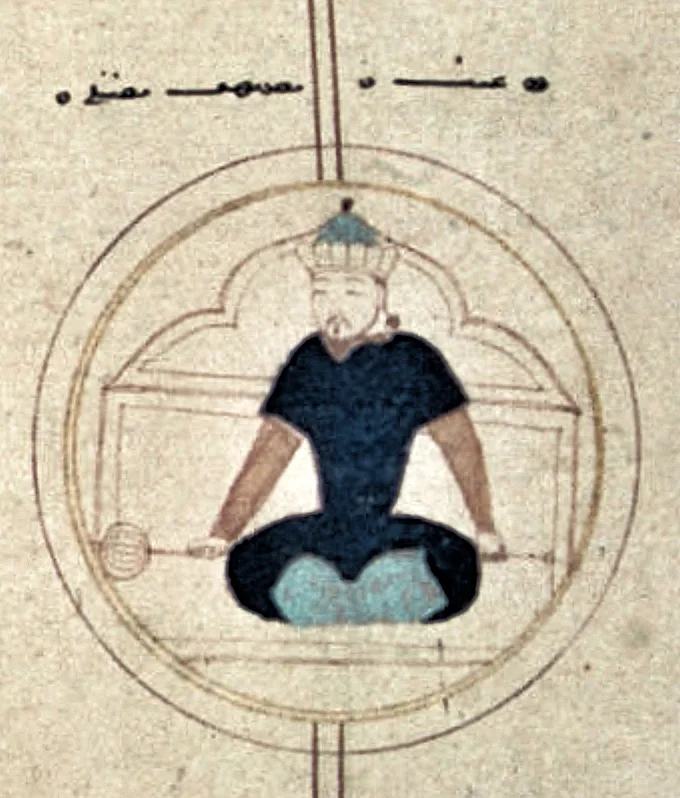
The Ilkhanate - The Mongol khanate Hülegü founded in Persia and the Middle East; its very name means a khan who obeys the Great Khan., founded in Persia - A historic region and great civilization centered on the Iranian Plateau in Western Asia, roughly corresponding to modern-day Iran and its surrounding territories. Great empires arose from this land across millennia, from the ancient Achaemenids and Sasanians to the Ilkhanate and Safavids. Set amid the Zagros Mountains, sweeping deserts, and fertile oases, Persian civilization flourished with distinctive architecture, walled gardens (the linguistic root of 'paradise'), intricate carpets, and delicate miniature paintings. The Feather of the Mythical SimurghIn the Persian epic 'Shahnameh' (The Book of Kings), tales are told of the Simurgh, an ancient, benevolent creature of immense size and wisdom living atop the Alborz mountains. When baby Zal (Rostam's father) was abandoned on the mountain because he was born with white hair, the Simurgh adopted him and raised him with care and knowledge. When Zal returned to human society, the bird gave him a magical feather, promising to fly in like a dark cloud whenever it was burned in times of dire need. Years later, when Zal's wife struggled in mortal danger giving birth to the giant baby Rostam, Zal burned the feather, and the Simurgh flew down to guide a miraculous surgical birth. The Seven Labors of RostamGrowing into an invincible warrior of supernatural strength, Rostam became the legendary protector of Persia alongside his faithful, fearless warhorse Rakhsh. To rescue the Persian king and army captured in the demon realm of Mazandaran, Rostam braved the Seven Labors (Haft Khan). Through perilous trials, he slew a fierce lion, endured scorching desert thirst, conquered a fire-breathing dragon, outwitted an enchantress, and defeated monstrous demons. In his final battle deep inside a dark cave, he vanquished the terrifying White Div and restored freedom to Persia. by Hülegü, enjoyed a golden age of culture and commerce after Ghazan Khan - He accepted Islam in 1295 and made it the state religion, and rebuilt the tax system and coinage that had been falling apart. embraced Islam as the state religion in 1295, yet became the first of the four Mongol realms to collapse. The collapse began in 1335, when the last khan, Abu Sa'id - Son of the eighth Ilkhan Öljaitü, he became khan at twelve, broke the strongman Chupan to rule in his own right, but died at thirty without an heir, bringing the Ilkhanate down., died suddenly in camp on the Caucasus - The Caucasus Mountains are a grand mountain range stretching between the Black Sea and the Caspian Sea, serving as a natural boundary dividing Asia and Europe. With many peaks towering over 5,000 meters, its rugged terrain was historically considered an impassable natural barrier for large armies. According to ancient Greek mythology, this is the legendary place where the Titan Prometheus was chained to a cold cliff as a punishment for stealing fire from the gods to give to humanity. He suffered there daily as an eagle ate his liver. It is also nicknamed the 'Mountain of Tongues' because its deep valleys isolated many different tribes, allowing them to preserve their own unique languages. Historically, these mountains acted as a formidable natural fortress. However, in 1222, the Mongol forces led by Jebe and Subutai accomplished the miraculous feat of crossing the snowy, rugged Caucasus Mountains. Their sudden emergence from the southern slopes shocked the Alans and Cumans living in the northern steppes. frontier. He had no son, and the direct line descending from Hülegü ended with him.
In Mongol society not just anyone could be khan: only a descendant of Genghis Khan qualified. So the general families who actually commanded the troops each hunted up a distant relative, set him on the throne, and fought in his name. After Arpa Ke'un - Enthroned after Abu Sa'id died without an heir in 1335, he repelled a Golden Horde invasion but was defeated and executed the following year amid general rebellion. was defeated and killed at the Jaghatu River in 1336, more than ten khans were raised and discarded over twenty-two years. Each was khan in name only; the real ruler was the commander behind him.
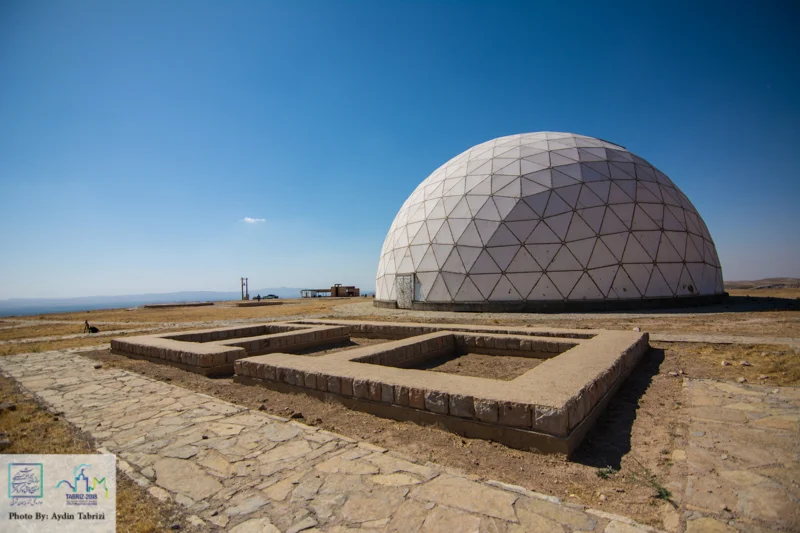
Two houses stood at the centre of the fighting: the Jalayirids based in Baghdad - Founded in 762 CE as the capital of the Abbasid Caliphate, Baghdad became a global center of learning, culture, and trade. Known as the 'City of Peace,' it was home to the House of Wisdom and was one of the largest and most sophisticated cities in the world during the Islamic Golden Age. Its capture and destruction by the Mongols in 1258 marked a profound turning point in Islamic history. and the Chobanids holding Tabriz - Tabriz, in north-western Iran, was the capital of the Ilkhanate. It sat where the roads from the Caucasus, Anatolia and Persia met, so merchants and envoys were always passing through. Under Ghazan Khan it was rebuilt into a centre of learning with hospitals, libraries and an observatory, and it was here that painting techniques arriving from China passed through Persian hands and grew into a new style of miniature. After the Ilkhanate broke apart, whoever held this city held Azerbaijan, so rival powers fought over it in turn. Its covered bazaar, still standing, is counted among the oldest markets in the world.. They met head-on near Alataq in 1338, and the border between them kept shifting as fortunes changed. Meanwhile the Muzaffarids made themselves independent in Shiraz to the south, and the Sarbadars did the same in Khorasan - A vast historical region in Central Asia and the Iranian plateau, spanning parts of modern-day Iran, Afghanistan, Turkmenistan, and Uzbekistan. Its name means 'Land of the Rising Sun.' During the 8th century, it was the primary breeding ground for the Abbasid Revolution, as its diverse population of Persian converts and dissatisfied Arab tribes provided the vital support needed to overthrow the Umayyad dynasty.. One state had become five.
The end came from outside. In 1357 Jani Beg - Ruler of the Golden Horde at its zenith, he crossed the Caucasus in 1357 to take Tabriz and extinguish the remnants of the Ilkhanate. of the Golden Horde - The nomadic state Batu founded on the lower Volga, which collected tribute from the Rus principalities for some 250 years. crossed the Caucasus and took Chobanid Tabriz, extinguishing the last power that still carried the Ilkhanate's name. When Jani Beg died the following year the Jalayirids recovered Tabriz, but they never called themselves Ilkhans. The Mongol state in Persia had closed after a century, and half a century later the Timurid Empire - A great empire founded in the late 14th century by the conqueror Timur, centered on Samarkand and uniting Central Asia and Persia in a brilliant cultural renaissance. would take its place.