After a khan was murdered in 1359, more than twenty khans were made and unmade in two decades of turmoil. The Horde suffered its first major defeat to Moscow - A principality that grew from a small wooden fortress to unify the Rus' lands and end Mongol rule, laying the foundation of Russia. at Kulikovo - Kulikovo Field (Kulikovo Pole) is a historic plain located at the confluence of the Don and Nepryadva rivers in Tula Oblast, south of Moscow. It is celebrated as the site of the pivotal Battle of Kulikovo in 1380, where Grand Prince Dmitry Donskoy led a united coalition of Rus' principalities to defeat the army of the Golden Horde under warlord Mamai. Legend recounts that just before the main clash, the monk-warrior Alexander Peresvet, blessed by Saint Sergius of Radonezh, rode out to engage the Tatar champion Chelubey in single combat. Charging at full gallop, both warriors impaled each other with their lances; Chelubey fell dead on the field while Peresvet, mortally wounded, stayed in his saddle until reaching his own lines, which was hailed as an omen of victory. The decisive turning point came when a hidden reserve cavalry regiment ambushed the Mongol flank from the dense Green Dubrava oak forest. Today, the field is home to the Kulikovo Pole State Memorial Museum and a monumental obelisk commemorating the battle. in 1380, and in 1395 Timur - Formidable Central Asian conqueror who unified the fragmented steppes and forged a colossal empire from Delhi to Anatolia, sparking the architectural and cultural glory of the Timurid Renaissance. destroyed its capital, Sarai - Sarai was the grand capital city of the Golden Horde (Kipchak Khanate), founded by Batu Khan in the mid-13th century near the lower Volga River. It grew into a major, wealthy trading hub connecting Europe and Asia, featuring beautiful mosques, palaces, and public baths. According to a famous local legend, two life-sized golden horses made of solid gold stood at the gates of Sarai to show off the Khan's power, but they mysteriously disappeared and are believed to be buried somewhere in the Volga steppes.. It then split into the Kazan Khanate - A medieval Tatar Muslim state that flourished along the middle Volga River, Crimean Khanate - A long-lasting Tatar state ruled by the Giray dynasty controlling Crimea and the Pontic steppe, Astrakhan Khanate - A merchant Tatar khanate controlling the mouth of the Volga River and the Caspian Sea trade, Siberian Khanate - The northernmost Tatar Muslim realm that ruled western Siberia east of the Ural Mountains, and Nogai Horde - A formidable nomadic confederation that dominated the Pontic-Caspian steppe between the Volga and Ural rivers, and in 1502 the last remaining core, the Great Horde, was destroyed.
LocationThe Volga - The Volga River is the longest river in Europe, flowing through western Russia into the Caspian Sea. During the Mongol invasion, it served as a crucial transport and migration route. Batu Khan established the capital of the Golden Horde, Sarai, along its lower banks. In Russian culture, it is affectionately called 'Mother Volga' (Volga Matushka) and is celebrated in numerous folk songs and legends as a source of life and strength, and its name is linked to the legendary Slav giant hero Volga Buslayevich. valley and the East European steppe (present-day southern Russia, Ukraine, western Kazakhstan, Crimea - )
BelligerentsGolden Horde - The nomadic state Batu founded on the lower Volga, which collected tribute from the Rus principalities for some 250 years. (Ulus of Jochi - 'Ulus' is a Mongolian word meaning a community of people, realm, or state. After Genghis Khan forged his vast empire, he granted appanages (uluses) to his four principal sons. To his eldest son, Jochi, and his lineage, he apportioned the vast western steppes of Eurasia and the Rus' lands. The official Mongolian name for this nomadic imperial realm was the 'Ulus of Jochi'. In Western and modern historiography, this empire is commonly known as the 'Golden Horde' or the 'Kipchak Khanate', but the Mongols themselves took pride in calling it the Ulus of Jochi to emphasize their descent from Genghis Khan's firstborn. Jochi's son Batu Khan established its capital at Sarai on the lower Volga River, ruling over Eastern Europe for more than two centuries. With the fall of the Great Horde in 1502, the Ulus of Jochi ceased to exist as a unified imperial entity, fragmenting into regional successor khanates including Kazan, Crimea, and Astrakhan.), Grand Duchy of Moscow - A principality that grew from a small wooden fortress to unify the Rus' lands and end Mongol rule, laying the foundation of Russia. and the Rus' princes, Timurid Empire - A great empire founded in the late 14th century by the conqueror Timur, centered on Samarkand and uniting Central Asia and Persia in a brilliant cultural renaissance., Grand Duchy of Lithuania - A dominant medieval and early modern East European realm stretching from the Baltic to the Black Sea, Kazan Khanate - A medieval Tatar Muslim state that flourished along the middle Volga River, Crimean Khanate - A long-lasting Tatar state ruled by the Giray dynasty controlling Crimea and the Pontic steppe, Astrakhan Khanate - A merchant Tatar khanate controlling the mouth of the Volga River and the Caspian Sea trade, Siberian Khanate - The northernmost Tatar Muslim realm that ruled western Siberia east of the Ural Mountains, and Nogai Horde - A formidable nomadic confederation that dominated the Pontic-Caspian steppe between the Volga and Ural rivers
💡 Historical Significance
The decline and fall of the Golden Horde - The nomadic state Batu founded on the lower Volga, which collected tribute from the Rus principalities for some 250 years. marked a monumental shift in Eastern European history, dismantling the 240-year 'Tatar Yoke - The 'Tatar Yoke' (or Mongol-Tatar Yoke) refers to the roughly 240-year period from the Mongol destruction of Kievan Rus' (1237–1240) until the Great Stand on the Ugra River (1480), during which the Rus' principalities were subjugated as tributary vassals to the Golden Horde. The metaphor of a 'yoke'—a heavy wooden beam placed across draft animals—symbolizes the profound political subordination and economic burden endured by the Rus' lands. The khans did not govern the forests directly; instead, they granted patents of authority (yarlyks) to favored princes to collect crushing taxes and levies. Defiance or withheld tribute was met with ruthless punitive raids, pillaging, and enslavement. While this era isolated Russia from Western European developments such as the Renaissance, it paradoxically allowed the Grand Duchy of Moscow to accumulate unprecedented wealth as the chief tax collector, ultimately enabling Ivan III to cast off the yoke in 1480 and establish a unified Russian state.' and enabling the rise of the Grand Duchy of Moscow - A principality that grew from a small wooden fortress to unify the Rus' lands and end Mongol rule, laying the foundation of Russia. as the Tsardom of Russia. Following the 1359 assassination of Berdi Beg Khan, two decades of chaotic civil wars and the defeat at the Battle of Kulikovo (1380) shattered the invincibility of Mongol rule. Although Tokhtamysh - He reunited the shattered Horde with Timur's help, then turned on his patron, lost two crushing battles and brought his own state down. briefly reunited the realm, devastating punitive campaigns by Timur - Formidable Central Asian conqueror who unified the fragmented steppes and forged a colossal empire from Delhi to Anatolia, sparking the architectural and cultural glory of the Timurid Renaissance. destroyed its major Volga - The Volga River is the longest river in Europe, flowing through western Russia into the Caspian Sea. During the Mongol invasion, it served as a crucial transport and migration route. Batu Khan established the capital of the Golden Horde, Sarai, along its lower banks. In Russian culture, it is affectionately called 'Mother Volga' (Volga Matushka) and is celebrated in numerous folk songs and legends as a source of life and strength, and its name is linked to the legendary Slav giant hero Volga Buslayevich. trade emporia, including Sarai - Sarai was the grand capital city of the Golden Horde (Kipchak Khanate), founded by Batu Khan in the mid-13th century near the lower Volga River. It grew into a major, wealthy trading hub connecting Europe and Asia, featuring beautiful mosques, palaces, and public baths. According to a famous local legend, two life-sized golden horses made of solid gold stood at the gates of Sarai to show off the Khan's power, but they mysteriously disappeared and are believed to be buried somewhere in the Volga steppes., permanently severing the Horde's economic lifeblood. As the fractured khanates descended into unending feud, Ivan III - The Grand Prince of Moscow who ended the 240-year Tatar Yoke at the Great Stand on the Ugra in 1480 and unified the Rus' lands to establish a centralized Russian state. formally repudiated Mongol tribute at the Great Stand on the Ugra River in 1480, decisively cementing Russian sovereignty.
Context & Background
14th century
Power in the hands of non-khans
Only descendants of Genghis Khan could be khan, so a strongman like Mamai - Not a Genghisid, he ruled through puppet khans, and his defeat at Kulikovo in 1380 ended him., who lacked the bloodline, had to rule through a puppet. The arrangement worked while he was strong, but it collapsed the moment a rival with real legitimacy appeared.
14th–15th century
The Silk Road trade routes shift
The northern steppe Silk Road that flourished under the Pax Mongolica was shattered by Timur - Formidable Central Asian conqueror who unified the fragmented steppes and forged a colossal empire from Delhi to Anatolia, sparking the architectural and cultural glory of the Timurid Renaissance.'s systematic destruction of Volga - The Volga River is the longest river in Europe, flowing through western Russia into the Caspian Sea. During the Mongol invasion, it served as a crucial transport and migration route. Batu Khan established the capital of the Golden Horde, Sarai, along its lower banks. In Russian culture, it is affectionately called 'Mother Volga' (Volga Matushka) and is celebrated in numerous folk songs and legends as a source of life and strength, and its name is linked to the legendary Slav giant hero Volga Buslayevich. cities, diverting trans-Eurasian trade toward southern oasis routes through Samarkand. Combined with the rise of maritime trade routes, this structural economic shift slowly choked off the commercial revenues the Golden Horde - The nomadic state Batu founded on the lower Volga, which collected tribute from the Rus principalities for some 250 years. depended upon.
15th century
Moscow changes places
The city that had collected tribute for the Horde used the wealth and standing that job brought to become the centre of the Rus'. It took a century for collector and payer to swap positions, and the final scene of that reversal was the standoff on the Ugra - The Ugra River is a 399-kilometer river in western Russia flowing through Smolensk and Kaluga oblasts as a left tributary of the Oka River. Meandering through dense woodlands and rolling hills, it is celebrated in history as the site of the pivotal 'Great Stand on the Ugra River' in 1480 between the forces of Grand Prince Ivan III of Moscow and Khan Ahmed of the Great Horde. During medieval times, Russian chronicles reverently dubbed the river the 'Belt of the Virgin Mary' (Belt of the Theotokos), believing divine protection shielded the northern lands from steppe invasions. By fortifying every river ford with early firearms, arquebuses, and artillery, Russian defenders repelled all crossing attempts, ultimately forcing the freezing Tatar host to retreat without a pitched battle. This bloodless standoff marked the definitive end of the 240-year 'Tatar Yoke', establishing Muscovy as a fully sovereign, independent Russian power. in 1480.
The Narrative
The Golden Horde - The nomadic state Batu founded on the lower Volga, which collected tribute from the Rus principalities for some 250 years., founded by Genghis Khan's grandson Batu, ruled the East European steppe and the Rus' principalities for more than two centuries. Its unravelling began not with external invasion but with brutal palace intrigue. After Khan Jani Beg died under mysterious circumstances in 1357, his son Berdi Beg seized the throne and ruthlessly murdered his own brothers and twelve royal kinsmen of the House of Batu to eliminate rivals. However, just two years later in 1359, Berdi Beg himself was assassinated in a court coup, leaving no surviving direct heirs of Batu. With the legitimate lineage entirely wiped out, rival warlords and aristocrats installed competing puppet khans from distant branches, plunging the realm into two decades of bloody civil war where more than twenty khans rose and fell. Russian chronicles call this turbulent era the Great Troubles.
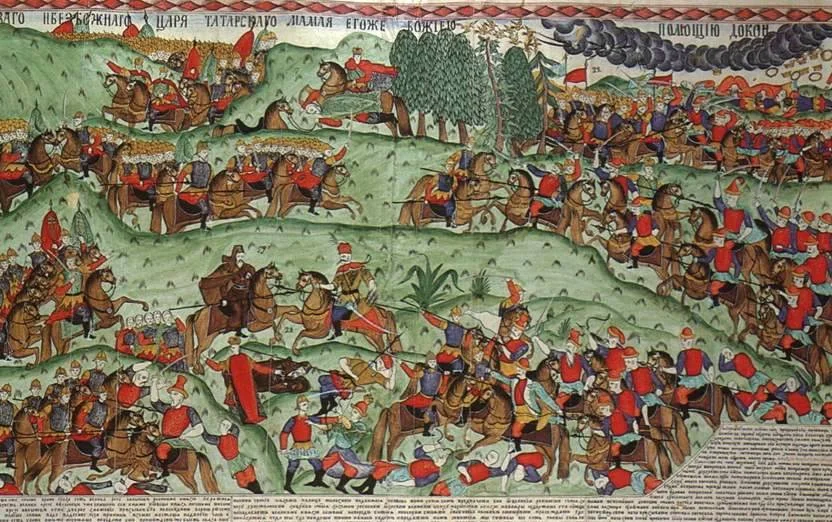
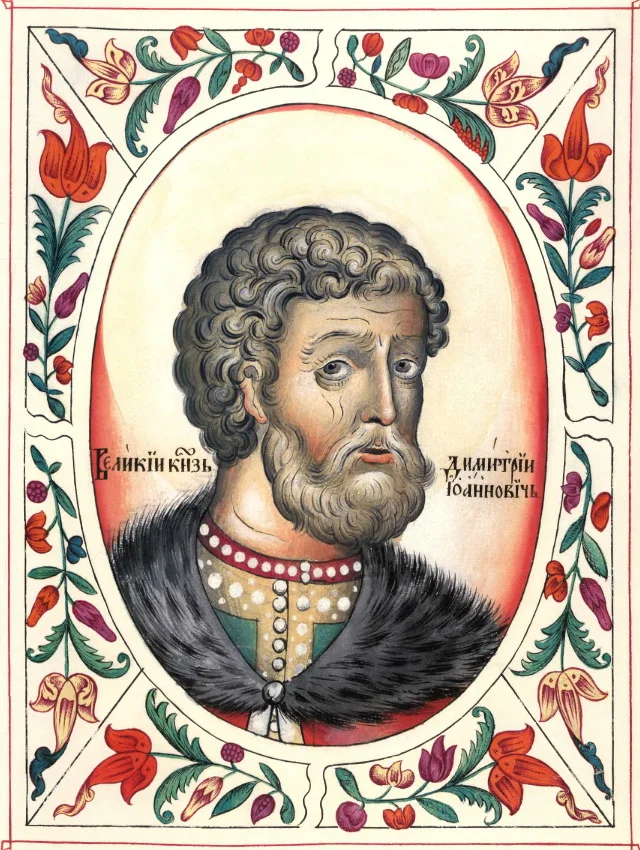
As khans came and went, the attitude of those who paid tribute changed too. In 1378 a Moscow - A principality that grew from a small wooden fortress to unify the Rus' lands and end Mongol rule, laying the foundation of Russia. army beat a Horde force at the Vozha River - The Vozha River is a right tributary of the Oka River flowing through Ryazan Oblast in western Russia. While a modest river meandering through forests and plains, it is famous in history as the site of the Battle of the Vozha River in 1378, where Russian forces first defeated a Golden Horde army in an open-field pitched battle. According to medieval Russian chronicles, as the Tatar horsemen attempted to ford the river under misty cover, Grand Prince Dmitry's forces waited on the commanding heights and launched a coordinated three-pronged counterattack, driving the disordered invaders back into the water. This triumph shattered the aura of Mongol invincibility and paved the way for the decisive victory at Kulikovo two years later., and two years later came the far larger clash at Kulikovo - Kulikovo Field (Kulikovo Pole) is a historic plain located at the confluence of the Don and Nepryadva rivers in Tula Oblast, south of Moscow. It is celebrated as the site of the pivotal Battle of Kulikovo in 1380, where Grand Prince Dmitry Donskoy led a united coalition of Rus' principalities to defeat the army of the Golden Horde under warlord Mamai. Legend recounts that just before the main clash, the monk-warrior Alexander Peresvet, blessed by Saint Sergius of Radonezh, rode out to engage the Tatar champion Chelubey in single combat. Charging at full gallop, both warriors impaled each other with their lances; Chelubey fell dead on the field while Peresvet, mortally wounded, stayed in his saddle until reaching his own lines, which was hailed as an omen of victory. The decisive turning point came when a hidden reserve cavalry regiment ambushed the Mongol flank from the dense Green Dubrava oak forest. Today, the field is home to the Kulikovo Pole State Memorial Museum and a monumental obelisk commemorating the battle.. Mamai - Not a Genghisid, he ruled through puppet khans, and his defeat at Kulikovo in 1380 ended him., who held real power, was not a Genghisid and ruled through a puppet khan. Dmitry - The Grand Prince of Moscow whose victory over Mamai at Kulikovo in 1380 earned him the name Donskoy, 'of the Don'. hid a reserve of cavalry in the woods and threw it into the enemy's flank at the moment his own line was about to break. Mongol overlordship did not end that day, but for the first time it had been shown that the Horde could be beaten.
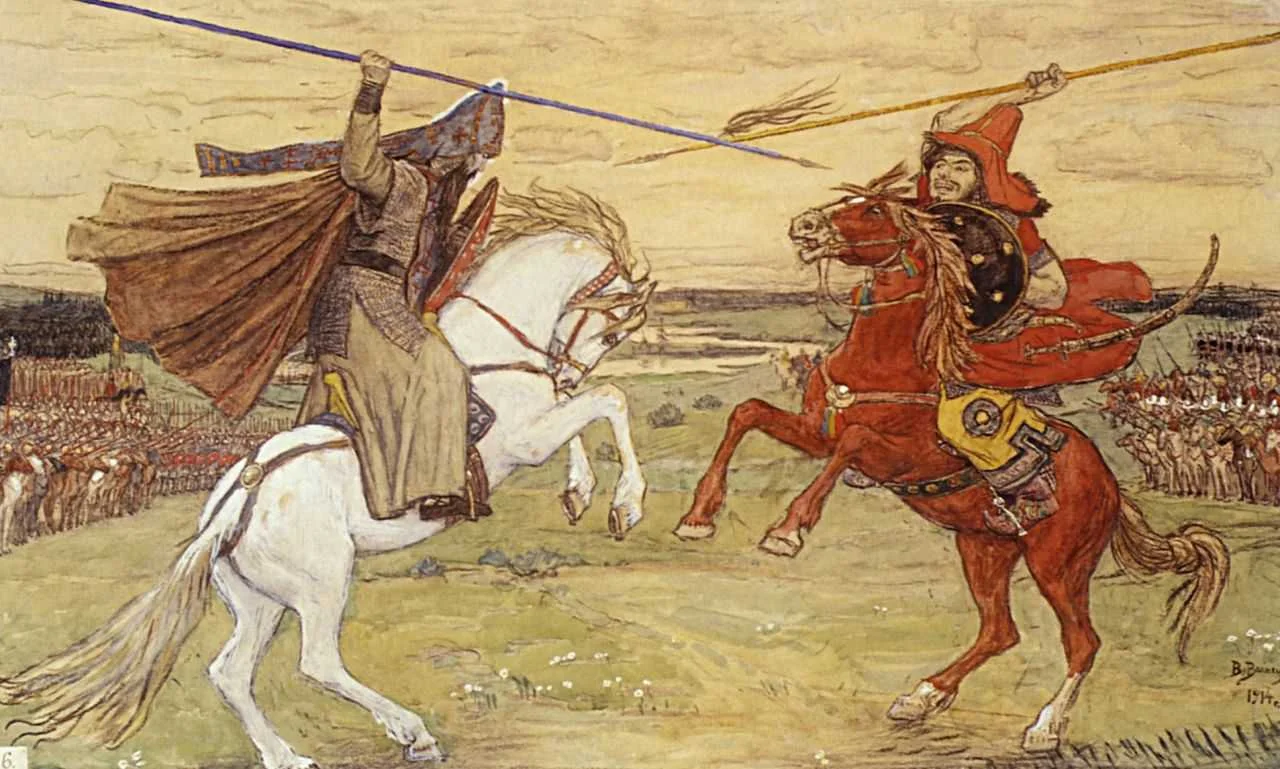
Viktor Vasnetsov, Peresvet's Duel with Chelubey (1914). Depicts the legendary single combat between the Russian monk Alexander Peresvet and the Tatar champion Chelubey prior to the Battle of Kulikovo (1380).
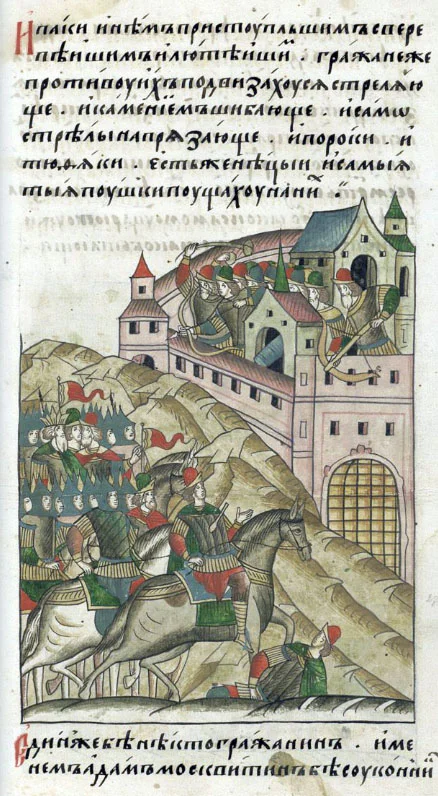
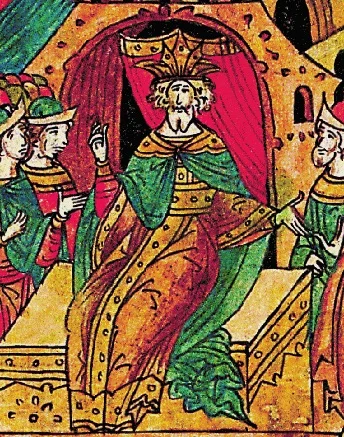
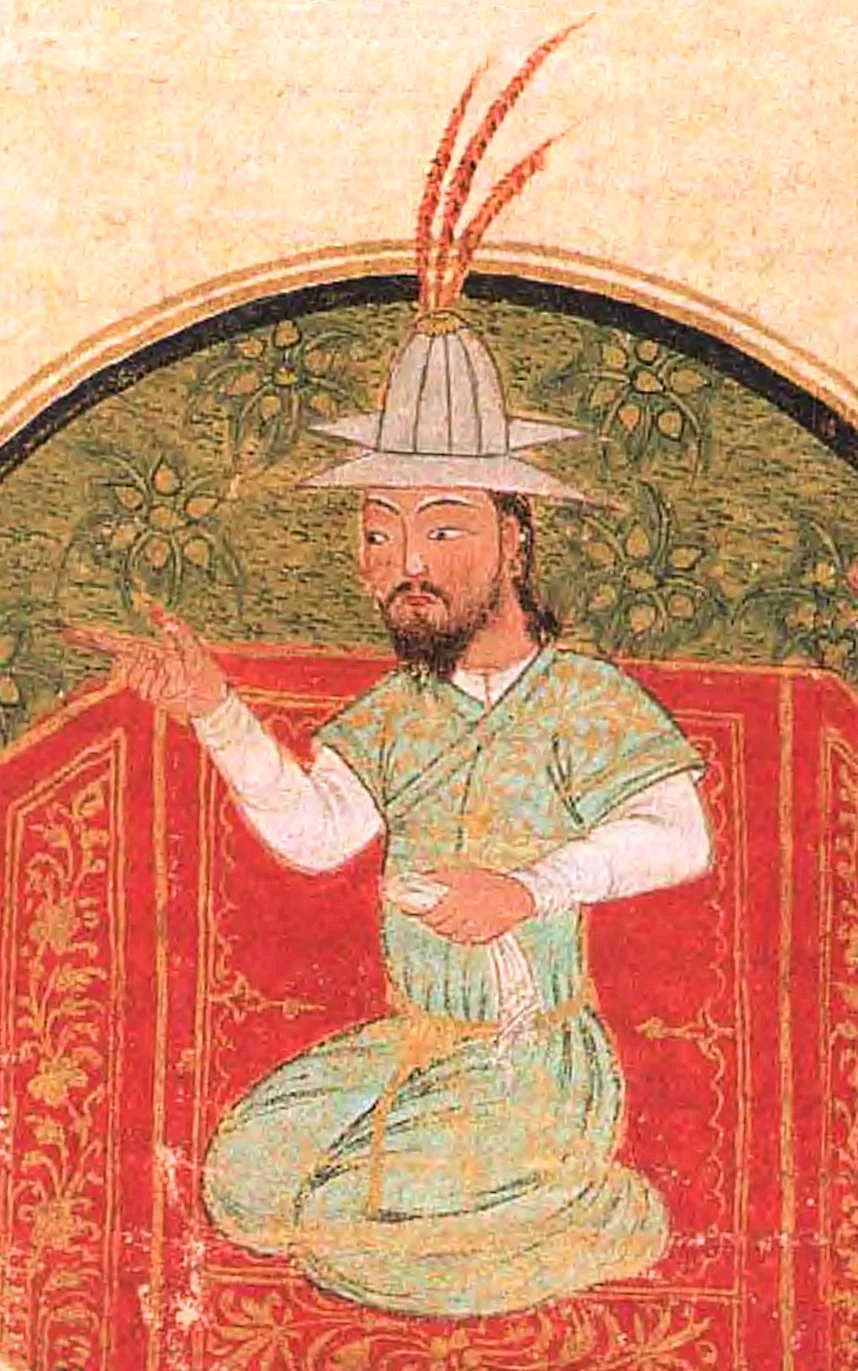
Defeated at Kulikovo, Mamai was quickly ousted by Tokhtamysh - He reunited the shattered Horde with Timur's help, then turned on his patron, lost two crushing battles and brought his own state down., a genuine descendant of Genghis Khan. Tokhtamysh reunited the fractured factions of the Golden Horde and sought to restore its imperial authority. In 1382, he marched swiftly on Moscow to reassert Mongol overlordship. Tricking the defenders into opening the gates of the white-stone Kremlin under the guise of peace talks, his forces stormed and burned the city to ashes. Moscow was forced to resume heavy tribute payments, temporarily restoring the Khanate's grip over the Rus'.
16th-century chronicle miniature from the Tsarstvennaya Kniga depicting the Siege and Sack of Moscow by Khan Tokhtamysh in 1382
However, Tokhtamysh soon turned on his erstwhile benefactor, the conqueror Timur - Formidable Central Asian conqueror who unified the fragmented steppes and forged a colossal empire from Delhi to Anatolia, sparking the architectural and cultural glory of the Timurid Renaissance., provoking a devastating conflict. Beaten decisively at the Kondurcha - The Kondurcha River is a 294-kilometer river flowing through Samara Oblast and Tatarstan in western Russia, emptying into the Sok River, a tributary of the Volga. Flowing through the transition zone between open steppe and forest, it is renowned as the battleground of the epic Battle of the Kondurcha River in 1391 between Timur (Tamerlane) and Khan Tokhtamysh of the Golden Horde. To punish Tokhtamysh for his betrayal, Timur executed a gruelling 2,000-kilometer march across the barren Kazakh steppes lasting several months. Meeting on the banks of the Kondurcha, Timur deployed his army into seven highly disciplined battle lines, neutralizing the Horde's flanking cavalry and shattering Tokhtamysh's host. The battle dealt a catastrophic military blow to the Golden Horde from which it never fully recovered. in 1391 and the Terek - The Terek River originates in the deep valleys of the Caucasus Mountains and flows for about 620 kilometers before emptying into the Caspian Sea. Because of its fast currents and strategic location, it has historically served as an important geographical boundary and natural defense line for traveling peoples and armies. In the winter of 1262–1263, during the fragmentation of the Mongol Empire, the armies of Hülegü and Berke fought a major battle along this river. According to historical accounts, as Hülegü's forces retreated across the frozen river, the ice broke beneath them, and countless soldiers and horses tragically drowned in the freezing water. Later in 1395, the river became the stage for the climactic Battle of the Terek River between Timur (Tamerlane) and Khan Tokhtamysh. Timur's crushing victory here opened the way for his army to sack and raze Sarai and the Volga trade cities, delivering a fatal blow to the Golden Horde. in 1395, Tokhtamysh watched Timur's armies systematically level Sarai - Sarai was the grand capital city of the Golden Horde (Kipchak Khanate), founded by Batu Khan in the mid-13th century near the lower Volga River. It grew into a major, wealthy trading hub connecting Europe and Asia, featuring beautiful mosques, palaces, and public baths. According to a famous local legend, two life-sized golden horses made of solid gold stood at the gates of Sarai to show off the Khan's power, but they mysteriously disappeared and are believed to be buried somewhere in the Volga steppes. and the bustling trading cities along the Volga - The Volga River is the longest river in Europe, flowing through western Russia into the Caspian Sea. During the Mongol invasion, it served as a crucial transport and migration route. Batu Khan established the capital of the Golden Horde, Sarai, along its lower banks. In Russian culture, it is affectionately called 'Mother Volga' (Volga Matushka) and is celebrated in numerous folk songs and legends as a source of life and strength, and its name is linked to the legendary Slav giant hero Volga Buslayevich. and Black Sea. This destruction was a calculated economic strategy by Timur to sever the northern steppe Silk Road and divert Eurasian commerce through his own southern oasis routes centered on Samarkand. Deprived of vital trade caravans and transit duties, the Golden Horde suffered a permanent economic catastrophe from which it never recovered.
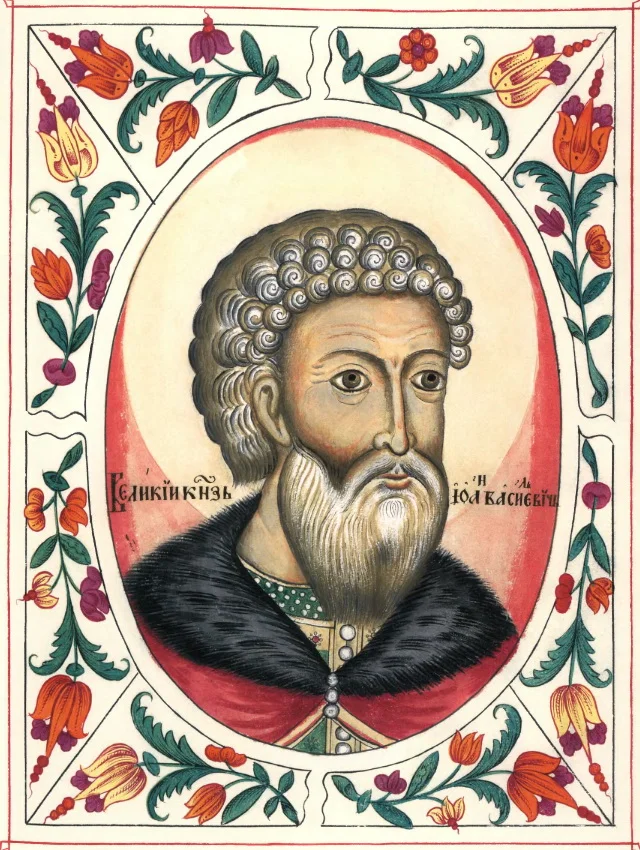
The Horde then came apart piece by piece. The Kazan Khanate - A medieval Tatar Muslim state that flourished along the middle Volga River, Crimean Khanate - A long-lasting Tatar state ruled by the Giray dynasty controlling Crimea and the Pontic steppe, Astrakhan Khanate - A merchant Tatar khanate controlling the mouth of the Volga River and the Caspian Sea trade, Siberian Khanate - The northernmost Tatar Muslim realm that ruled western Siberia east of the Ural Mountains, and Nogai Horde - A formidable nomadic confederation that dominated the Pontic-Caspian steppe between the Volga and Ural rivers broke away in turn, and what remained at the centre was called the Great Horde. In 1480 Ivan III - The Grand Prince of Moscow who ended the 240-year Tatar Yoke at the Great Stand on the Ugra in 1480 and unified the Rus' lands to establish a centralized Russian state. of Moscow and Khan Ahmed faced each other across the Ugra River - The Ugra River is a 399-kilometer river in western Russia flowing through Smolensk and Kaluga oblasts as a left tributary of the Oka River. Meandering through dense woodlands and rolling hills, it is celebrated in history as the site of the pivotal 'Great Stand on the Ugra River' in 1480 between the forces of Grand Prince Ivan III of Moscow and Khan Ahmed of the Great Horde. During medieval times, Russian chronicles reverently dubbed the river the 'Belt of the Virgin Mary' (Belt of the Theotokos), believing divine protection shielded the northern lands from steppe invasions. By fortifying every river ford with early firearms, arquebuses, and artillery, Russian defenders repelled all crossing attempts, ultimately forcing the freezing Tatar host to retreat without a pitched battle. This bloodless standoff marked the definitive end of the 240-year 'Tatar Yoke', establishing Muscovy as a fully sovereign, independent Russian power.; neither could force a crossing and both eventually withdrew. Russia remembers that bloodless standoff as the day Mongol rule ended. In 1502 the Crimea - n Khanate destroyed the last base of the Great Horde, and the unified empire of the Ulus of Jochi - 'Ulus' is a Mongolian word meaning a community of people, realm, or state. After Genghis Khan forged his vast empire, he granted appanages (uluses) to his four principal sons. To his eldest son, Jochi, and his lineage, he apportioned the vast western steppes of Eurasia and the Rus' lands. The official Mongolian name for this nomadic imperial realm was the 'Ulus of Jochi'. In Western and modern historiography, this empire is commonly known as the 'Golden Horde' or the 'Kipchak Khanate', but the Mongols themselves took pride in calling it the Ulus of Jochi to emphasize their descent from Genghis Khan's firstborn. Jochi's son Batu Khan established its capital at Sarai on the lower Volga River, ruling over Eastern Europe for more than two centuries. With the fall of the Great Horde in 1502, the Ulus of Jochi ceased to exist as a unified imperial entity, fragmenting into regional successor khanates including Kazan, Crimea, and Astrakhan. gave way to multiple competing independent khanates across the Eurasian steppe.
Following the murder of Khan Berdi Beg in 1359, Batu's direct lineage was extinguished, plunging the Golden Horde - The nomadic state Batu founded on the lower Volga, which collected tribute from the Rus principalities for some 250 years. into more than two decades of civil war known as the Great Troubles. Steppe factions east and west of the Volga - The Volga River is the longest river in Europe, flowing through western Russia into the Caspian Sea. During the Mongol invasion, it served as a crucial transport and migration route. Batu Khan established the capital of the Golden Horde, Sarai, along its lower banks. In Russian culture, it is affectionately called 'Mother Volga' (Volga Matushka) and is celebrated in numerous folk songs and legends as a source of life and strength, and its name is linked to the legendary Slav giant hero Volga Buslayevich. installed rival puppet khans, resulting in more than twenty khans rising and falling in rapid succession. Central authority fractured, the tribute collection machinery collapsed, and Rus' princes began questioning their allegiance.
1362 AD
Battle of Blue Waters
📍Syniukha River (present-day central Ukraine) (Map)
Exploiting the Horde's civil turmoil, Grand Duke Algirdas of Lithuania - A dominant medieval and early modern East European realm stretching from the Baltic to the Black Sea marched south toward the Black Sea. Facing three Tatar - Fierce Nomadic Horsemen of the Eurasian Steppes The Tatars were originally a nomadic tribe from the northeastern Mongolian plateau. Following the Mongol conquests of the 13th century, Europeans and Russians used the collective designation 'Tatars' (or 'Tartars') for the Mongol invaders and the nomadic peoples of the Golden Horde. In medieval Europe, terrified chroniclers associated their lightning mobility and ferocious archery with 'Tartaros', the deepest abyss in Greek mythology, believing them to be demonic warriors unleashed from the underworld.The 1402 Battle of Ankara and the Tatar Defection Settled in Anatolia, a corps of Tatar mercenaries (the Black Tatars / Qara Tatar) formed a crucial part of the left wing in Ottoman Sultan Bayezid I's army at the Battle of Ankara (1402). However, having been secretly contacted and swayed by their fellow steppe conqueror Timur, the Tatars abruptly switched sides during the heat of the battle and joined Timur's ranks. This decisive betrayal shattered the Ottoman battle lines and ensured Timur's overwhelming victory.The Legacy of the Steppe Khanates Over generations, the Mongol ruling elite of the Golden Horde blended with local Turkic peoples (such as Kipchaks) and adopted Islam, forging a distinct Tatar cultural identity. Following the fragmentation of the Golden Horde, they founded the khanates of Kazan, Crimea, and Astrakhan, with their descendants preserving their vibrant language and customs in Tatarstan, Crimea, and across the steppes. princes attempting an encirclement, Algirdas curved his battle lines to evade arrow barrages and launched swift flanking counterattacks to crush each Mongol detachment in turn. This decisive victory transferred Kyiv, Podolia, and the vast southern Rus' lands - The Rus' Region, also known as the Rus' Land, refers to the historical territory in Eastern Europe inhabited by the East Slavs during the medieval period, covering parts of modern Ukraine, Belarus, and western Russia. It was characterized by vast plains, dense forests, and major river networks that fostered thriving trade routes. The name 'Rus' is bound to legendary founding stories. According to the Primary Chronicle, the warring Slavic tribes invited Rurik and his Varangian (Viking) brothers from across the Baltic Sea to bring order and rule over them. The tribe they belonged to was called the 'Rus,' and thus the land they ruled became known as the Land of Rus. Another legend tells of three brothers—Lech (ancestor of Poland), Czech (ancestor of Czechia), and Rus—where the eldest brother, Rus, traveled east to settle and establish the Rus' Land. Although this region unified into the prosperous federation of Kyivan Rus', internal conflicts among its princes weakened it. Consequently, they suffered a devastating defeat by the invading Mongols at the Battle of the Kalka River in 1223, ushering in a long period of Mongol domination. along the Dnipro - The Dnipro River (also historically known as the Dnieper) rises in the Valdai Hills of Russia and flows south for 2,201 kilometers through Belarus and Ukraine to empty into the Black Sea. As Europe's fourth-longest river, it has served for millennia as the vital economic artery and cradle of East Slavic civilization. During the Middle Ages, the Dnipro formed the backbone of the legendary 'Trade Route from the Varangians to the Greeks', linking Viking traders from the Baltic Sea directly to Constantinople and the Byzantine Empire. Ancient Slavic folklore fondly celebrated the river under the poetic name 'Slavutych' (the Glorious River). According to a pious legend, Saint Andrew the Apostle sailed up the Dnipro and erected a cross upon the high bluffs, prophesying that a great Christian capital would rise on that spot—the future city of Kyiv. The river sustained the medieval realm of Kievan Rus', and following the Battle of Blue Waters in 1362, control of its vast middle and lower basins passed from the Golden Horde to the Grand Duchy of Lithuania. from Mongol control to Lithuania.
ResultLithuanian victory
Truce / Interlude (16 years)
1378 AD
Battle of the Vozha River
📍Vozha River (present-day Ryazan Oblast, Russia) (Map)
When Grand Prince Dmitry - The Grand Prince of Moscow whose victory over Mamai at Kulikovo in 1380 earned him the name Donskoy, 'of the Don'. of Moscow - A principality that grew from a small wooden fortress to unify the Rus' lands and end Mongol rule, laying the foundation of Russia. withheld tribute, the Horde's strongman Mamai - Not a Genghisid, he ruled through puppet khans, and his defeat at Kulikovo in 1380 ended him. dispatched commander Begich with a punitive host. Dmitry seized the high ground overlooking the Vozha River - The Vozha River is a right tributary of the Oka River flowing through Ryazan Oblast in western Russia. While a modest river meandering through forests and plains, it is famous in history as the site of the Battle of the Vozha River in 1378, where Russian forces first defeated a Golden Horde army in an open-field pitched battle. According to medieval Russian chronicles, as the Tatar horsemen attempted to ford the river under misty cover, Grand Prince Dmitry's forces waited on the commanding heights and launched a coordinated three-pronged counterattack, driving the disordered invaders back into the water. This triumph shattered the aura of Mongol invincibility and paved the way for the decisive victory at Kulikovo two years later. and waited. As the Tatar horsemen lost formation while crossing the river, Russian forces struck simultaneously from three sides, driving the disordered invaders into the water and routing them. It marked the first major open-field victory of a Rus' army over Mongol forces.
ResultMoscow victory
1380 AD
Battle of Kulikovo
📍Kulikovo Field (upper Don, present-day Tula Oblast, Russia) (Map)
To decisively crush Moscow, Mamai advanced north with a vast army, while Dmitry led a coalition of Rus' forces across the Don - The Don River rises in Tula Oblast south of Moscow and flows south for approximately 1,870 kilometers into the Sea of Azov, making it Europe's fifth-longest river. Known to the ancient Greeks as the Tanais, it is celebrated in Russian folklore as 'Quiet Don' or 'Father Don' due to its broad, gentle flow through fertile southern plains. In 1380, Grand Prince Dmitry of Moscow scored a historic triumph over the Golden Horde near the upper reaches of the Don at the Battle of Kulikovo. In honour of this landmark victory, he was bestowed with the enduring epithet **'Donskoy'** ('of the Don'). In subsequent centuries, the wide steppe basin of the Don became the legendary homeland and bastion of the Don Cossacks. onto Kulikovo Field - Kulikovo Field (Kulikovo Pole) is a historic plain located at the confluence of the Don and Nepryadva rivers in Tula Oblast, south of Moscow. It is celebrated as the site of the pivotal Battle of Kulikovo in 1380, where Grand Prince Dmitry Donskoy led a united coalition of Rus' principalities to defeat the army of the Golden Horde under warlord Mamai. Legend recounts that just before the main clash, the monk-warrior Alexander Peresvet, blessed by Saint Sergius of Radonezh, rode out to engage the Tatar champion Chelubey in single combat. Charging at full gallop, both warriors impaled each other with their lances; Chelubey fell dead on the field while Peresvet, mortally wounded, stayed in his saddle until reaching his own lines, which was hailed as an omen of victory. The decisive turning point came when a hidden reserve cavalry regiment ambushed the Mongol flank from the dense Green Dubrava oak forest. Today, the field is home to the Kulikovo Pole State Memorial Museum and a monumental obelisk commemorating the battle.. By choosing a narrow plain bounded by dense woods and ravines, Dmitry prevented the Mongol cavalry from enveloping his flanks. When the Russian left flank was on the verge of collapse, a hidden reserve cavalry burst from the forest into Mamai's flank and rear, routing the Horde. Dmitry earned the legendary title 'Donskoy'.
Following Mamai's defeat, Tokhtamysh - He reunited the shattered Horde with Timur's help, then turned on his patron, lost two crushing battles and brought his own state down., a genuine descendant of Genghis Khan backed by Timur - Formidable Central Asian conqueror who unified the fragmented steppes and forged a colossal empire from Delhi to Anatolia, sparking the architectural and cultural glory of the Timurid Renaissance., reunited the fractured Golden Horde. Determined to reassert Mongol suzerainty, he launched a surprise campaign against Moscow in 1382. After failing to storm the Kremlin's stone walls, Tokhtamysh feigned peaceful negotiations to coax the defenders into opening the gates, then sacked and burned the city. Moscow was forced to resume paying heavy tribute.
ResultGolden Horde victory
Truce / Interlude (9 years)
1391 AD
Battle of the Kondurcha River
📍Kondurcha River (present-day Samara Oblast, Russia) (Map)
After Tokhtamysh betrayed his former patron by raiding Timurid territories in Central Asia and the Caucasus, Timur marched a massive army across the steppe in retaliation. At the Kondurcha River - The Kondurcha River is a 294-kilometer river flowing through Samara Oblast and Tatarstan in western Russia, emptying into the Sok River, a tributary of the Volga. Flowing through the transition zone between open steppe and forest, it is renowned as the battleground of the epic Battle of the Kondurcha River in 1391 between Timur (Tamerlane) and Khan Tokhtamysh of the Golden Horde. To punish Tokhtamysh for his betrayal, Timur executed a gruelling 2,000-kilometer march across the barren Kazakh steppes lasting several months. Meeting on the banks of the Kondurcha, Timur deployed his army into seven highly disciplined battle lines, neutralizing the Horde's flanking cavalry and shattering Tokhtamysh's host. The battle dealt a catastrophic military blow to the Golden Horde from which it never fully recovered., Timur deployed his forces into seven disciplined echelons, neutralizing Tokhtamysh's flanking maneuvers with superior coordination. A relentless frontal assault broke the Golden Horde's lines, forcing Tokhtamysh to flee north into the forests.
ResultTimurid victory
Truce / Interlude (4 years)
1395 AD
Battle of the Terek and the destruction of Sarai
📍Terek River (present-day North Caucasus, Russia) (Map)
Regrouping after his initial defeat, Tokhtamysh confronted Timur again on the banks of the Terek River - The Terek River originates in the deep valleys of the Caucasus Mountains and flows for about 620 kilometers before emptying into the Caspian Sea. Because of its fast currents and strategic location, it has historically served as an important geographical boundary and natural defense line for traveling peoples and armies. In the winter of 1262–1263, during the fragmentation of the Mongol Empire, the armies of Hülegü and Berke fought a major battle along this river. According to historical accounts, as Hülegü's forces retreated across the frozen river, the ice broke beneath them, and countless soldiers and horses tragically drowned in the freezing water. Later in 1395, the river became the stage for the climactic Battle of the Terek River between Timur (Tamerlane) and Khan Tokhtamysh. Timur's crushing victory here opened the way for his army to sack and raze Sarai and the Volga trade cities, delivering a fatal blow to the Golden Horde. in the North Caucasus. Although Horde horsemen initially pressed Timur's vanguard hard, internal betrayal and shifting allegiances among Tatar commanders shattered Tokhtamysh's battle line. After winning the battle, Timur systematically burned and razed Sarai - Sarai was the grand capital city of the Golden Horde (Kipchak Khanate), founded by Batu Khan in the mid-13th century near the lower Volga River. It grew into a major, wealthy trading hub connecting Europe and Asia, featuring beautiful mosques, palaces, and public baths. According to a famous local legend, two life-sized golden horses made of solid gold stood at the gates of Sarai to show off the Khan's power, but they mysteriously disappeared and are believed to be buried somewhere in the Volga steppes., Astrakhan - A merchant Tatar khanate controlling the mouth of the Volga River and the Caspian Sea trade, and key trade emporiums along the Volga, inflicting a permanent economic catastrophe upon the Horde.
ResultTimurid victory
Truce / Interlude (43 years)
1438 AD – 1466 AD
The Kazan, Crimea - n and Astrakhan khanates break away
Devastated by Timur's destruction and endemic succession struggles, the Golden Horde permanently fractured into several regional states during the 15th century. The Kazan Khanate - A medieval Tatar Muslim state that flourished along the middle Volga River (1438), Crimean Khanate - A long-lasting Tatar state ruled by the Giray dynasty controlling Crimea and the Pontic steppe (1441), Astrakhan Khanate (1466), and Sibir Khanate - The northernmost Tatar Muslim realm that ruled western Siberia east of the Ural Mountains broke away one after another. The rump core along the Volga was reduced to the weakened Great Horde, and these competing successor khanates increasingly fell under the sway of Moscow and neighboring powers.
Truce / Interlude (14 years)
1480 AD
The Great Stand on the Ugra
📍Ugra River (present-day Kaluga Oblast, Russia) (Map)
When Grand Prince Ivan III - The Grand Prince of Moscow who ended the 240-year Tatar Yoke at the Great Stand on the Ugra in 1480 and unified the Rus' lands to establish a centralized Russian state. of Moscow formally renounced tribute to the Mongols, Khan Ahmed of the Great Horde led an army north to restore subjugation. The two hosts faced each other across the Ugra River - The Ugra River is a 399-kilometer river in western Russia flowing through Smolensk and Kaluga oblasts as a left tributary of the Oka River. Meandering through dense woodlands and rolling hills, it is celebrated in history as the site of the pivotal 'Great Stand on the Ugra River' in 1480 between the forces of Grand Prince Ivan III of Moscow and Khan Ahmed of the Great Horde. During medieval times, Russian chronicles reverently dubbed the river the 'Belt of the Virgin Mary' (Belt of the Theotokos), believing divine protection shielded the northern lands from steppe invasions. By fortifying every river ford with early firearms, arquebuses, and artillery, Russian defenders repelled all crossing attempts, ultimately forcing the freezing Tatar host to retreat without a pitched battle. This bloodless standoff marked the definitive end of the 240-year 'Tatar Yoke', establishing Muscovy as a fully sovereign, independent Russian power. for several months. Unable to force a river crossing against Russian arquebuses and cannons guarding the fords, and threatened by approaching winter freeze and supply shortages, Ahmed withdrew without a major battle. This standoff marked the end of the 240-year Tatar Yoke - The 'Tatar Yoke' (or Mongol-Tatar Yoke) refers to the roughly 240-year period from the Mongol destruction of Kievan Rus' (1237–1240) until the Great Stand on the Ugra River (1480), during which the Rus' principalities were subjugated as tributary vassals to the Golden Horde. The metaphor of a 'yoke'—a heavy wooden beam placed across draft animals—symbolizes the profound political subordination and economic burden endured by the Rus' lands. The khans did not govern the forests directly; instead, they granted patents of authority (yarlyks) to favored princes to collect crushing taxes and levies. Defiance or withheld tribute was met with ruthless punitive raids, pillaging, and enslavement. While this era isolated Russia from Western European developments such as the Renaissance, it paradoxically allowed the Grand Duchy of Moscow to accumulate unprecedented wealth as the chief tax collector, ultimately enabling Ivan III to cast off the yoke in 1480 and establish a unified Russian state..
As the last ruler of the Great Horde, Sheikh Ahmed, struggled to maintain nomadic supremacy, Khan Meñli I Giray of the Crimean Khanate, allied with Moscow, launched a devastating assault on the Great Horde's core camp near the lower Volga. The Great Horde's forces were completely scattered and its nomadic base eradicated. This historic downfall formally extinguished the imperial core of the Ulus of Jochi - 'Ulus' is a Mongolian word meaning a community of people, realm, or state. After Genghis Khan forged his vast empire, he granted appanages (uluses) to his four principal sons. To his eldest son, Jochi, and his lineage, he apportioned the vast western steppes of Eurasia and the Rus' lands. The official Mongolian name for this nomadic imperial realm was the 'Ulus of Jochi'. In Western and modern historiography, this empire is commonly known as the 'Golden Horde' or the 'Kipchak Khanate', but the Mongols themselves took pride in calling it the Ulus of Jochi to emphasize their descent from Genghis Khan's firstborn. Jochi's son Batu Khan established its capital at Sarai on the lower Volga River, ruling over Eastern Europe for more than two centuries. With the fall of the Great Horde in 1502, the Ulus of Jochi ceased to exist as a unified imperial entity, fragmenting into regional successor khanates including Kazan, Crimea, and Astrakhan. that had dominated Eastern Europe for centuries.
ResultCrimean victory
Art & Heritage
The Battle of Kulikovo in Russian painting
Various 19th–20th century Russian painters, 19th–20th century
🏛️ Various (State Tretyakov Gallery and others)
Kulikovo became a favourite subject of Russian national painting centuries after the event. Comparing these canvases with the medieval chronicles is a lesson in itself: how later ages reshape a battle to say something about themselves.
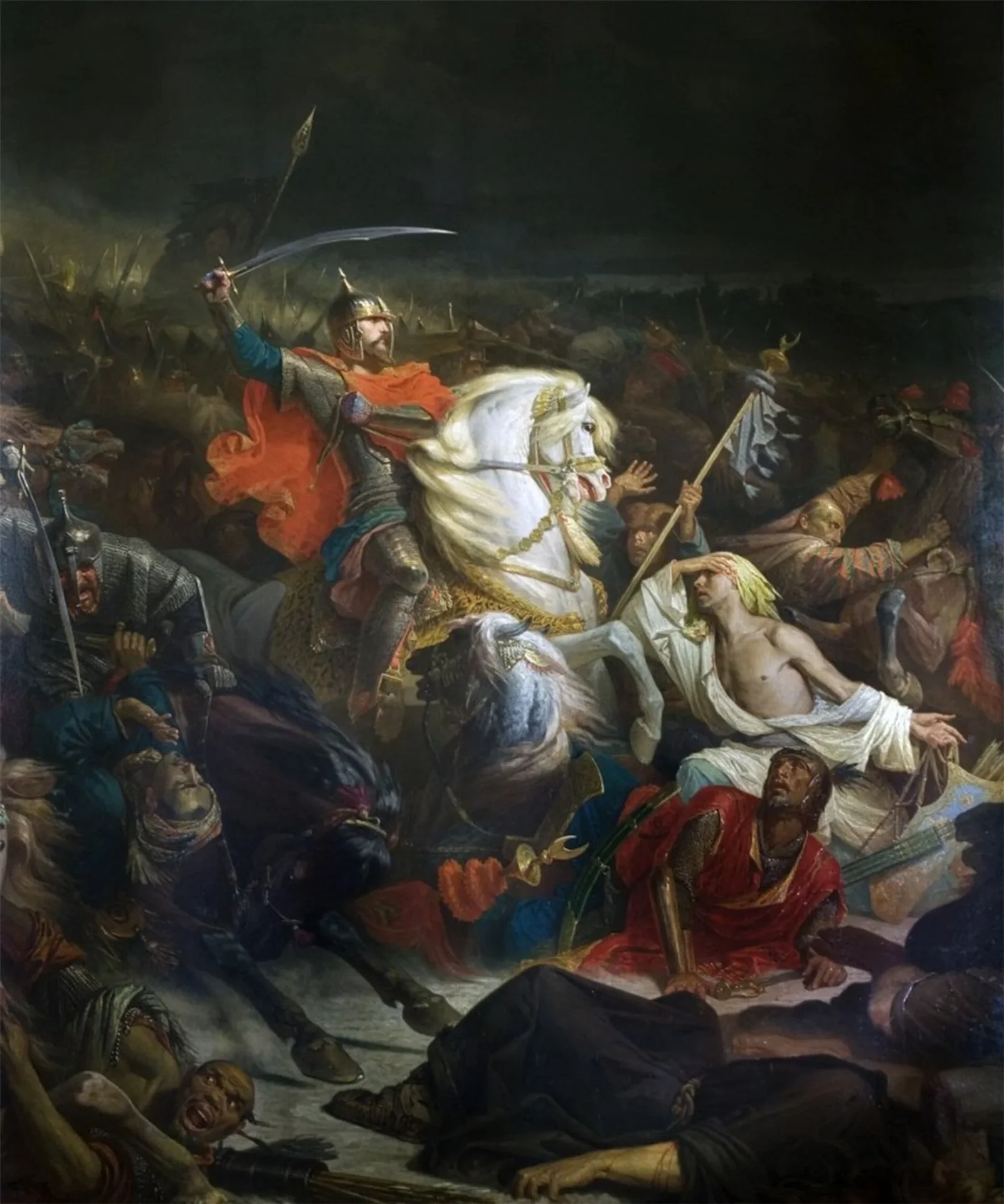
The Battle of Kulikovo (1849)
Adolphe Yvon (1817–1893), 1849
🏛️ Grand Kremlin Palace, Moscow
A monumental historical canvas by French painter Adolphe Yvon depicting the ferocious clash between Grand Prince Dmitry's Rus' army and Mamai's Tatar host at the 1380 Battle of Kulikovo.
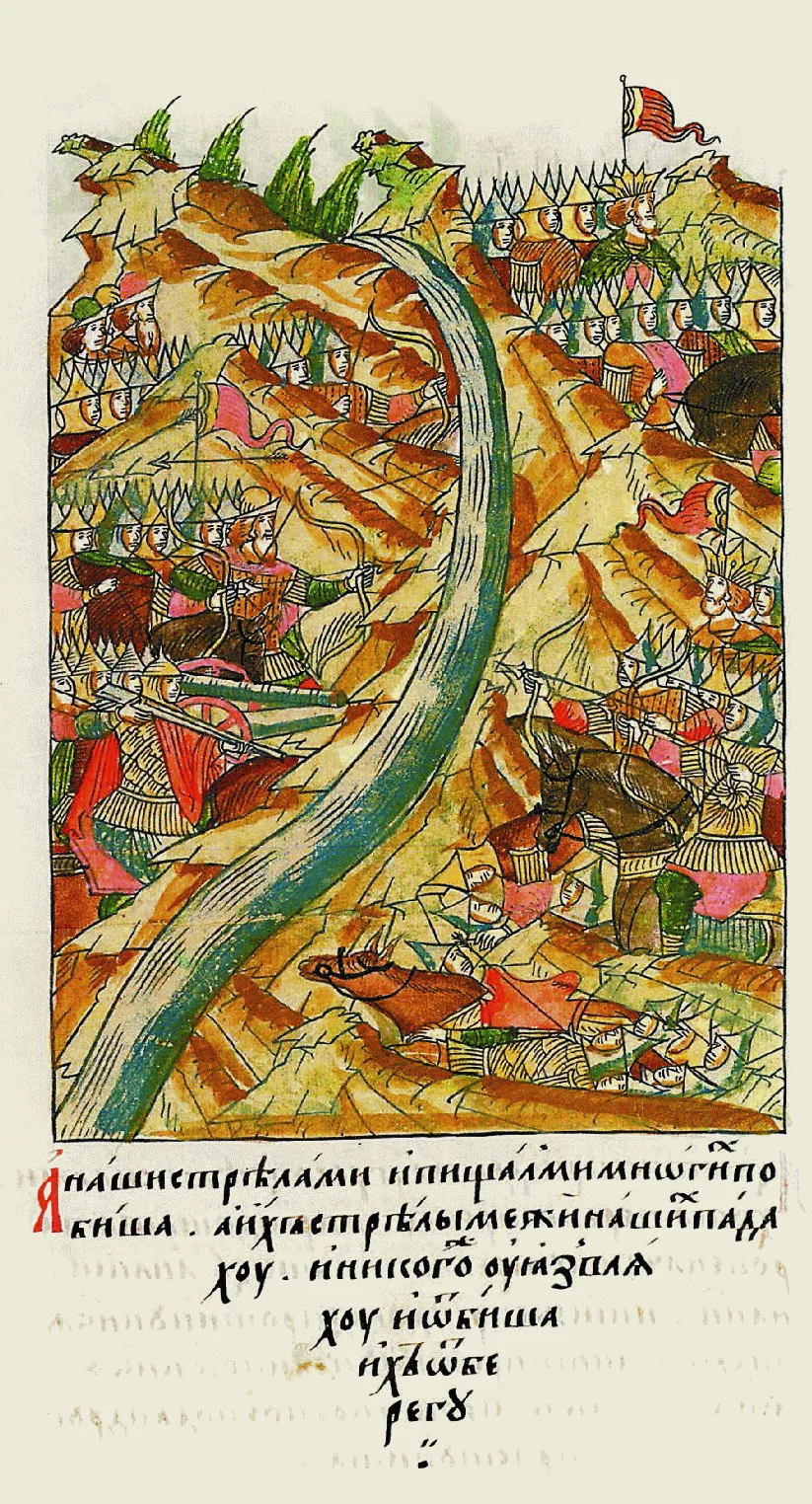
The Stand on the Ugra in a chronicle miniature
Russian chronicle illuminators, 16th century
🏛️ Various (Russian State Library and others)
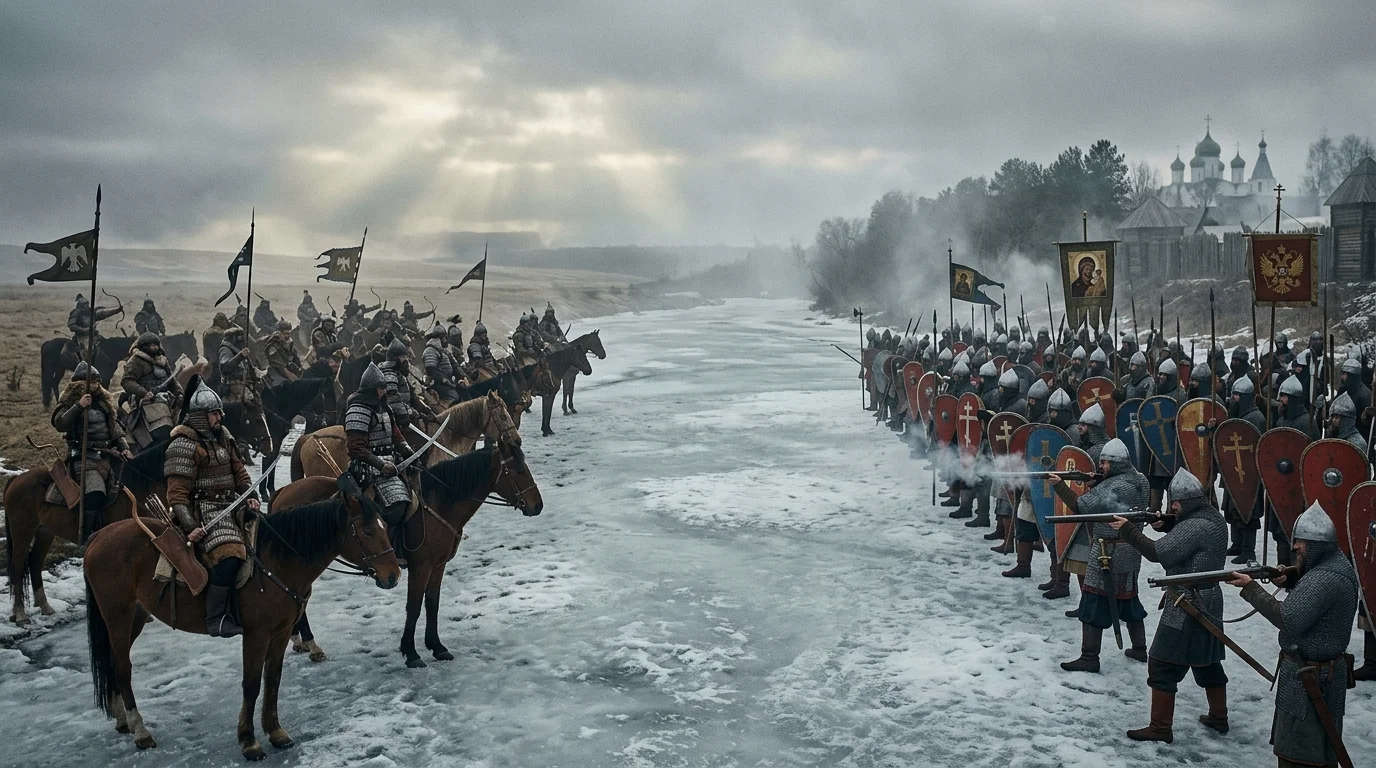
A manuscript illustration of the two armies facing each other across the river. It is a picture of a battle that never happened, which is exactly why it matters: the end of Mongol overlordship came without a fight.
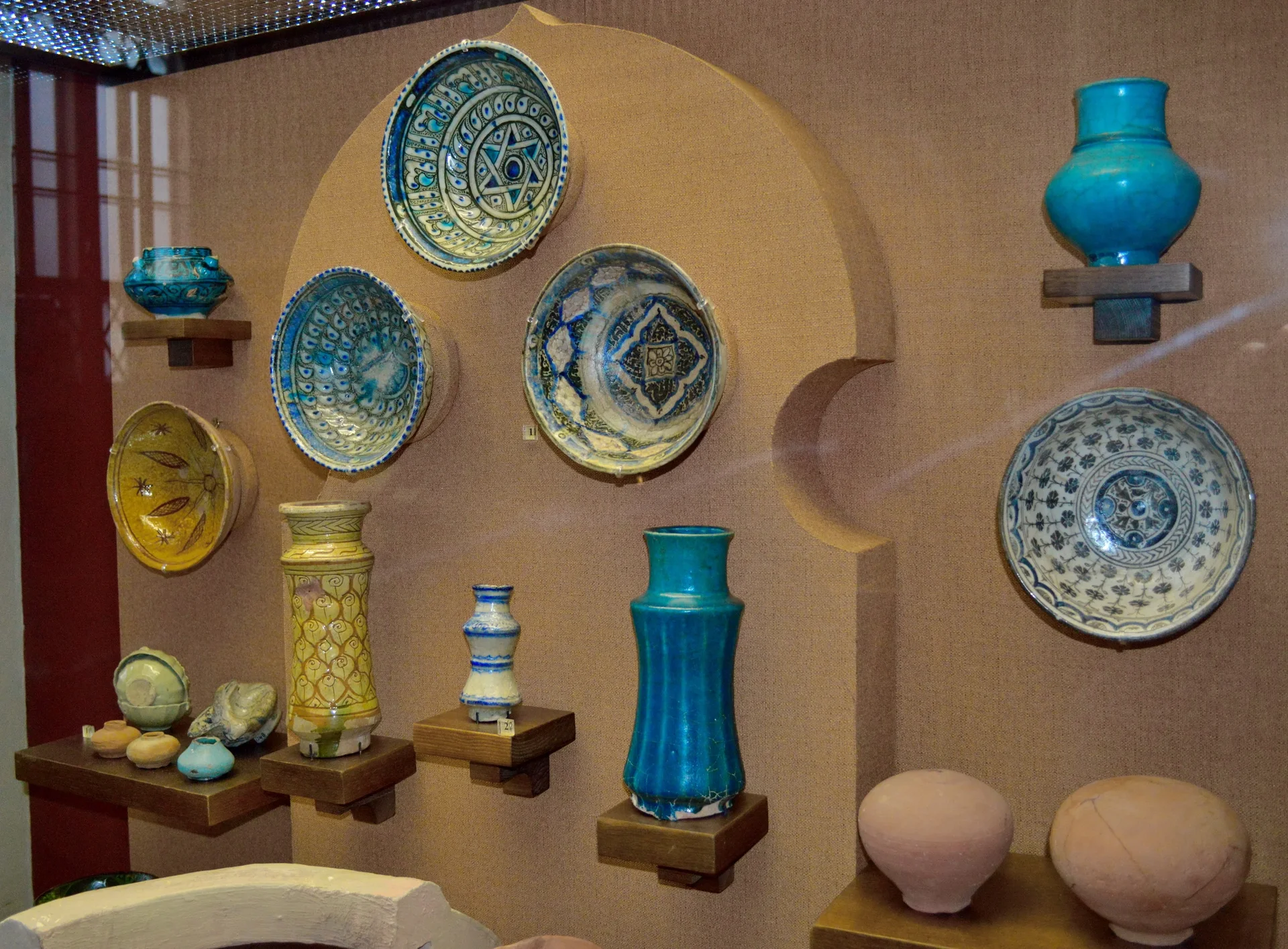
Ceramic Bowl of the Golden Horde (Sarai / Volga region)
Golden Horde craftsmen, 13th–14th century
🏛️ State Historical Museum, Moscow (GIM)
Glazed and painted ceramic bowl excavated along the Volga trade cities of the Golden Horde. It reflects the sophisticated urban craft and bustling trade of Sarai before the cities were devastated in 1395.
Related Videos
How the Mongols Lost Russia - Medieval History Animated DOCUMENTARY