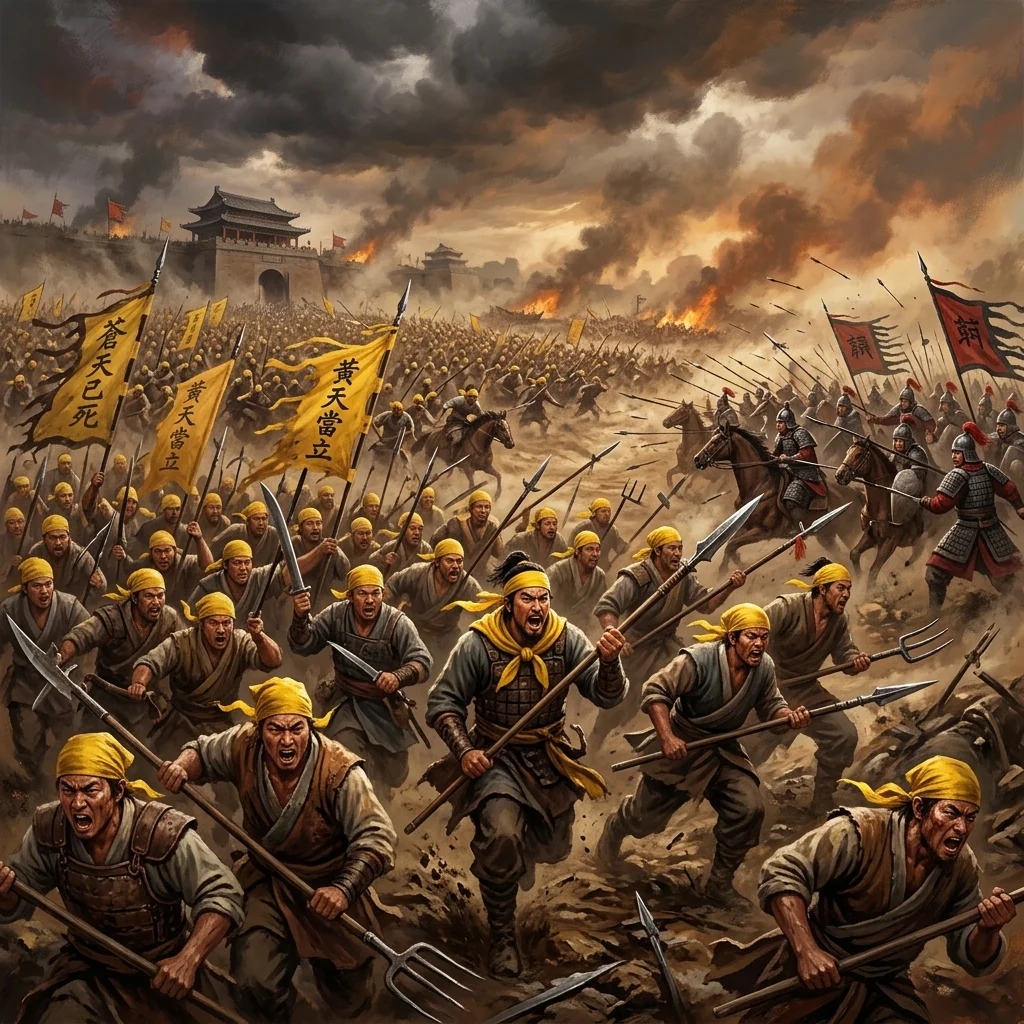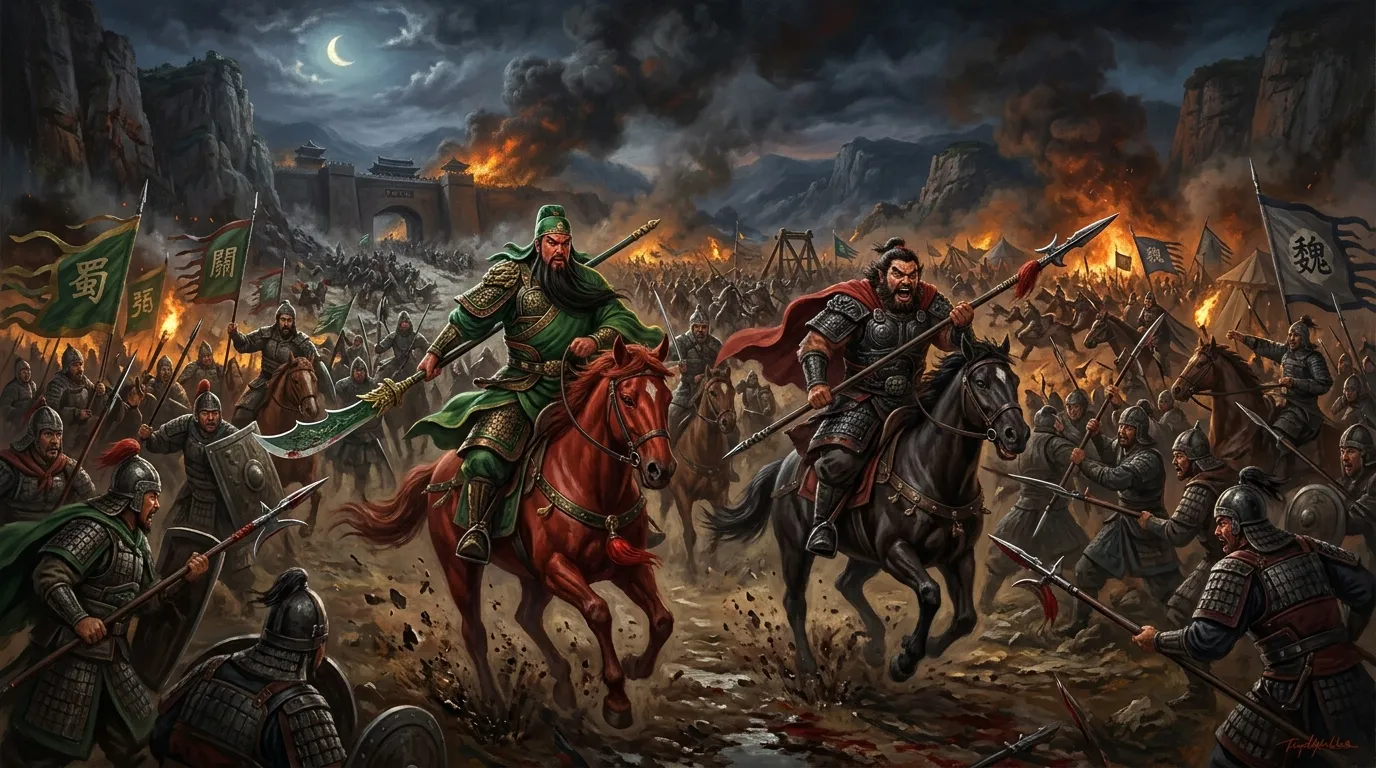
The legendary era of the Three Kingdoms began with the collapse of the corrupt Eastern Han dynasty, sparked by the massive Yellow Turban Rebellion in 184 AD. As chaos engulfed the land, warlords raised their own armies, and three honorable friends—Liu Bei, Guan Yu, and Zhang Fei—swore an oath of brotherhood in a peach garden, vowing to restore peace to the empire.
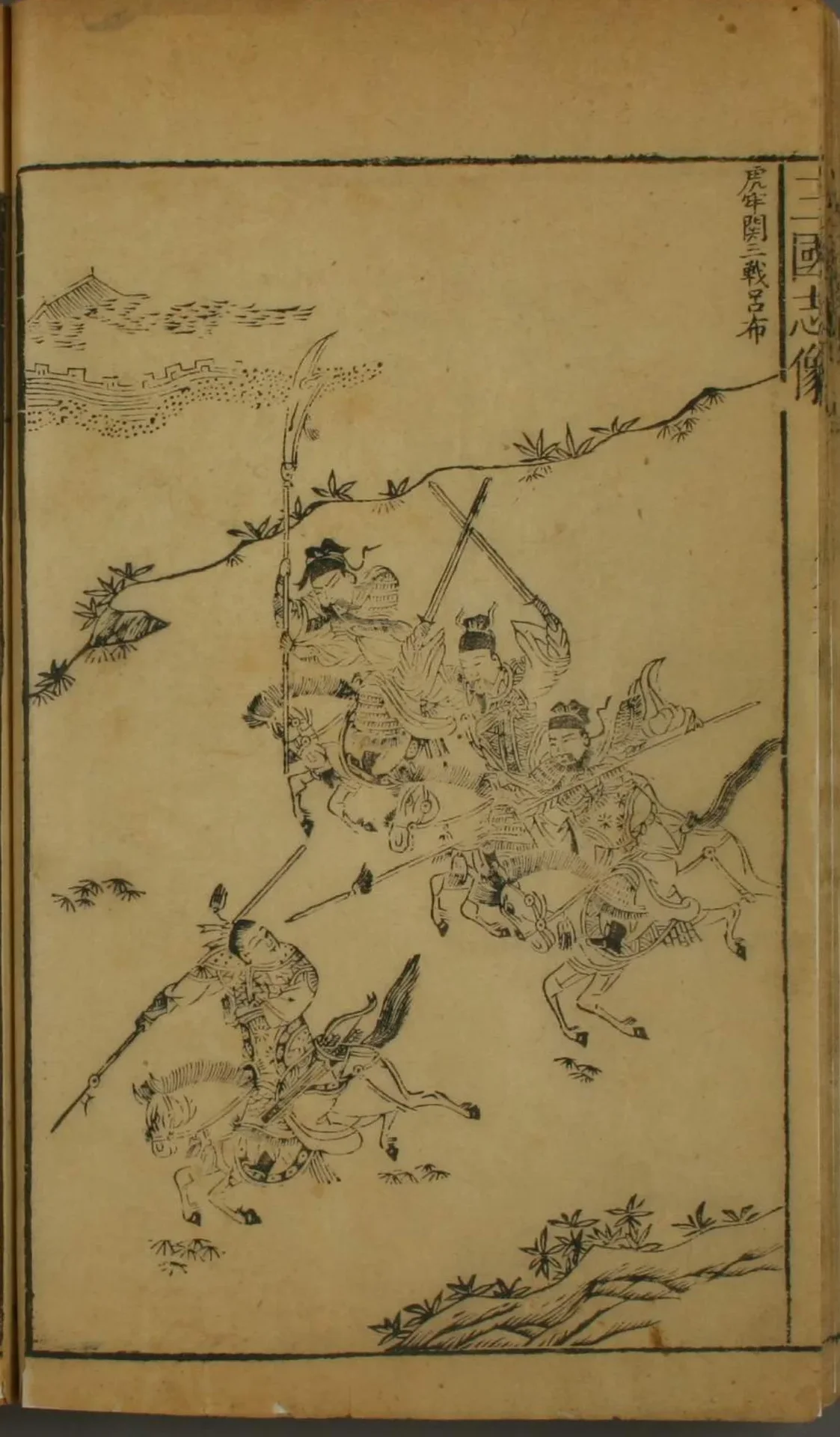
The brilliant but ruthless warlord Dong Zhuo soon seized control of the Han emperor, ruling with unmatched tyranny. A coalition of warlords gathered to stop him, leading to the epic Battle of Hulao Pass where the three sworn brothers fiercely dueled the invincible warrior Lü Bu. Although Dong Zhuo was eventually assassinated, the empire fractured into territories controlled by rival warlords.
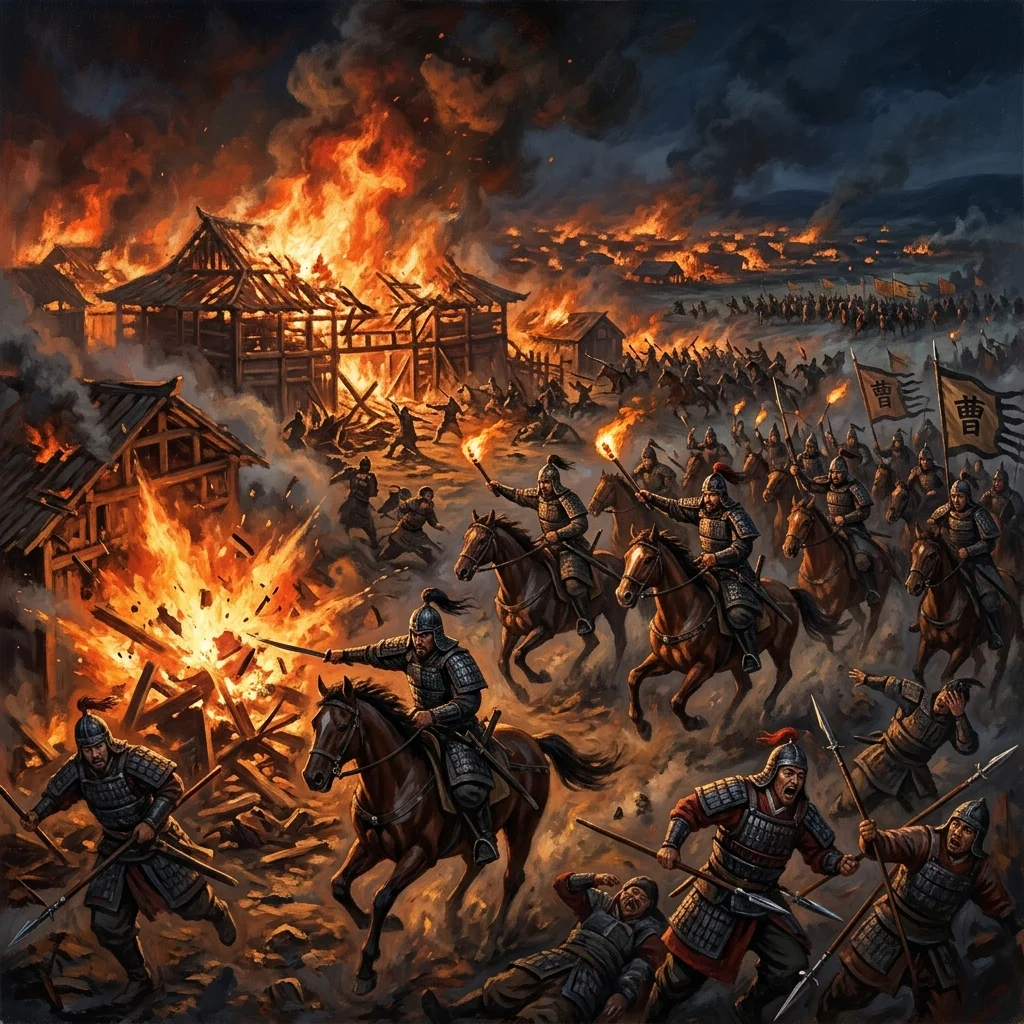
Among these warlords, the cunning and ambitious Cao Cao emerged as the most powerful force in the north. He famously declared his philosophy of ruthlessness to conquer his enemies. Cao Cao consolidated his power by controlling the puppet Emperor and decisively defeating his greatest rival, Yuan Shao, at the Battle of Guandu through a brilliant night raid on the enemy's food supplies.
Meanwhile, Liu Bei, still lacking a land of his own, sought the help of the brilliant hidden strategist Zhuge Liang. Demonstrating his utmost sincerity, Liu Bei visited Zhuge Liang's humble thatched cottage three times before the genius finally agreed to join him. This legendary partnership would change the course of history.
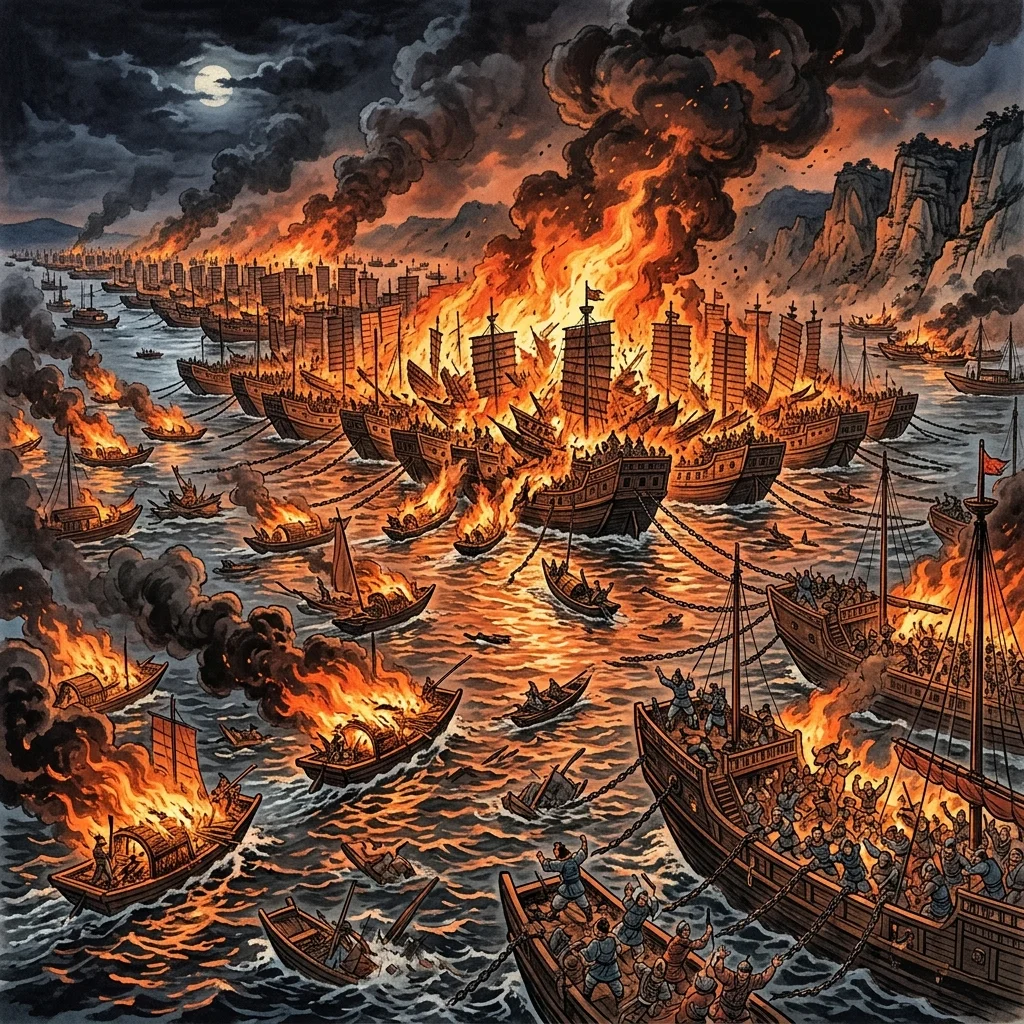
By 208 AD, Cao Cao marched a massive army south to conquer the remaining warlords and unify China. Facing complete annihilation, Liu Bei formed a desperate alliance with the young and capable leader of the southeast, Sun Quan. At the legendary Battle of Red Cliffs, their strategists employed a devastating fire attack, exploiting the eastern wind to burn Cao Cao's magnificent chained fleet to ashes.
The miraculous victory at Red Cliffs permanently shattered Cao Cao's dream of swift unification and solidified a three-way division of the realm. Cao Pi, Cao Cao's son, eventually usurped the Han throne to formally establish the state of Wei. In response, Liu Bei founded Shu Han in the mountainous southwest to continue the Han legacy, while Sun Quan declared himself emperor of Eastern Wu in the prosperous southeast.
The fragile balance was broken when Sun Quan's forces betrayed and killed Guan Yu to seize the strategic Jing Province. A grief-stricken Liu Bei launched a massive revenge campaign but was disastrously defeated at the Battle of Yiling, passing away shortly after. The heavy burden of Shu Han's survival now rested entirely on the shoulders of the loyal Chancellor, Zhuge Liang.
Determined to fulfill Liu Bei's dying wish, Zhuge Liang launched six grueling but tragic Northern Expeditions against the mighty Wei. He engaged in brilliant tactical duels with Wei's formidable commander, Sima Yi. Ultimately, Zhuge Liang collapsed from exhaustion and died at the Battle of Wuzhang Plains, his dream of restoring the Han dynasty unfulfilled.
In the end, none of the three original heroes conquered China. The powerful Sima clan overthrew the Wei emperors and established the Jin dynasty in 266 AD. Jin forces conquered a weakened Shu, and in 280 AD, they launched a massive naval invasion that forced the surrender of Eastern Wu, finally reunifying China and closing the curtain on a legendary century of heroes and chaos.