In 280 AD, the Western Jin - The Western Jin dynasty, founded by Sima Yan, was the first dynasty to reunify China after the chaotic Three Kingdoms period. It ruled from 266 to 316 AD. Legend has it that the Sima clan's rise was foretold by celestial omens, and their victory over Eastern Wu in 280 AD was celebrated as the restoration of the Mandate of Heaven. However, the dynasty soon faced internal strife known as the War of the Eight Princes, which eventually led to its collapse and the beginning of the Sixteen Kingdoms era. dynasty finally unified China by conquering the state of Wu. Emperor Sima Yan - The founding emperor of the Western Jin who unified the Three Kingdoms but whose late-reign indulgence and policy errors led to the dynasty's rapid decline. initially ruled with wisdom, but after unification, he fell into laziness and luxury, failing to properly establish a succession plan or manage the growing power of relocated nomadic tribes.
After Sima Yan's death, his son Emperor Hui (Sima Zhong) - The second emperor of Western Jin, famously known for his intellectual disability and the tragic quote 'Why not eat meat porridge?'. ascended the throne, but his severe intellectual disabilities made him unable to govern effectively. This created a power vacuum that was exploited by his ambitious wife, Empress Jia Nanfeng - The ambitious and ruthless empress of Western Jin whose manipulation for power triggered the devastating War of the Eight Princes.. Her ruthless manipulation triggered a brutal 16-year civil war known as the 'War of the Eight Princes - A series of civil wars among the imperial princes of the Western Jin dynasty between 291 and 306 AD. The conflict devastated the empire's core territories and weakened its military, directly leading to the 'Disaster of Yongjia' and the fall of Western Jin.,' which devastated the economy and annihilated the central government's military strength.
During this chaos, nomadic tribal leaders in northern China, who had been recruited as mercenaries or forced to settle inside the empire, saw an opportunity to declare independence. Liu Yuan - A Southern Xiongnu leader who founded the state of Han Zhao, sparking the Sixteen Kingdoms period., a Xiongnu - A nomadic confederation in the Eurasian Steppe that formed a powerful empire under Modu Chanyu. leader, declared himself the heir to the Han dynasty and established the state of Han Zhao.
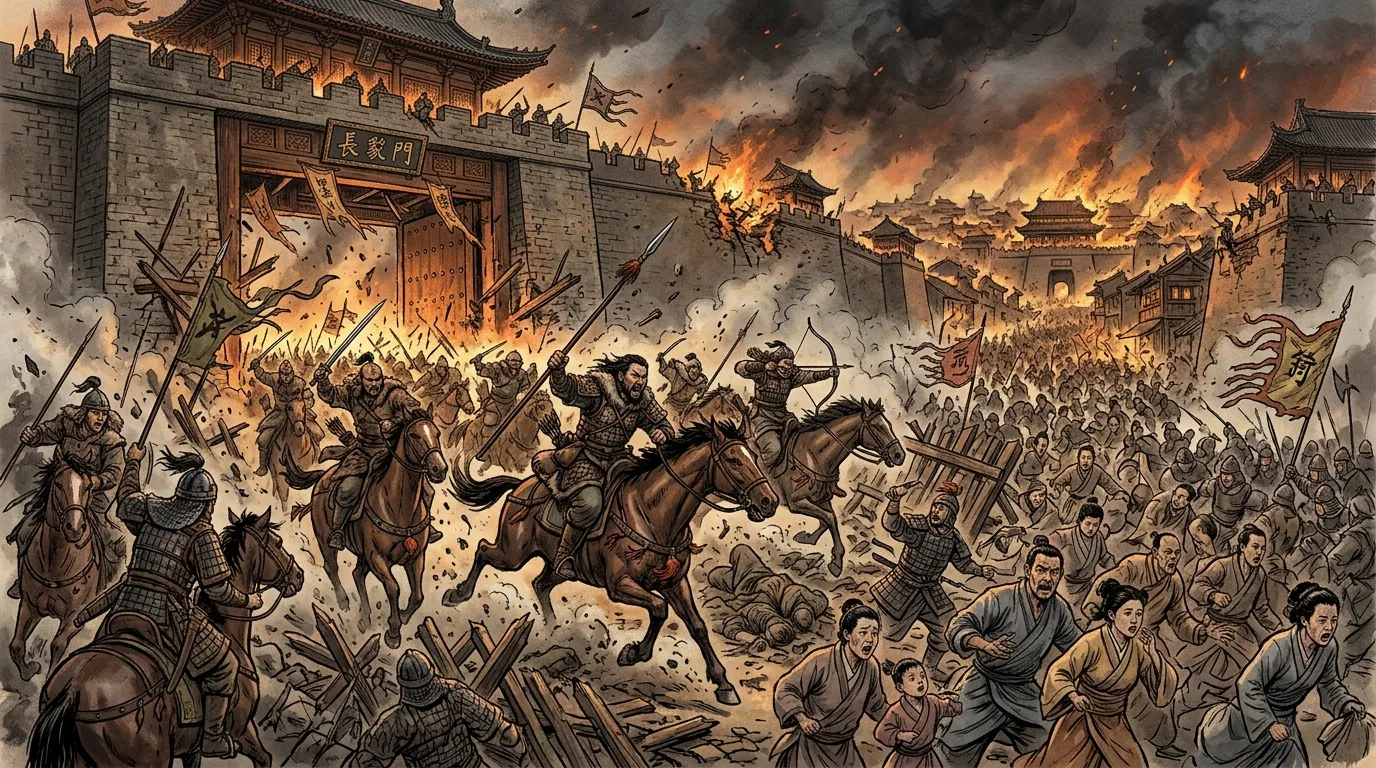
The weakened Jin could not withstand the onslaught. In 311 AD, the capital Luoyang was captured and looted by nomadic forces, and Emperor Hui was taken prisoner, an event known as the Disaster of Yongjia. Five years later, the last major stronghold, Chang'an, fell, marking the complete end of the Western Jin dynasty.
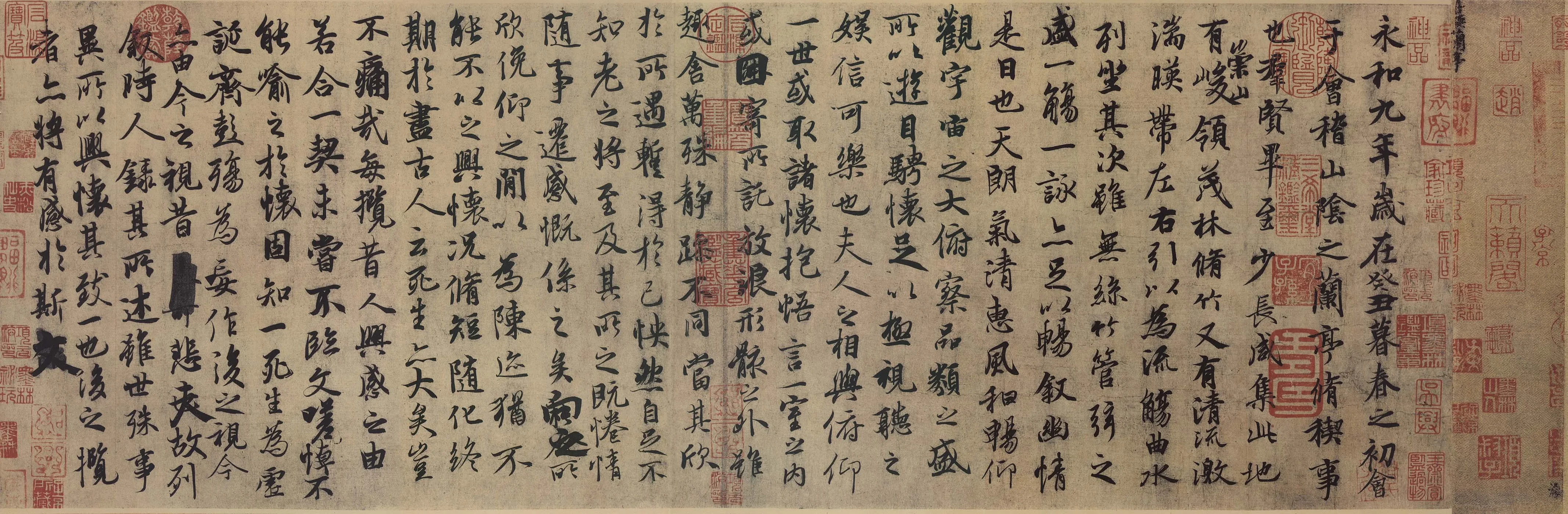
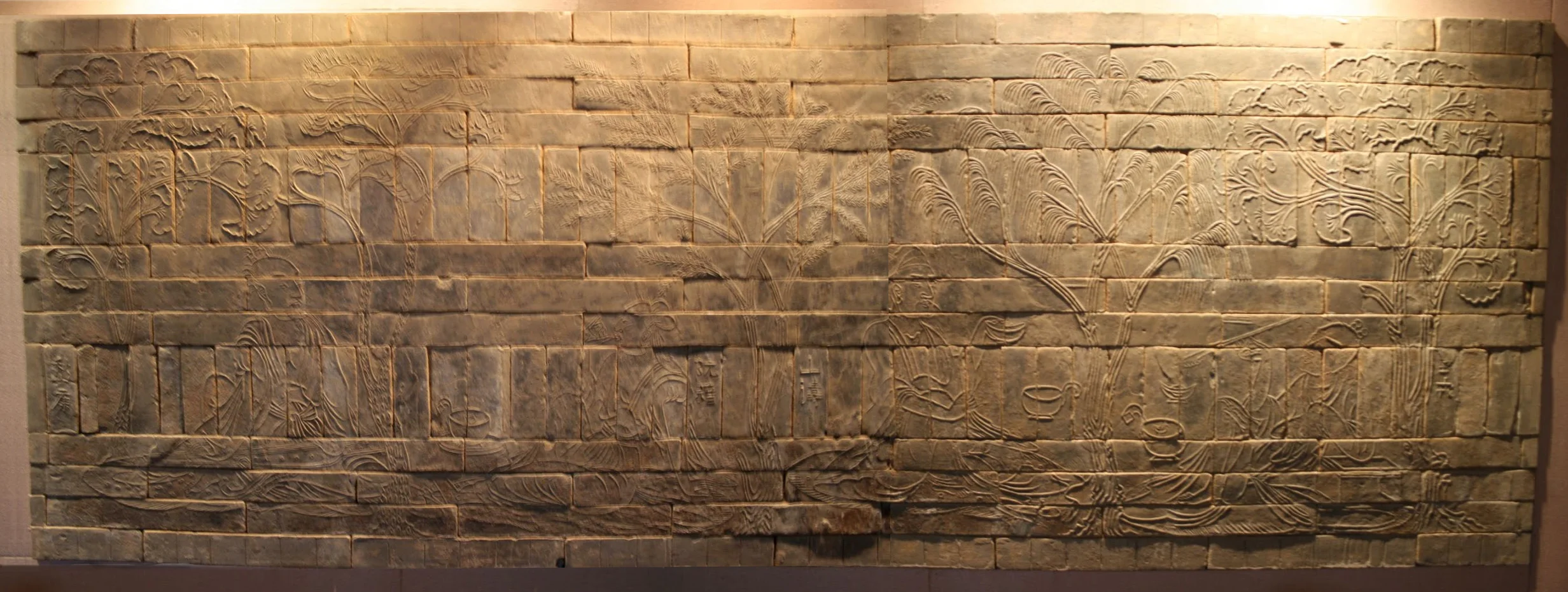
The surviving imperial family members and their supporters fled south across the Yangtze River and established the Eastern Jin dynasty - The Eastern Jin was a Chinese dynasty established by the Sima clan after fleeing to the south following the fall of Western Jin to nomadic tribes. It was known for its vibrant culture, with famous figures like the painter Gu Kaizhi and the 'Saint of Calligraphy' Wang Xizhi. Legend says that the poet Tao Yuanming discovered a hidden village called 'Peach Blossom Spring' during this era, where people lived in eternal peace—a reflection of the people's desire to escape the chaos of the north. Its survival at the Battle of Fei River preserved Chinese civilization in the Yangtze River region. with Jiankang - Jiankang was the capital city of the Eastern Jin and several subsequent Southern dynasties during the Northern and Southern Dynasties period. Located in modern-day Nanjing, it was a major cultural and economic hub of Southern China. It was originally known as Jianye during the Three Kingdoms period when it served as the capital of Eastern Wu. After the fall of Western Jin, it became the symbol of Han Chinese resistance and cultural preservation in the south. (modern-day Nanjing) as its capital. Meanwhile, the nomadic tribes that occupied Northern China began establishing their own states, marking the beginning of the chaotic Sixteen Kingdoms period.