The crisis began with the assassination of the third Caliph, Uthman, in 656 by rebels. Uthman belonged to the powerful Umayyad clan, while his successor, Ali ibn Abi Talib (Prophet Muhammad's cousin and son-in-law), belonged to the Prophet's own Hashim clan. This set the stage for a deep-seated clan rivalry. Uthman's kin, led by Muawiyah, governor of Syria, demanded immediate justice and refused to pledge allegiance to Ali until the killers were punished.
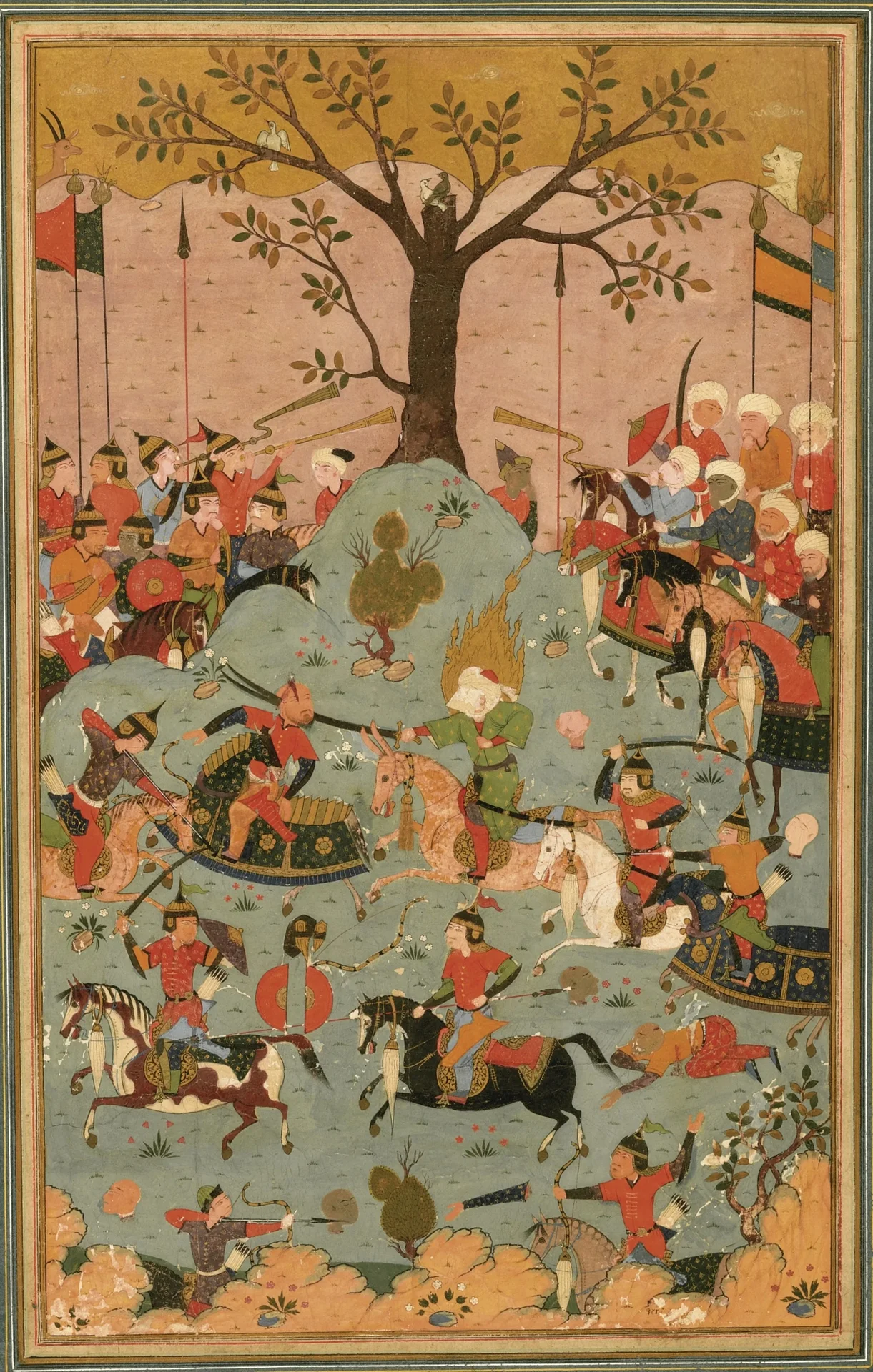
The conflict first erupted at the Battle of the Camel near Basra. Here, Ali faced an army led by Aisha, the widow of Prophet Muhammad. Aisha was not siding with the Umayyad clan; rather, she was deeply outraged that Ali was focusing on stabilizing the state instead of immediately executing Uthman's murderers. After defeating her forces, Ali treated Aisha with respect and sent her back to Medina. He then moved the capital to Kufa in Iraq to secure better support.
The war escalated at the Battle of Siffin in 657 between Ali and Muawiyah. The battle ended in a stalemate and a controversial arbitration that fractured Ali's support base, leading to the emergence of the Kharijites, who opposed both sides.
In 661, Ali was assassinated by a Kharijite while praying in Kufa. His son Hasan briefly succeeded him but negotiated a peace treaty with Muawiyah to prevent further bloodshed. Muawiyah then became the sole Caliph, founding the Umayyad dynasty. This monumental shift sidelined the Prophet's Hashim clan from ultimate power and moved the capital to Damascus.