The era began in 304 AD when Liu Yuan - A Southern Xiongnu leader who founded the state of Han Zhao, sparking the Sixteen Kingdoms period., a leader of the Xiongnu people, founded the state of Han-Zhao - Founded by Liu Yuan in 304 AD, Han-Zhao was the first of the Sixteen Kingdoms established by nomadic tribes. Liu Yuan, a Xiongnu leader who was highly educated in Han classics, claimed legitimacy as a successor to the Han Dynasty. Legend tells that his mother conceived him after dreaming of a golden deer, signifying a majestic destiny. Han-Zhao's victories over the Western Jin at Luoyang and Chang'an effectively signaled the end of unified imperial rule in northern China for over a century.. This was at a time when the Western Jin dynasty was weakened by internal power struggles. In 311 and 316 AD, Han-Zhao forces captured the capitals of Luoyang and Chang'an, effectively ending the Western Jin. This pivotal event, known as the 'Disaster of Yongjia', marked a grand victory for the Han-Zhao that signaled a new era, while for the Western Jin, it meant the total collapse of their empire. The north then became an arena where multiple groups established their own states and competed for power.
Following the fall of Han-Zhao, a powerful general named Shi Le - The only person in Chinese history to rise from a slave to an emperor, Shi Le was a brilliant military genius who founded the Later Zhao dynasty and unified much of Northern China. established the Later Zhao - Founded by Shi Le of the Jie people in 319 AD, Later Zhao became a dominant power that unified most of northern China. Shi Le rose from a former slave to a formidable conqueror, known for his military genius and surprisingly wise administration. Folk tales describe how he could predict the outcome of battles by listening to the sound of temple bells in the wind. Under the later reign of the tyrannical Shi Hu, the state reached its peak of territorial expansion but also sowed the seeds of its own violent collapse through excessive luxury and brutality, which eventually led to the rise of Ran Min. dynasty in 319 AD. For a time, he managed to unify much of Northern China under his strong military rule. However, after the death of the powerful emperor Shi Hu in 349 AD, the state collapsed into a violent succession crisis. In 350 AD, a Han Chinese general named Ran Min seized power and triggered a massive ethnic conflict. This chaos finally cleared the way for two new major powers to emerge around 351 AD: the Xianbei-led Former Yan - Former Yan (337–370 AD) was a state of the Sixteen Kingdoms founded by the Xianbei Murong clan. The name 'Murong' itself carries a majestic legend; it is said to mean 'embracing the brilliance of the sun and moon,' signifying their destiny to rule. The Murong royalty were famous throughout history for being incredibly handsome and elegant, looking more like noble knights than nomadic warriors. This reputation made them the inspiration for many later stories and popular Wuxia novels. On the battlefield, they were feared for their 'Lianhuanma'—thousands of heavy cavalrymen linked together by iron chains, charging like an unbreakable wall of steel. At its peak, Former Yan controlled much of North China before falling to the Former Qin. in the east and the Di-led Former Qin in the west.
Amidst this fragmentation, Emperor Fu Jian - The ambitious ruler of Former Qin who unified northern China and attempted to conquer the south, only to be defeated at the Battle of Fei River. and his brilliant prime minister Wang - The brilliant prime minister of Former Qin who helped Fu Jian unify Northern China, often compared to Zhuge Liang. Meng of the Former Qin dynasty rose to prominence. Together, they governed the people fairly regardless of their ethnicity and built the Former Qin into the most powerful and stable state in the North. In 370 AD, the Qin forces led by Wang Meng defeated their greatest rival, the Former Yan in the east. By 376 AD, with the conquest of Former Liang in the west and the kingdom of Dai in the north, Fu Jian finally achieved the grand task of unifying the entire Northern China for the first time in decades.
However, after Wang Meng’s death, Fu Jian became overly confident. He ignored the warnings that his multi-ethnic empire was not yet fully integrated and began planning a grand campaign to conquer the Eastern Jin in the south. He believed that his army of 870,000 was so vast that they could stop the flow of the Yangtze River just by throwing their whips into it.
In 383 AD, the two powers met at the Fei River. Despite their massive numbers, the Former Qin's brittle coalition of ethnic groups collapsed into a catastrophic rout when a tactical retreat triggered an uncontrollable panic. This single battle erased decades of unification efforts and shattered the Former Qin empire, leading to the rapid rise of new powers in the north.
During the collapse of Former Qin, Murong Chui - A legendary general of the Murong clan who restored the Yan dynasty by founding Later Yan, celebrated for his talent and strategic persistence., a brilliant general and prince of the former Yan royalty, seized the opportunity to restore his clan's glory. In 384 AD, he gathered the Murong people and founded the Later Yan - A state established by the Murong clan of the Xianbei people during the Sixteen Kingdoms period. At its peak, it was the most powerful contender for Northern China's supremacy. However, its decline began after a catastrophic defeat by the Northern Wei at the Battle of Canhe Slope in 395 AD, eventually leading to its collapse. dynasty, which quickly became a major power in the east. This restoration set the stage for a new rivalry between the established Later Yan - Later Yan (384–407 AD) was a state of the Sixteen Kingdoms founded by Murong Chui following the collapse of the Former Qin empire. As a restoration of the Murong clan's Former Yan dynasty, it briefly regained control over the eastern plains of Northern China. Known for its powerful heavy cavalry and the military genius of its founder, Later Yan was the primary rival of the rising Northern Wei. However, following a disastrous defeat at the Battle of Canhe Slope, the state was divided and eventually replaced by Northern Yan and Later Yan's fragments. and a newly rising force from the north: the Northern Wei.
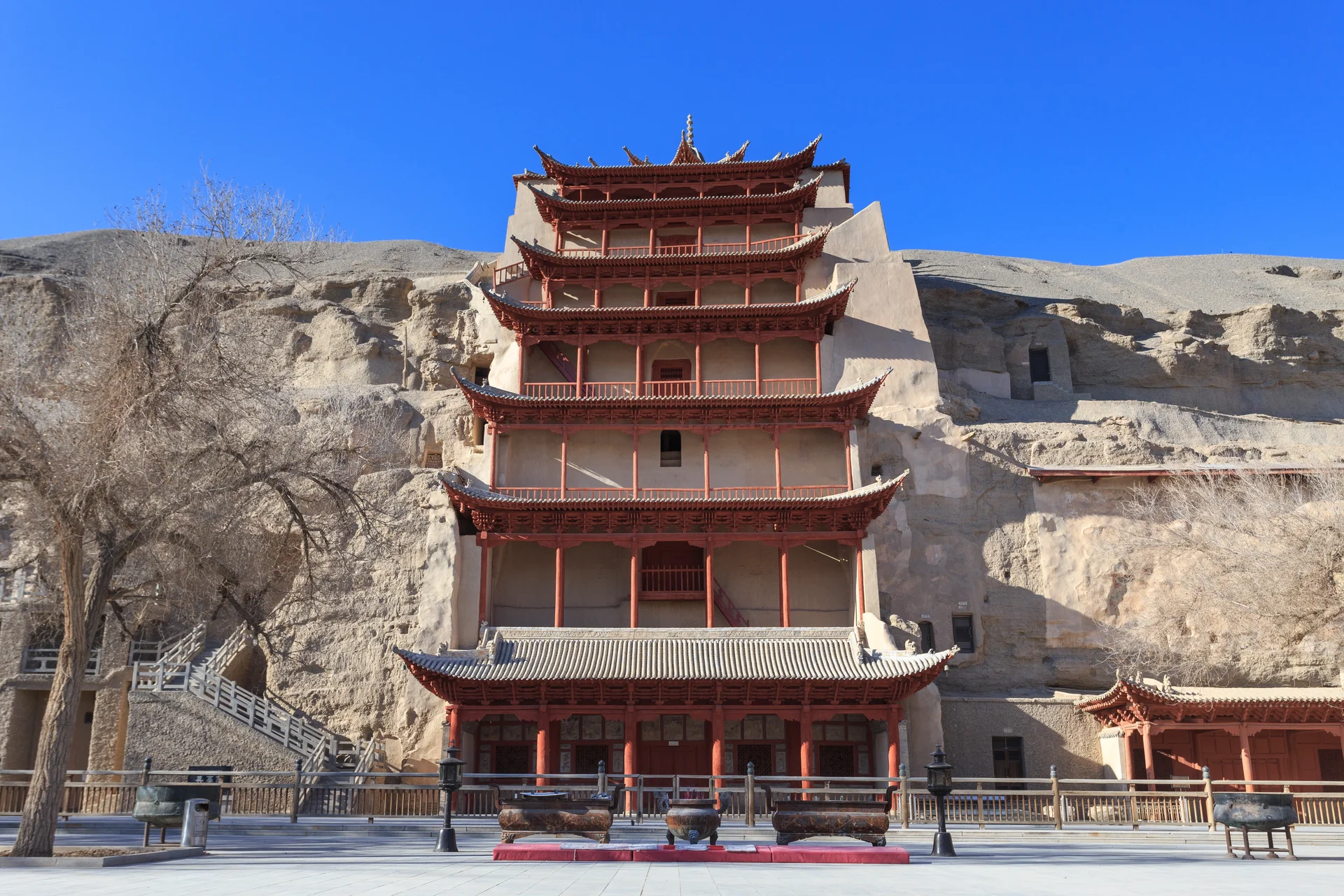
Amidst this renewed chaos, Tuoba Gui - The founding emperor (Daowu) of the Northern Wei dynasty, who unified the nomadic Xianbei tribes and laid the foundation for the conquest of North China., a descendant of the royalty of the state of Dai that had been destroyed by Former Qin, was gathering strength in the far north. Following the collapse of the Qin empire, he rallied his people and successfully restored his clan's territory, founding the Northern Wei dynasty - Northern Wei was established by the Tuoba clan of the Xianbei people during the Sixteen Kingdoms period. It successfully unified Northern China under Emperor Taiwu, bringing an end to the chaotic era and ushering in the Northern Dynasties period. According to legend, the ancestors of the Tuoba clan originated from a Great Cave (Gaxian Cave) in the far north, where they lived for generations before migrating south to fulfill their destiny as rulers of the Central Plains. in 386 AD. This marked the birth of the empire that would eventually unify all of Northern China. The Northern Wei steadily built their strength and rose as a formidable rival to the Later Yan, eventually gaining control of the north after a decisive victory at the Battle of Canhe Slope in 395 AD. The ultimate task of unification was finally achieved by Tuoba Gui's grandson, Emperor Taiwu (Tuoba Tao - The third emperor (Taiwu) of Northern Wei, a brilliant military commander who conquered rival states and finally unified Northern China, ending the Sixteen Kingdoms period.), who conquered the last remaining kingdoms, including the Xia, Northern Yan - Northern Yan (407–436 AD) was a direct successor state to Later Yan. It was established when Gao Yun and the Han Chinese general Feng Ba staged a coup against the Later Yan ruler, effectively seizing its remaining eastern territories and population. With its capital at Longcheng in modern Liaoning, it maintained a presence in the northeast. However, facing relentless pressure from the rising Northern Wei dynasty, the state finally fell in 436 AD, and its royal family sought refuge in Goguryeo., and Northern Liang - Northern Liang (397–439 AD) was a state of the Sixteen Kingdoms located in the Hexi Corridor (modern Gansu). Founded by the Lushui Xiongnu under the Juqu clan, it served as a vital bridge for Silk Road trade and a major center of Buddhist learning. The kingdom is famously remembered as the last obstacle to the Northern Wei's unification of Northern China; its fall in 439 AD officially marked the end of the chaotic Sixteen Kingdoms period. The cultural and religious legacy of Northern Liang, including its early temple architecture and scripture translations, profoundly influenced the subsequent dynasties of East Asia.. In 439 AD, the fall of Northern Liang officially brought the 130-year Sixteen Kingdoms - The name 'Sixteen Kingdoms' comes from the 'Five Tribes' (5호) and the 'Sixteen States' (16국) that dominated Northern China between 304 and 439 AD. '5호' (Five Tribes) refers to the Xiongnu, Jie, Xianbei, Di, and Qiang—nomadic peoples who migrated into the Chinese heartland. '16국' (Sixteen Kingdoms) is a traditional number based on the historical record 'Shiliuguo Chunqiu', representing the many short-lived states founded by these tribes and some Han leaders. It was a time of great mixing of cultures and people, though marked by constant warfare. period to a close.