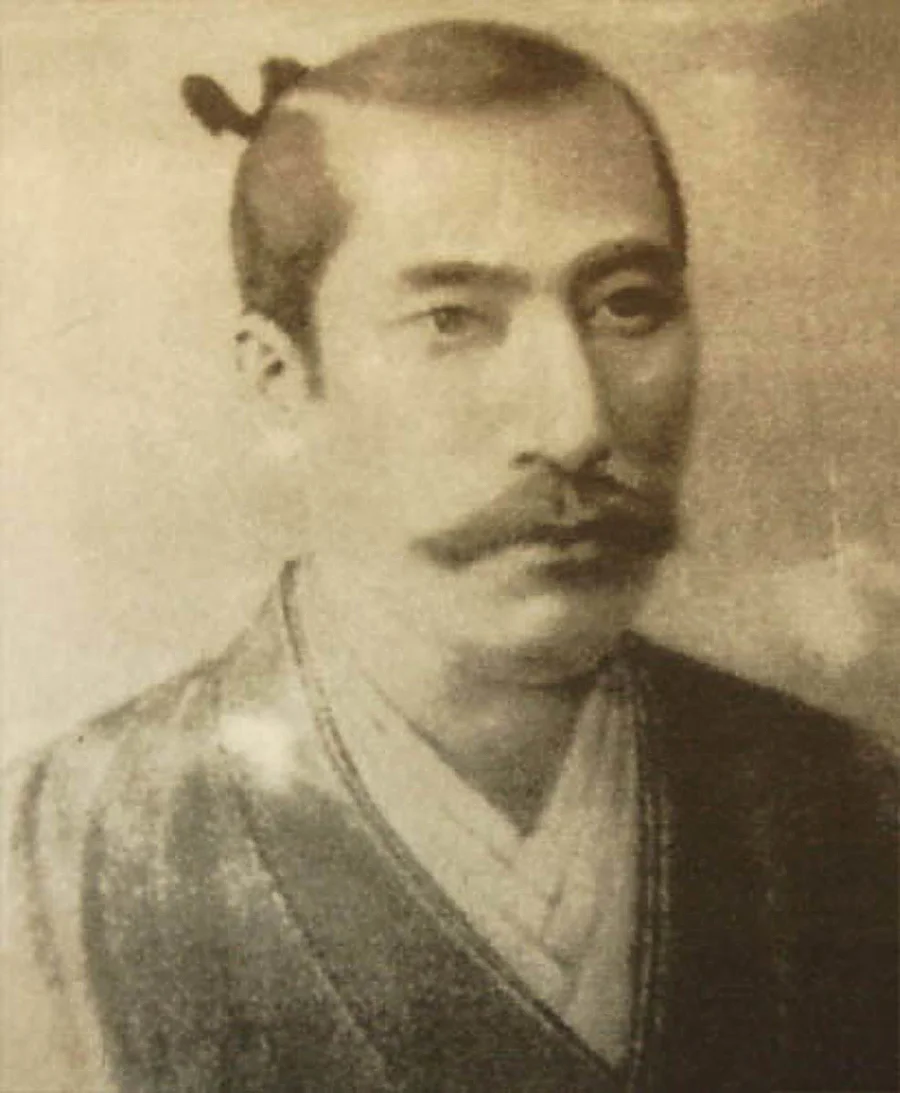
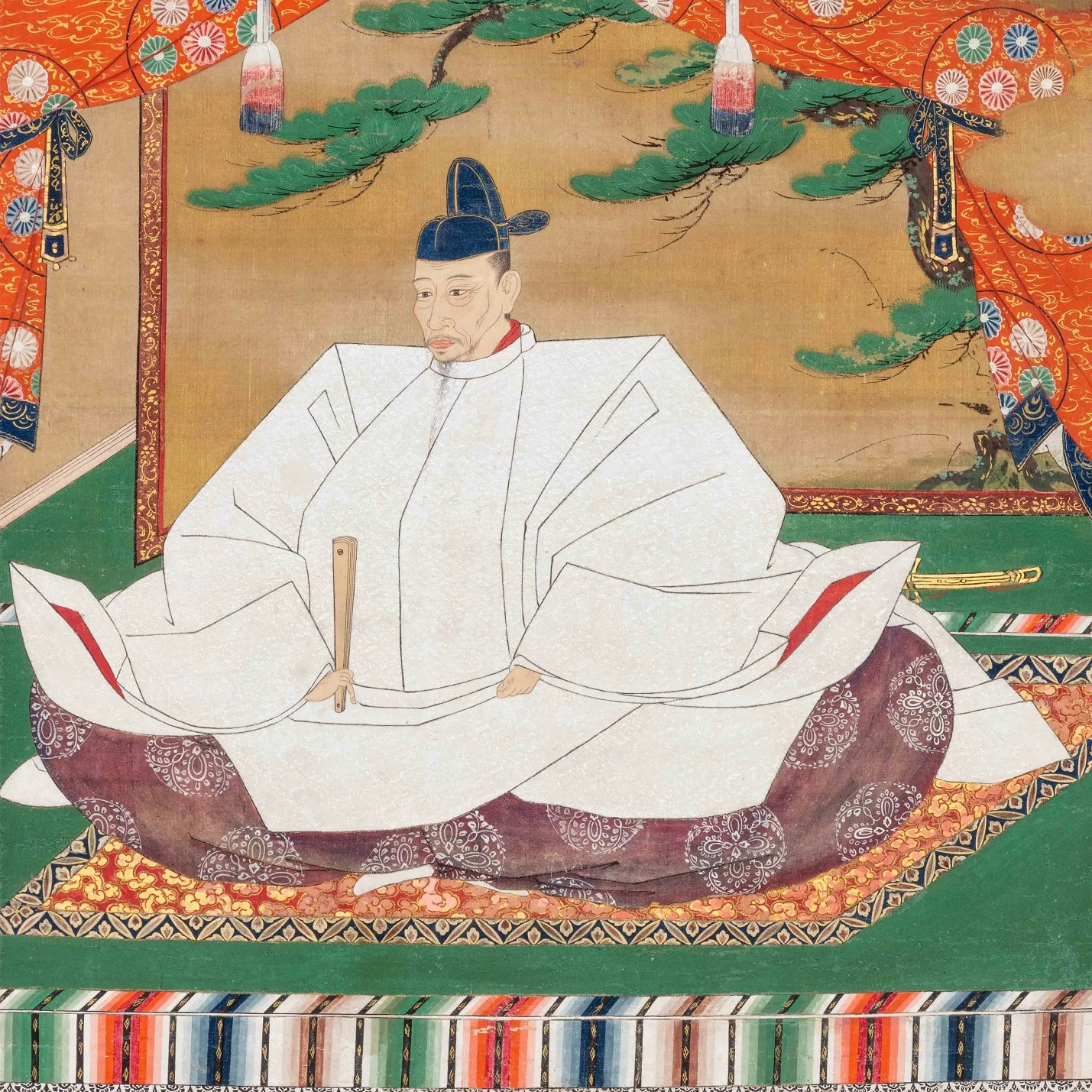
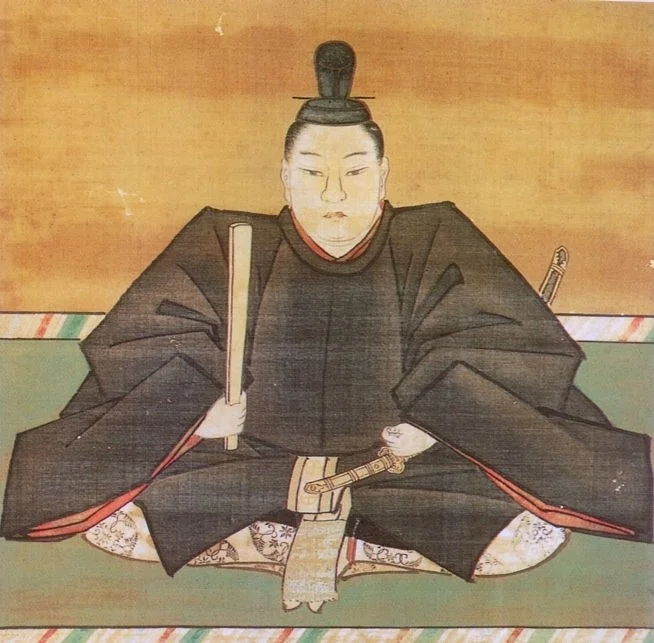
An international war from 1592 to 1598 triggered by Toyotomi Hideyoshi - Japanese ruler who rose from humble origins under Oda Nobunaga to unify Japan and launch the invasions of Korea.'s invasions of Joseon - A Confucian kingdom on the Korean Peninsula founded by Yi Seong-gye in 1392, which ruled for over five centuries and created the Hangeul alphabet. Korea. Despite initial land setbacks, Joseon repelled the invasion through Admiral Yi Sun-sin - Legendary Joseon admiral who achieved 23 consecutive victories without a single defeat, saving Korea at sea using Panokseon and Turtle Ships.'s naval command, guerrilla resistance by Righteous Armies, and a Joseon-Ming allied counteroffensive.
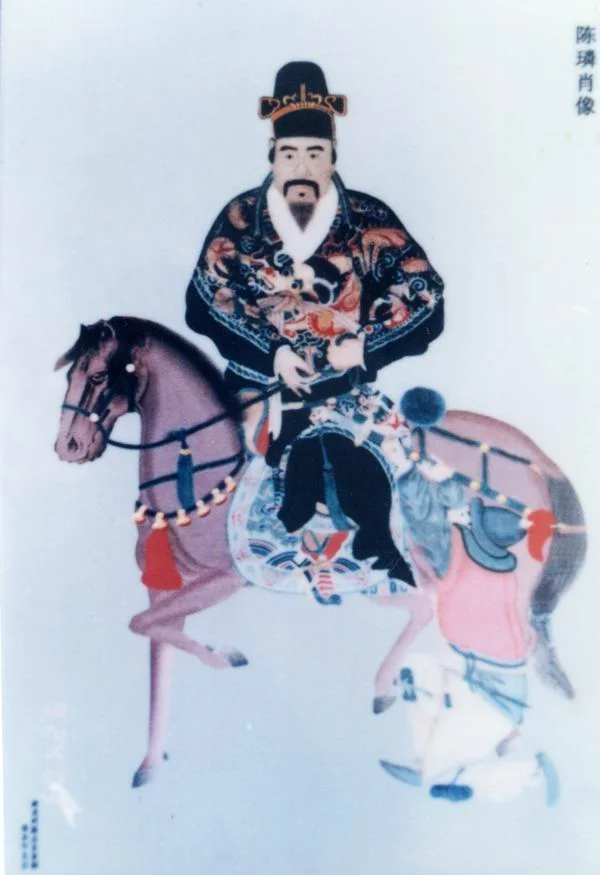
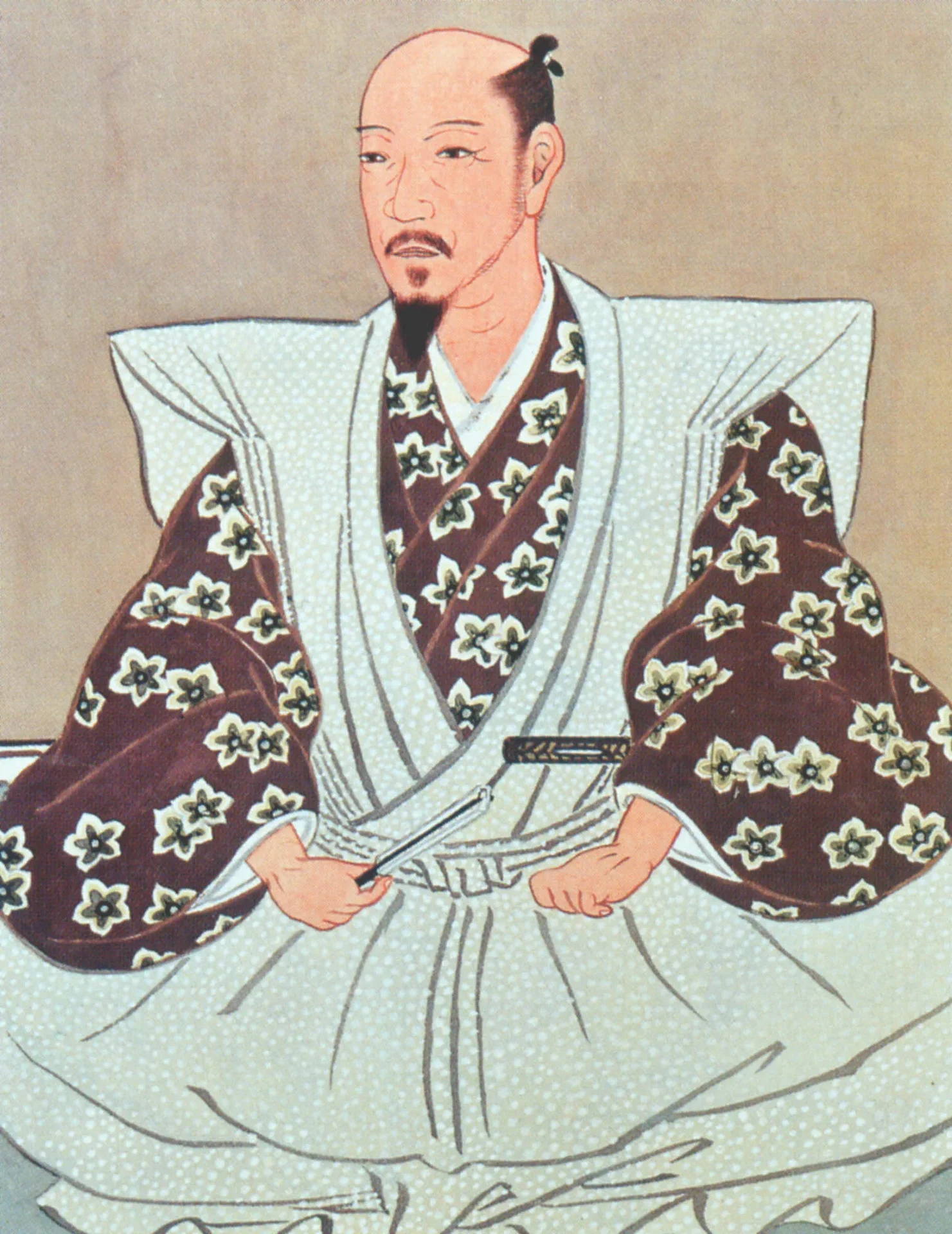
BelligerentsJoseon Dynasty - A Confucian kingdom on the Korean Peninsula founded by Yi Seong-gye in 1392, which ruled for over five centuries and created the Hangeul alphabet., Ming Dynasty - A powerful Han-led empire established by Zhu Yuanzhang in 1368 that constructed the Forbidden City and sent Zheng He's treasure fleets across the Indian Ocean., Japan (Azuchi-Momoyama Period) - The era of Japanese unification under Oda Nobunaga and Toyotomi Hideyoshi that ended the Sengoku period, built grand castles, and launched the Imjin War.
Context & Background
Late 16th Century
East Asian Geopolitics
Japan - The era of Japanese unification under Oda Nobunaga and Toyotomi Hideyoshi that ended the Sengoku period, built grand castles, and launched the Imjin War. reached unification under Toyotomi Hideyoshi - Japanese ruler who rose from humble origins under Oda Nobunaga to unify Japan and launch the invasions of Korea. after a century of civil war. Joseon - A Confucian kingdom on the Korean Peninsula founded by Yi Seong-gye in 1392, which ruled for over five centuries and created the Hangeul alphabet. experienced over two centuries of peace, while Ming China faced internal decay and Jurchen threats.
April 1591
Demands for Safe Passage
Hideyoshi demanded safe passage through Joseon to conquer Ming China (Jeongmyeong Gado), preparing a massive invasion fleet.
May 23, 1592
Outbreak of the Imjin War
Japanese forces launched a surprise landing at Busan, marking the beginning of the seven-year war.
The Narrative
In May 1592, Toyotomi Hideyoshi - Japanese ruler who rose from humble origins under Oda Nobunaga to unify Japan and launch the invasions of Korea. launched a full-scale invasion of Joseon - A Confucian kingdom on the Korean Peninsula founded by Yi Seong-gye in 1392, which ruled for over five centuries and created the Hangeul alphabet. with the ambitious goal of conquering Ming China. Armed with matchlock muskets and hardened by decades of civil war, the Japan - The era of Japanese unification under Oda Nobunaga and Toyotomi Hideyoshi that ended the Sengoku period, built grand castles, and launched the Imjin War.ese forces quickly overwhelmed Joseon's land defense lines. Despite desperate defense efforts, such as General Shin Rip - Renowned Joseon general who defeated Jurchen raids in the north and commanded Joseon forces at the Battle of Tangeumdae.'s battle at Tangeumdae - Tangeumdae is a scenic historic site located on a cliff overlooking the South Han River in Chungju, South Korea. Its name literally means 'the terrace where the Gayageum is played,' originating from a famous legend of Ureuk, one of the three legendary musicians of ancient Korea. After fleeing the collapsing Gaya confederacy to Silla, Ureuk climbed this picturesque cliff and plucked his 12-string Gayageum. Legend says the melody was so captivating that birds, fish, and passing travelers would pause in reverence. However, Tangeumdae is also remembered as the tragic battlefield of the 1592 Imjin War. General Shin Rip made a desperate last stand here against invading Japanese forces by forming a 'back-to-the-water' battle line. Heavy rains and muddy terrain neutralized his Joseon cavalry charges against concentrated Japanese matchlock fire. After his army collapsed, Shin Rip leaped into the South Han River, marking a tragic chapter in Korean history. in Chungju, the defense collapsed. King Seonjo - The 14th monarch of the Joseon Dynasty during the Japanese invasion. and the royal court fled north from Hanyang (Seoul) through Gaeseong and Pyongyang to Uiju on the Ming border. Hanyang fell to the invaders within twenty days of the landing.
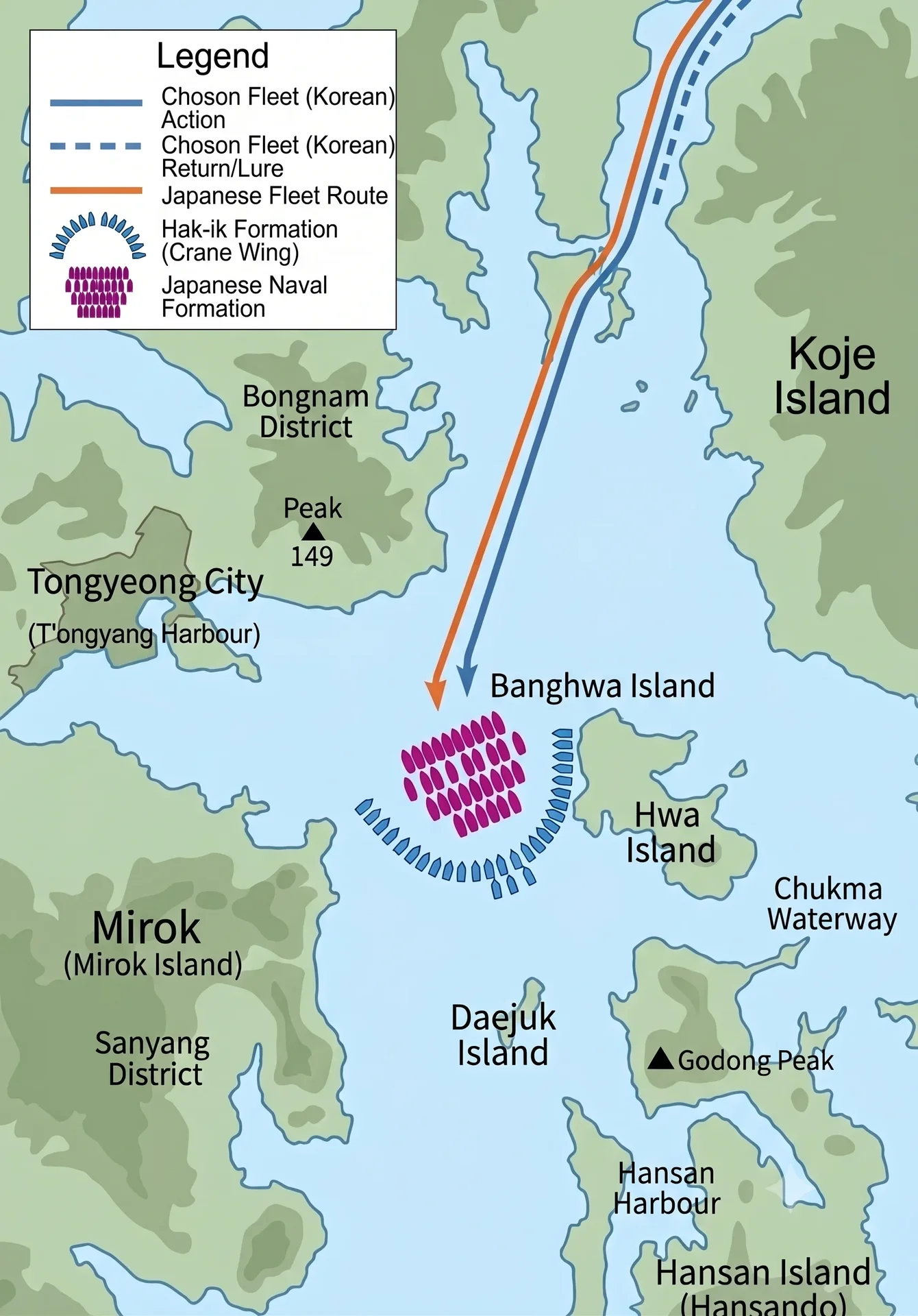
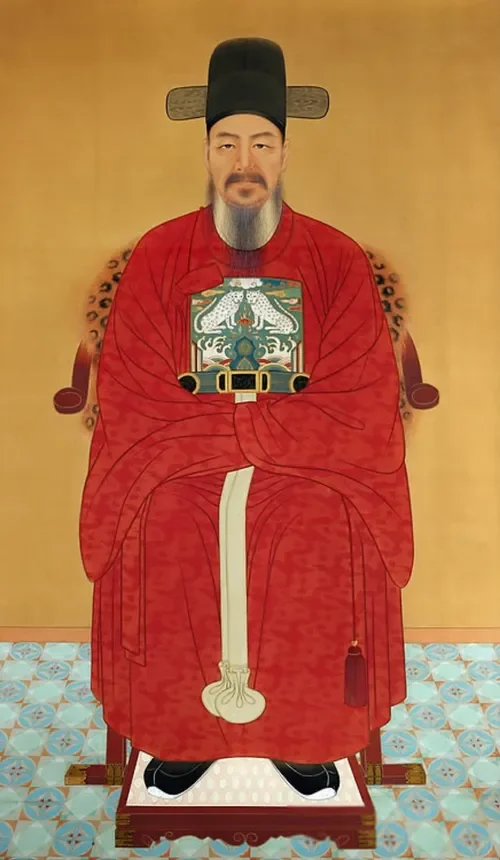
While land forces suffered repeated setbacks, Joseon turned the tide on the sea. The Joseon navy, led by Cholla Left Naval Commander Yi Sun-sin - Legendary Joseon admiral who achieved 23 consecutive victories without a single defeat, saving Korea at sea using Panokseon and Turtle Ships. and Gyeongsang Right Naval Commander Won Gyun - Joseon naval commander who fought alongside Yi Sun-sin in early victories but led the fleet to a catastrophic defeat at Chilcheollyang., achieved consecutive victories at Okpo, Sacheon, and Hansando. Feigning retreat in the narrow Gyonnae-ryang Strait, Yi Sun-sin lured the Japanese fleet into an open-sea ambush. Employing the Crane Wing formation - The Crane Wing Formation (Hakikjin) is a tactical naval and military formation where ships or units spread out in a semi-circular V-shaped or U-shaped arc, resembling a crane unfolding its wings. Famous for its decisive use by Admiral Yi Sun-sin at the Battle of Hansando, a small decoy squadron enticed the enemy fleet into open water, after which the main fleet deployed its wings to surround and concentrate firepower on the enemy's front and flanks. with heavily timbered Panokseon warship - Panokseon was the main multi-deck warship used by the Joseon Navy during the late 16th century and the Imjin War. Designed with an elevated upper deck (Panok) over the main rowing deck, it allowed rowers to operate safely below while gunners and archers fired heavy cannons and arrows from above. Its sturdy pine timber construction and U-shaped flat hull provided exceptional stability and maneuvering agility in turbulent coastal waters, enabling heavy cannon broadsides and ramming tactics against lighter Japanese vessels.s and iron-roofed Turtle Ships (Geobukseon), he destroyed the main Japanese naval forces at Hansando . This naval campaign severed Japan's maritime supply lines, leaving Japanese armies on land short of provisions and reinforcements.
The Battle of Hansando: The Joseon navy lures the Japanese fleet into an open-sea ambush, destroying it with the Crane Wing formation.
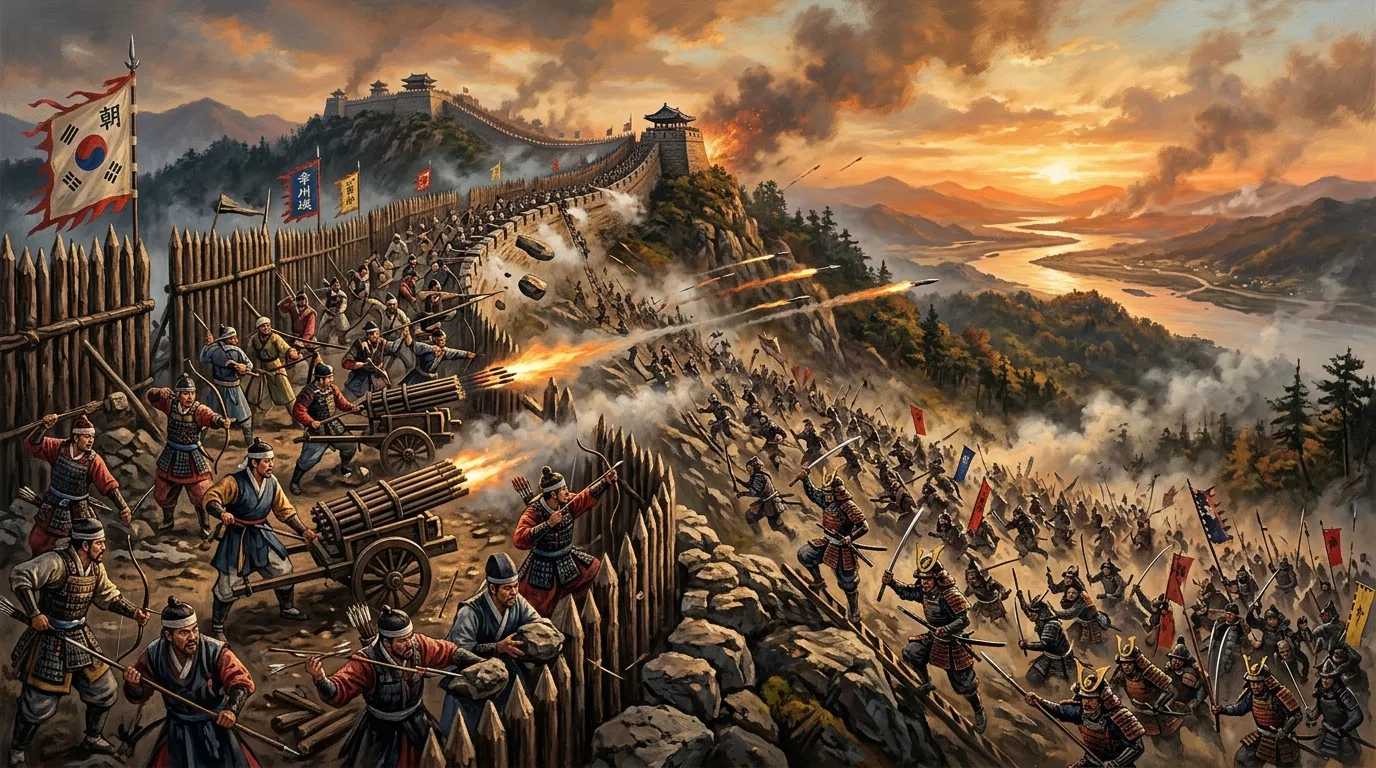
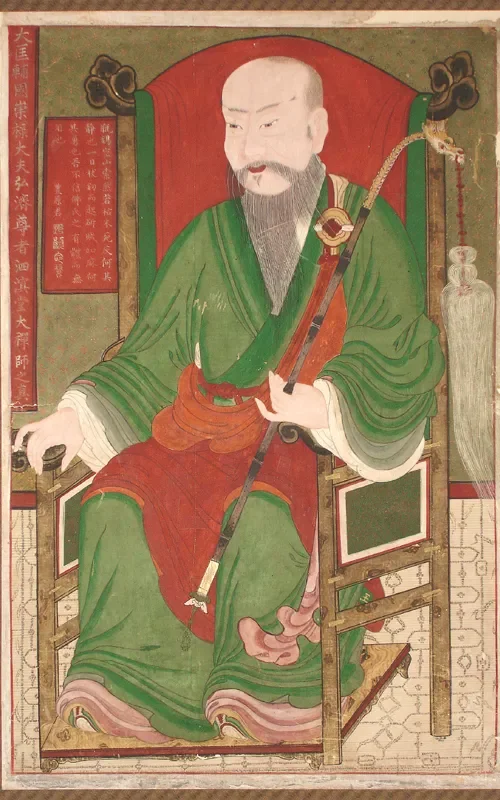
Complemented by naval victories, irregular civilian militias (Uibyeong) like Gwak Jae-u - First Righteous Army commander who waged effective guerrilla warfare wearing red robes, earning the moniker Red-Robe General. and Samyeongdaesa - Eminent Buddhist monk commander who led warrior-monk militias in land battles and later negotiated the repatriation of over 3,000 Korean captives from Japan. disrupted Japanese logistics. In October 1592, General Kim Si-min led 3,800 soldiers and civilians in the 1st Siege of Jinju , using firearms and night torch tactics with outside guerilla forces to defeat 25,000 Japanese troops and protect Jeolla province. Concurrently, Ming forces joined Joseon, recapturing Pyongyang in early 1593. When General Gwon Yul - Supreme Commander of Joseon land forces who achieved decisive victories at Ichi and Haengju. entrenched his forces at Haengju Mountain Fortress right outside Hanyang to threaten Japanese logistics, the Japanese army launched a massive assault but was crushed in the Battle of Haengju. Retracting to the southern coast, Japanese forces launched the 2nd Siege of Jinju with 93,000 troops in June 1593. Though Jinju fell after 9 days of fierce defense by 6,000 defenders and tragic sacrifices (including the legend of Nongae - A legendary patriotic woman who, following the fall of Jinju Castle in 1593, lured a high-ranking Japanese commander to the Uiam Rock along the Nam River and sacrificed her life by leaping into the river with him.), heavy casualties forced Japan to abandon all plans to conquer Jeolla.
The Battle of Haengju: Joseon defenders hold the mountain fortress against a much larger Japanese force.
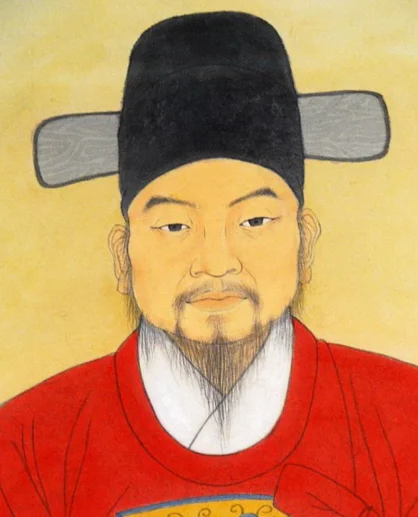
After retreating from Hanyang, Japanese forces built coastal fortresses (Waeseong) along the southern coast, leading to a stalemate. Ming China and Japan conducted peace talks, but negotiations collapsed by 1596. Meanwhile, Admiral Yi Sun-sin, who commanded immense respect from the people, faced deep political mistrust from King Seonjo. Within the court, political rivalries flared between factions supporting Yi and those advocating for Won Gyun, accompanied by repeated accusations against Yi. Exploiting this, Japanese agent Yoshira - Japanese intelligence agent under So Yoshitoshi who delivered counter-intelligence to the Joseon court prior to the 1597 re-invasion. leaked false intelligence targeting Kato - One of Toyotomi Hideyoshi's Seven Spears of Shizugatake, who led the Japanese 2nd Division into Hamgyong Province during the Imjin War and commanded forces at the Siege of Ulsan.. When Yi acted with strategic caution due to trap concerns, King Seonjo and the court used it as a trigger to dismiss and imprison him for disobeying royal orders. Amid royal suspicion and political friction, Won Gyun was appointed as Supreme Naval Commander to replace Yi.
In 1597, as the Jeongyu Jaeran - Jeongyu Jaeran refers to the second Japanese invasion phase of 1597 within the broader seven-year Imjin War (1592–1598). After four years of peace negotiations broke down between Ming China and Japan, Toyotomi Hideyoshi ordered a second full-scale offensive. The conflict ended in 1598 following Hideyoshi's death and the allied victory at Noryang. began, newly appointed Supreme Naval Commander Won Gyun warned of the dangers of a sole naval advance on Busan and requested joint army-navy support. However, King Seonjo, the court, and Commander-in-Chief Gwon Yul strongly demanded an immediate offensive, even subjecting Won to flogging. Trapped in a dilemma, Won set sail with the entire fleet, but his forces grew exhausted after being led on a chase to Busan and ambushed at Gadeokdo. Retreating to Chilcheollyang Strait , the exhausted Joseon fleet was ambushed and encircled at night by Japanese naval forces, resulting in a crushing defeat, the loss of most warships, and Won Gyun's death.
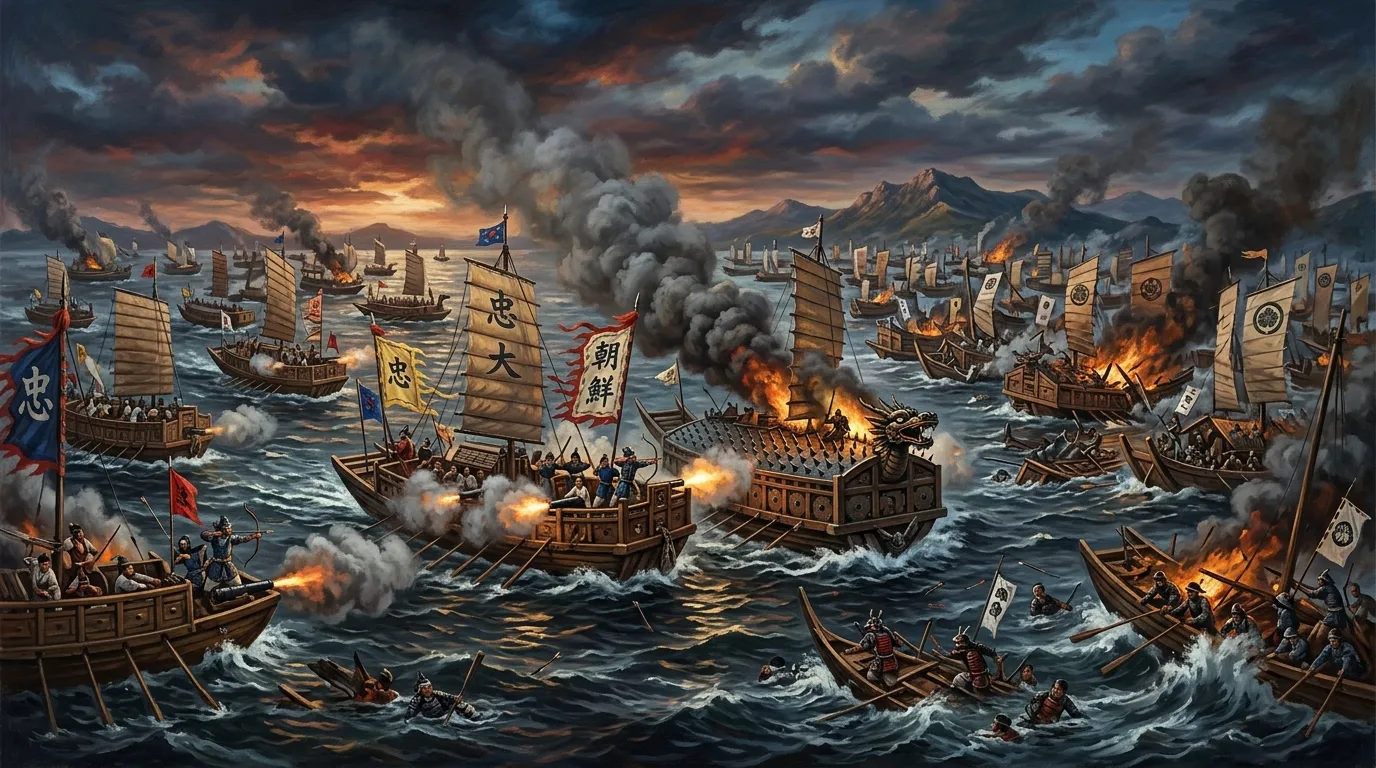
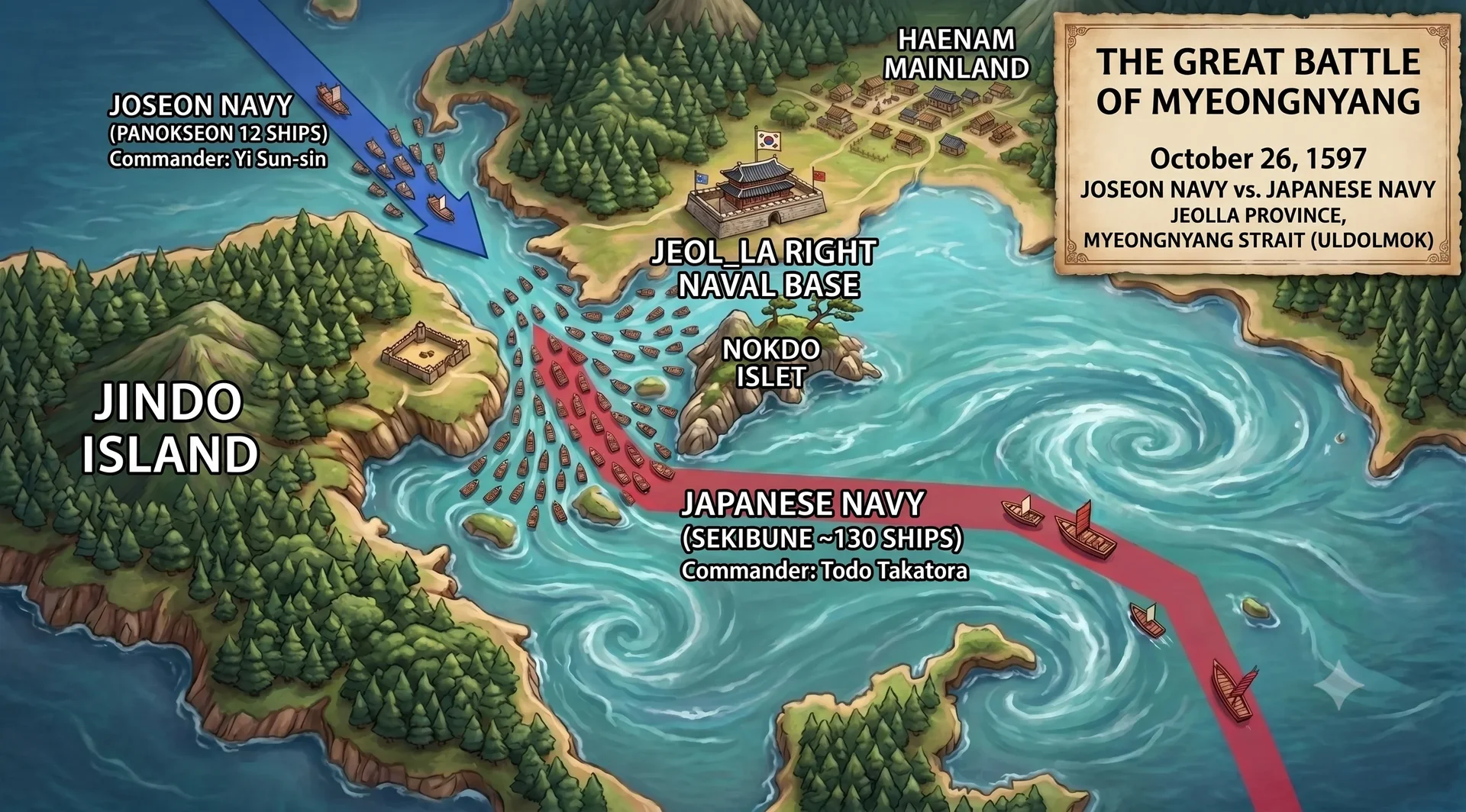
When the Joseon Navy faced complete destruction after the Chilcheollyang disaster, the court reinstated Admiral Yi Sun-sin, who had been serving in white as a common soldier, to Supreme Naval Commander. Upon his reinstatement, only 12 (later 13) Panokseon warships remained. Overconfident after Chilcheollyang and underestimating the reduced Joseon navy, the Japanese fleet advanced 133 warships into the narrow Myeongnyang Strait to secure a maritime supply route to the Yellow Sea. Exploiting their advance, Yi strategically arranged his ships in line across the narrow channel and utilized the roaring tidal currents and whirlpools to win a miraculous victory at the Battle of Myeongnyang .
The Battle of Myeongnyang: Admiral Yi Sun-sin defeats 133 Japanese warships with just 13 Panokseon vessels.
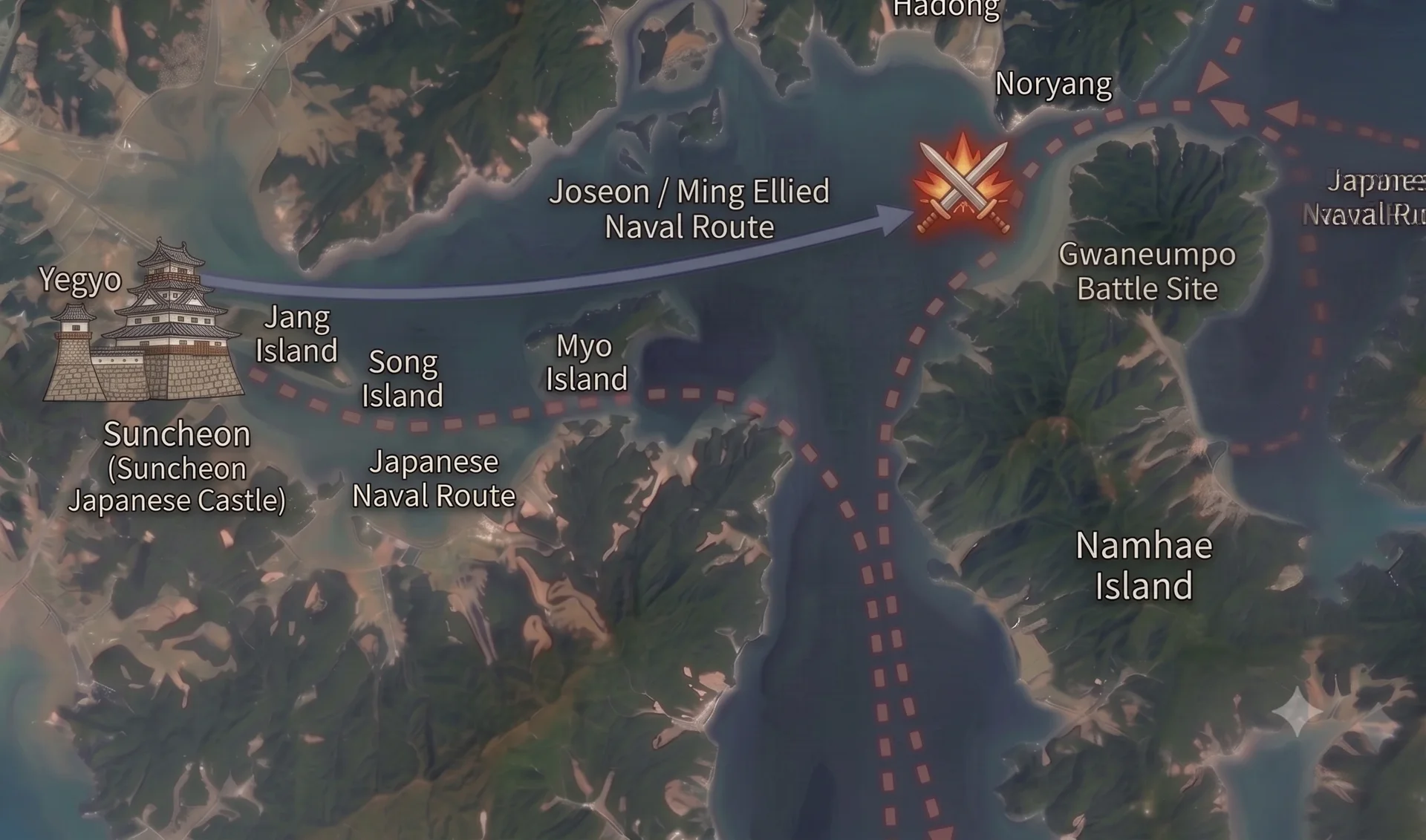
Following Hideyoshi's death in 1598, Japanese forces sought to evacuate. The joint Joseon-Ming fleet feigned an attack on Konishi Yukinaga - Christian daimyo and commander of the Japanese 1st Division vanguard who led the invasion of Busan and Pyongyang, and led peace negotiations with Ming China.'s troops at Suncheon Fortress while laying an ambush at Noryang Strait. When Shimazu Yoshihiro - Daimyo of Satsuma renowned for his aggressive tactics who commanded Japanese forces at Sacheon and led the relief fleet at the Battle of Noryang.'s relief fleet arrived, the allies crushed them at the Battle of Noryang . Admiral Yi Sun-sin fell in action during the pursuit, bringing the seven-year war to a close.
The Battle of Noryang: Feigning an attack on Suncheon Fortress, the allied fleet ambushes and defeats Japan's relief forces at Noryang.
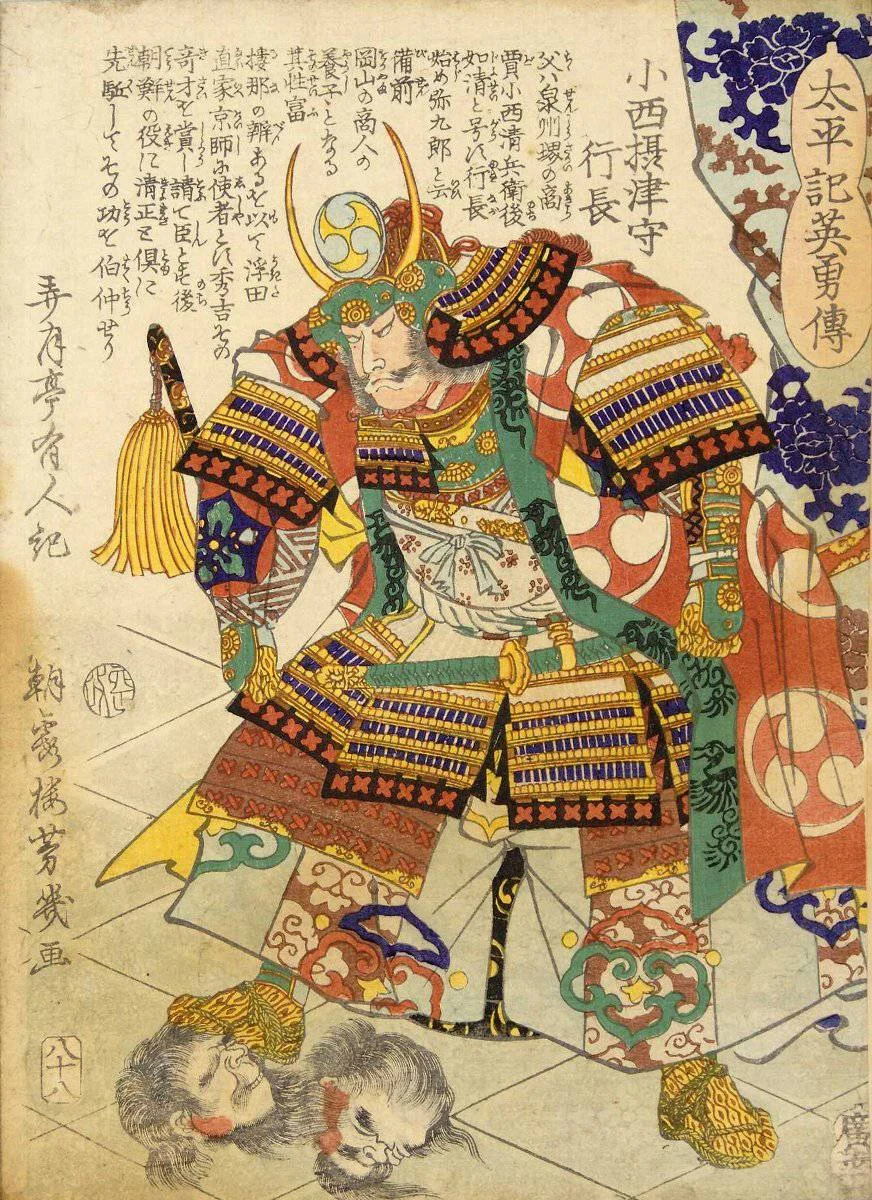
On May 23, 1592, Konishi Yukinaga - Christian daimyo and commander of the Japanese 1st Division vanguard who led the invasion of Busan and Pyongyang, and led peace negotiations with Ming China.'s 1st Division of the Japan - The era of Japanese unification under Oda Nobunaga and Toyotomi Hideyoshi that ended the Sengoku period, built grand castles, and launched the Imjin War.ese invasion fleet made a surprise landing at Busan. Commander Jeong Bal of Busan진 and Governor Song Sang-hyeon of Dongnae put up desperate resistance, refusing Hideyoshi - Japanese ruler who rose from humble origins under Oda Nobunaga to unify Japan and launch the invasions of Korea.'s demands to yield passage to Ming China. However, facing overwhelming musket firepower and numbers, both garrisons were overwhelmed and killed. The fall of these key coastal strongholds breached Joseon - A Confucian kingdom on the Korean Peninsula founded by Yi Seong-gye in 1392, which ruled for over five centuries and created the Hangeul alphabet.'s primary defensive line, allowing Japanese forces to launch an unchecked rapid advance north toward Hanyang.
General Shin Rip - Renowned Joseon general who defeated Jurchen raids in the north and commanded Joseon forces at the Battle of Tangeumdae. positioned Joseon's elite cavalry on the flat plains of Tangeumdae - Tangeumdae is a scenic historic site located on a cliff overlooking the South Han River in Chungju, South Korea. Its name literally means 'the terrace where the Gayageum is played,' originating from a famous legend of Ureuk, one of the three legendary musicians of ancient Korea. After fleeing the collapsing Gaya confederacy to Silla, Ureuk climbed this picturesque cliff and plucked his 12-string Gayageum. Legend says the melody was so captivating that birds, fish, and passing travelers would pause in reverence. However, Tangeumdae is also remembered as the tragic battlefield of the 1592 Imjin War. General Shin Rip made a desperate last stand here against invading Japanese forces by forming a 'back-to-the-water' battle line. Heavy rains and muddy terrain neutralized his Joseon cavalry charges against concentrated Japanese matchlock fire. After his army collapsed, Shin Rip leaped into the South Han River, marking a tragic chapter in Korean history. in Chungju, backing into the Namhan River to create a desperate last stand. However, recent heavy rains turned the battlefield into thick mud, neutralizing the mobility of the cavalry charges. Konishi Yukinaga's Japanese forces deployed matchlock musketeers in disciplined line formations, ambushing and encircling Shin Rip's troops. The annihilation of Joseon's core land army left the capital, Hanyang, entirely undefended, forcing King Seonjo - The 14th monarch of the Joseon Dynasty during the Japanese invasion. to evacuate north.
In August 1592, the Joseon navy secured control of the southern seas. Admiral Yi Sun-sin - Legendary Joseon admiral who achieved 23 consecutive victories without a single defeat, saving Korea at sea using Panokseon and Turtle Ships. deployed decoy warships to feign retreat, luring Wakizaka Yasuharu's fleet out of the narrow Gyonnae-ryang Strait. As the enemy pursued into the open waters off Hansan Island, the Joseon fleet formed the semi-circular 'Crane Wing' ambush formation. Turtle Ships charged into the enemy center to cause chaos, while Panokseon - Panokseon was the main multi-deck warship used by the Joseon Navy during the late 16th century and the Imjin War. Designed with an elevated upper deck (Panok) over the main rowing deck, it allowed rowers to operate safely below while gunners and archers fired heavy cannons and arrows from above. Its sturdy pine timber construction and U-shaped flat hull provided exceptional stability and maneuvering agility in turbulent coastal waters, enabling heavy cannon broadsides and ramming tactics against lighter Japanese vessels. broadsides annihilated 59 out of 70 Japanese vessels.
In February 1593, a combined allied force of 40,000 Ming troops under Li Rusong and 10,000 Joseon troops, including Samyeongdaesa - Eminent Buddhist monk commander who led warrior-monk militias in land battles and later negotiated the repatriation of over 3,000 Korean captives from Japan.'s monk-warriors, launched a massive siege to recapture Pyongyang from Konishi Yukinaga. The allies unleashed overwhelming artillery bombardments using Ming heavy cannons (Folangji) and Joseon rocket arrows (Singijeon), breaching the city gates and defensive earthen walls. After suffering heavy casualties, the surviving Japanese forces retreated south toward Hanyang, shifting the strategic initiative of the war to the Joseon-Ming alliance.
In October 1592, Commander Kim Si-min led 3,800 soldiers and local civilians in defending Jinju Castle against 25,000 Japanese troops. Defenders utilized cannons and explosive bombs while outside Righteous Armies under Gwak Jae-u - First Righteous Army commander who waged effective guerrilla warfare wearing red robes, earning the moniker Red-Robe General. launched night torch raids to harass the enemy rear. After 6 days of intense combat, over 10,000 Japanese casualties were inflicted, successfully protecting the vital Jeolla grain region.
In March 1593, General Gwon Yul - Supreme Commander of Joseon land forces who achieved decisive victories at Ichi and Haengju. led 2,300 soldiers, monk-warriors, and local civilians in defending the wooden palisades of Haengju Mountain Fortress. A massive Japanese force of 30,000 commanded by Ukita Hideie and Kato Kiyomasa - One of Toyotomi Hideyoshi's Seven Spears of Shizugatake, who led the Japanese 2nd Division into Hamgyong Province during the Imjin War and commanded forces at the Siege of Ulsan. launched seven fierce wave assaults. The defenders utilized advanced gunpowder weapons like rocket launchers (Singijeon) and mortar shells (Bigyeok Jincheonroe), while women gathered rocks in their aprons to drop on attackers. Suffering over 10,000 casualties, the Japanese army was forced to abandon Hanyang and fall back to the southern coast.
In June 1593, Hideyoshi dispatched a massive army of 93,000 troops to attack Jinju in retaliation. A Joseon force of 6,000 under Kim Cheon-il and Choi Gyeong-hoe fought desperately for 9 days before the castle fell. Despite the tragic destruction, including the famous legend of Nongae - A legendary patriotic woman who, following the fall of Jinju Castle in 1593, lured a high-ranking Japanese commander to the Uiam Rock along the Nam River and sacrificed her life by leaping into the river with him. leaping into the Nam River with a Japanese officer, Japan suffered crippling losses and lost the momentum to advance into Jeolla.
In August 1597, the Joseon Navy suffered a major defeat. Supreme Commander Won Gyun - Joseon naval commander who fought alongside Yi Sun-sin in early victories but led the fleet to a catastrophic defeat at Chilcheollyang. warned of the risks of a solo attack on Busan, but was forced into battle under heavy pressure and flogging by King Seonjo and Gwon Yul. Exhausted from naval chases and enemy ambushes at Gadeokdo, the Joseon fleet retreated to Chilcheollyang Strait. Taking advantage of their poor guard, Japanese naval forces encircled Chilcheollyang and launched a surprise night attack. Over 160 warships, including Turtle Ships and Panokseon, were destroyed, and Won Gyun fell in action.
In October 1597, Reinstated Admiral Yi Sun-sin achieved a miraculous victory at Myeongnyang Strait with just 13 Panokseon warships against a massive Japanese fleet of 133 vessels. Knowing he was heavily outnumbered, Yi strategically positioned his ships at the narrow, rocky Myeongnyang Strait, exploiting its roaring tidal currents and whirlpools. As the tide turned against the advancing Japanese fleet, Yi's ships launched concentrated broadsides, sinking 31 enemy vessels and killing Japanese Commander Kurushima Michifusa. This legendary triumph restored Joseon's naval power and blocked Japan's advance toward the capital.
In December 1598, the joint Joseon-Ming fleet feigned an attack on Konishi Yukinaga's forces trapped at Suncheon Fortress while lying in ambush at Noryang Strait. As Shimazu Yoshihiro - Daimyo of Satsuma renowned for his aggressive tactics who commanded Japanese forces at Sacheon and led the relief fleet at the Battle of Noryang.'s relief fleet of 500 Japanese vessels entered the narrow strait, the allied fleet launched a night surprise bombardment with fire tactics. Encircling the enemy, the allies destroyed and captured over 300 Japanese ships, crushing the relief fleet. Admiral Yi Sun-sin fell in action during the pursuit, bringing the seven-year Imjin War to a close.
ResultJoseon-Ming Allied Victory
Art & Heritage
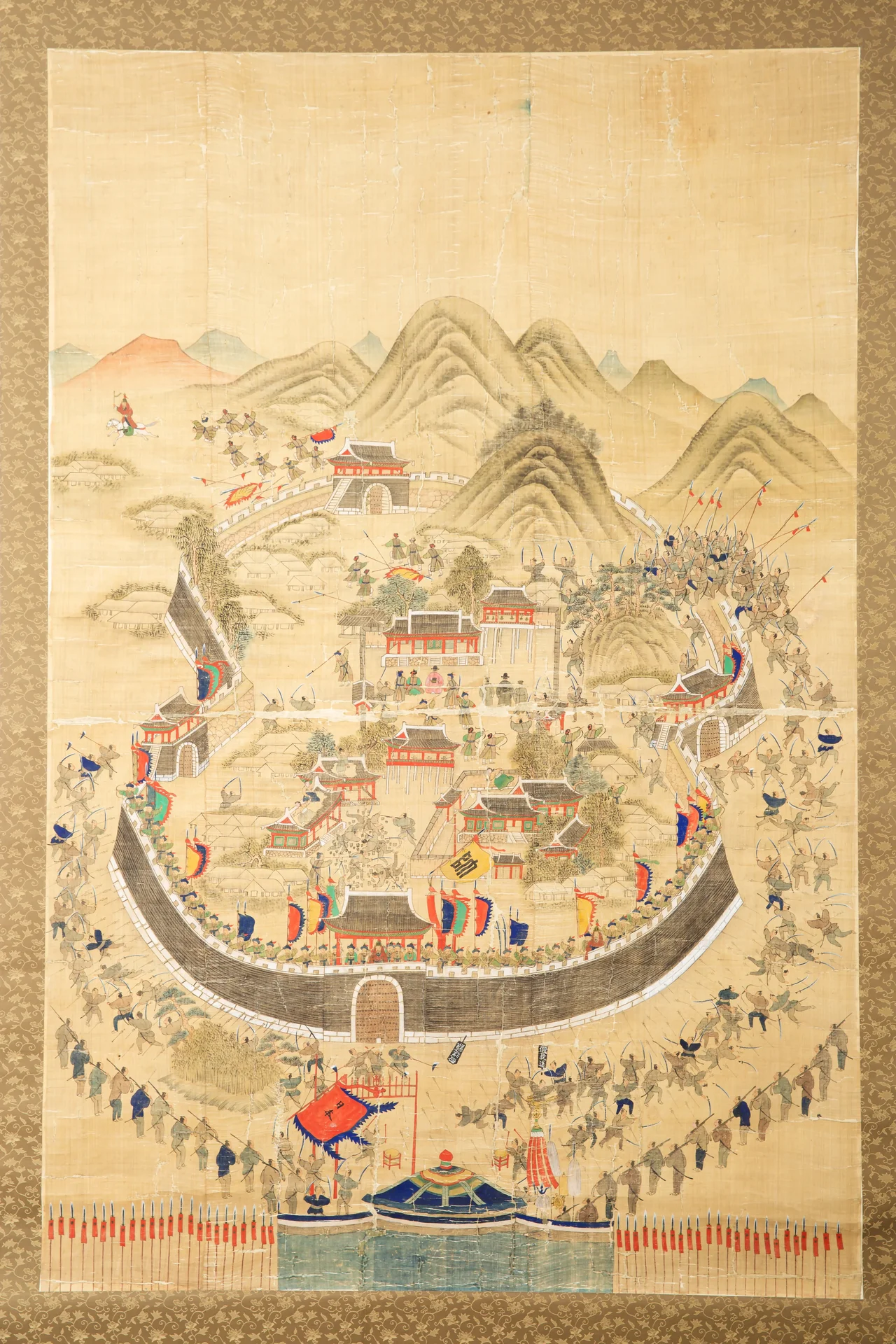
Dongnae Fortress Siege Scroll
Unknown, 18th Century
🏛️ Jinju National Museum
A scroll painting depicting the heroic defense and fall of Dongnae Fortress against the invading Japanese forces.
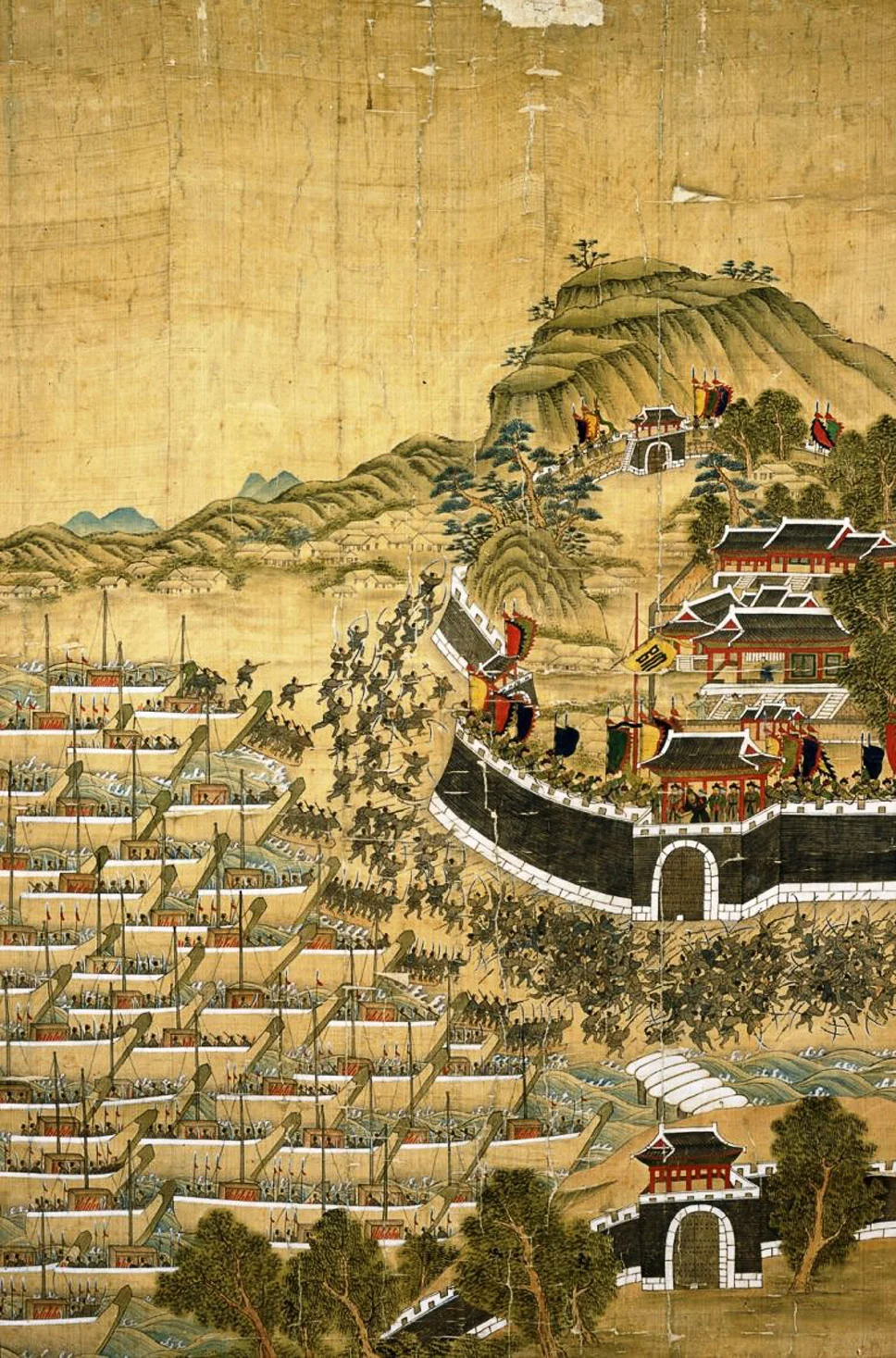
Battle of Busanjin Scroll
Unknown, c. 1760
🏛️ Jinju National Museum
A vivid depiction of the battle at Busanjin fortress, where General Jeong Bal and the garrison fought to the death against the massive first wave of the Japanese invasion.
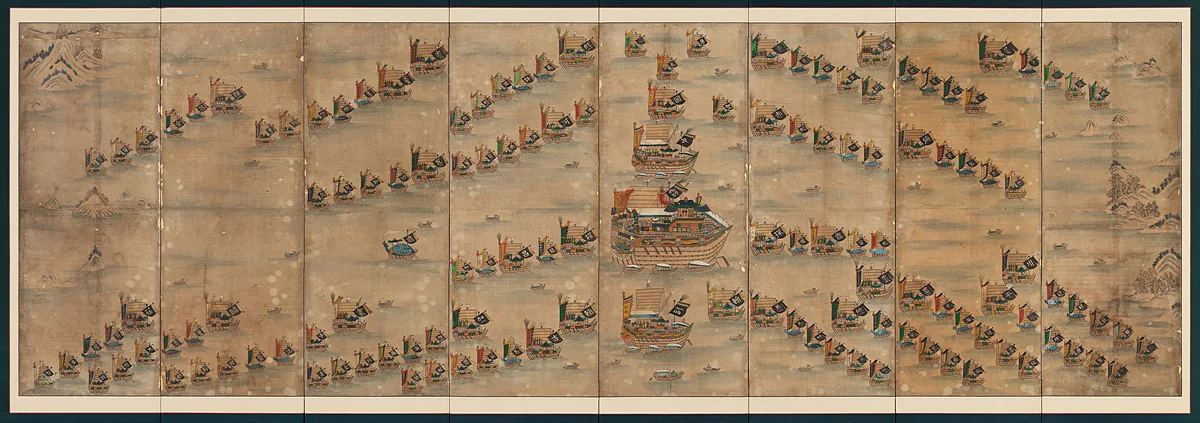
Naval Drill Scroll (Sugun Joryeondo)
Unknown, Late Joseon Dynasty
🏛️ National Maritime Museum
A majestic folding screen showing the massive naval drills of the Joseon fleet, demonstrating the Crane Wing (Hakikjin) formation and the deployment of Turtle Ships and Panokseons.
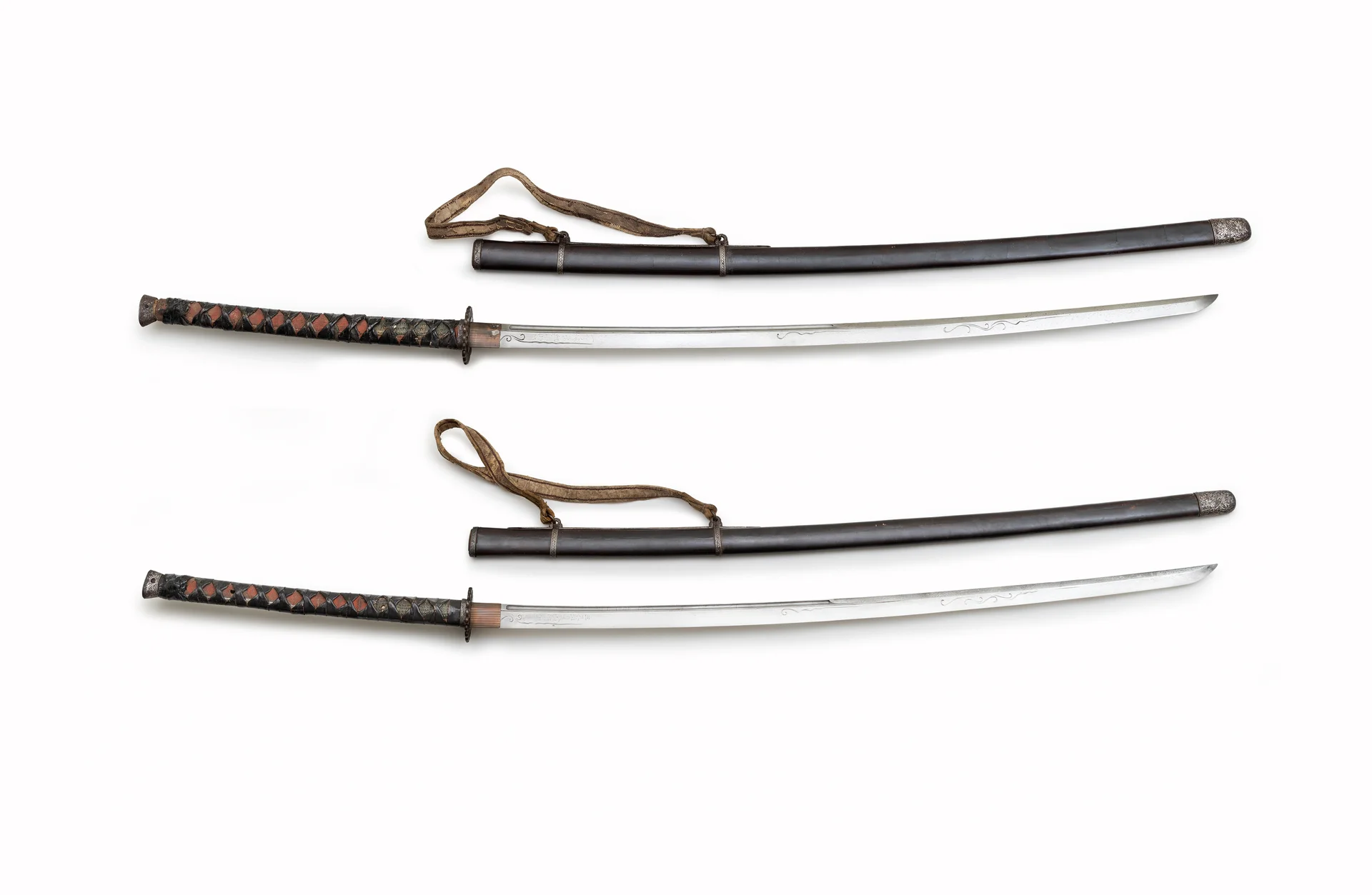
Long Swords of Yi Sun-sin
Swordsmiths Tae-gwi-ryeon and Yi Mu-saeng, 1594
🏛️ Hyeonchungsa Shrine, Asan
A pair of swords nearly two metres long, made for the admiral at his headquarters in Hansando. They were too big to swing in a fight and were kept beside him as symbols of command, each engraved with a line of verse he chose.
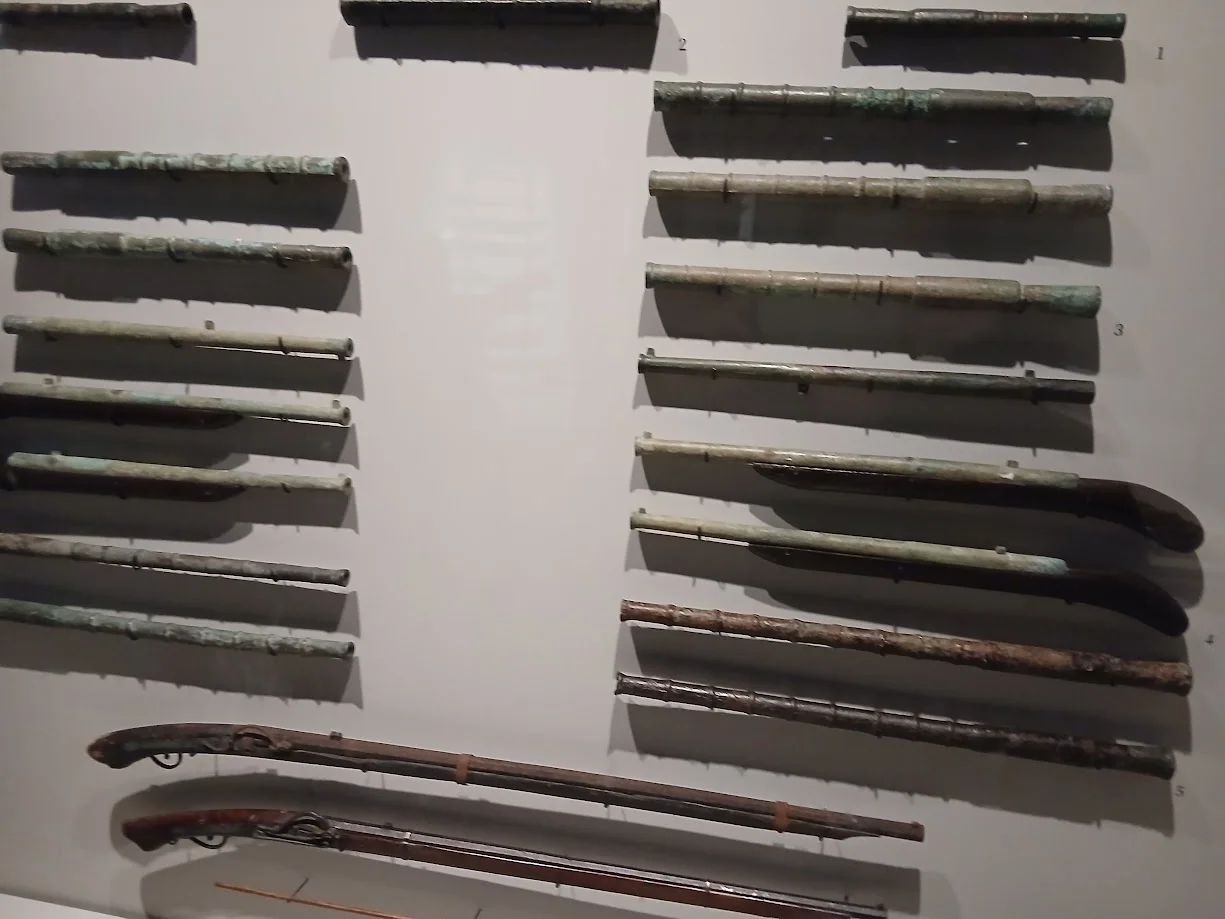
Japanese Matchlock Musket (Jochong)
Japanese gunsmiths, 16th century
🏛️ Jinju National Museum
The matchlock gun that gave the invading armies their edge on land in 1592. A burning cord touched off the powder, so it was slow to reload, but massed volleys could break formations of bowmen at ranges Joseon troops were not prepared for.
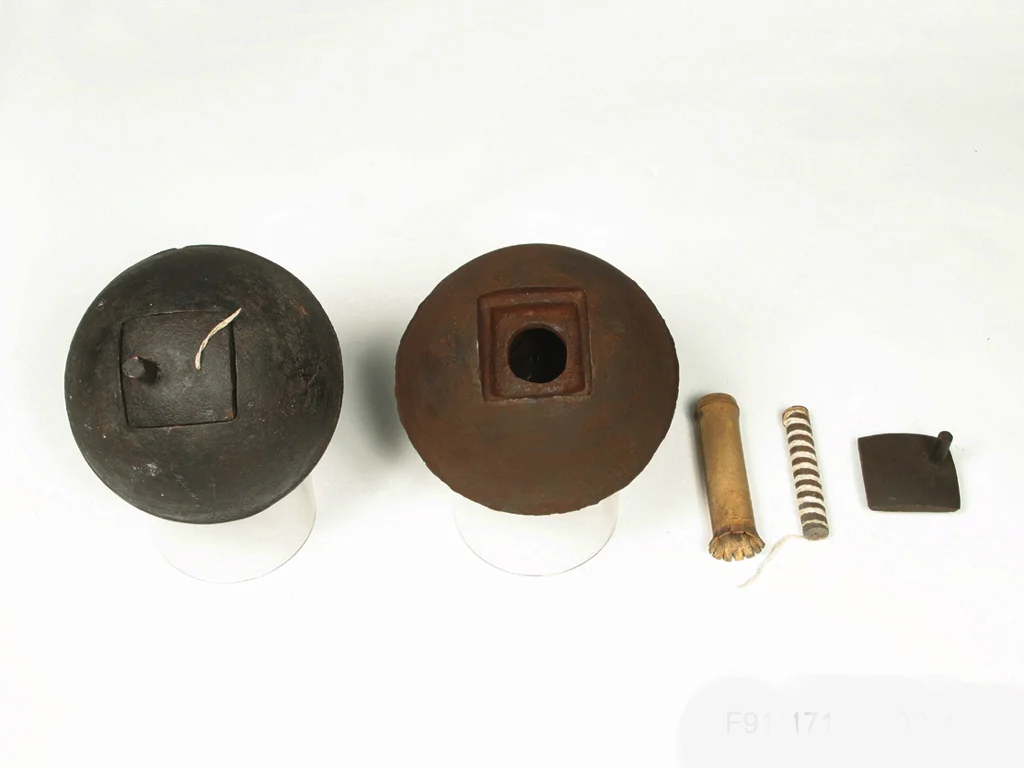
Bigyeokjincheolloe (Timed Exploding Shell)
Yi Jang-son (attributed), 1590s
🏛️ National Museum of Korea / Jinju National Museum
A hollow iron ball packed with gunpowder and metal fragments, with a wooden fuse device inside that delayed the blast. Lobbed into a fort by a mortar, it exploded some time after landing, a weapon the Japanese garrisons had no answer for.
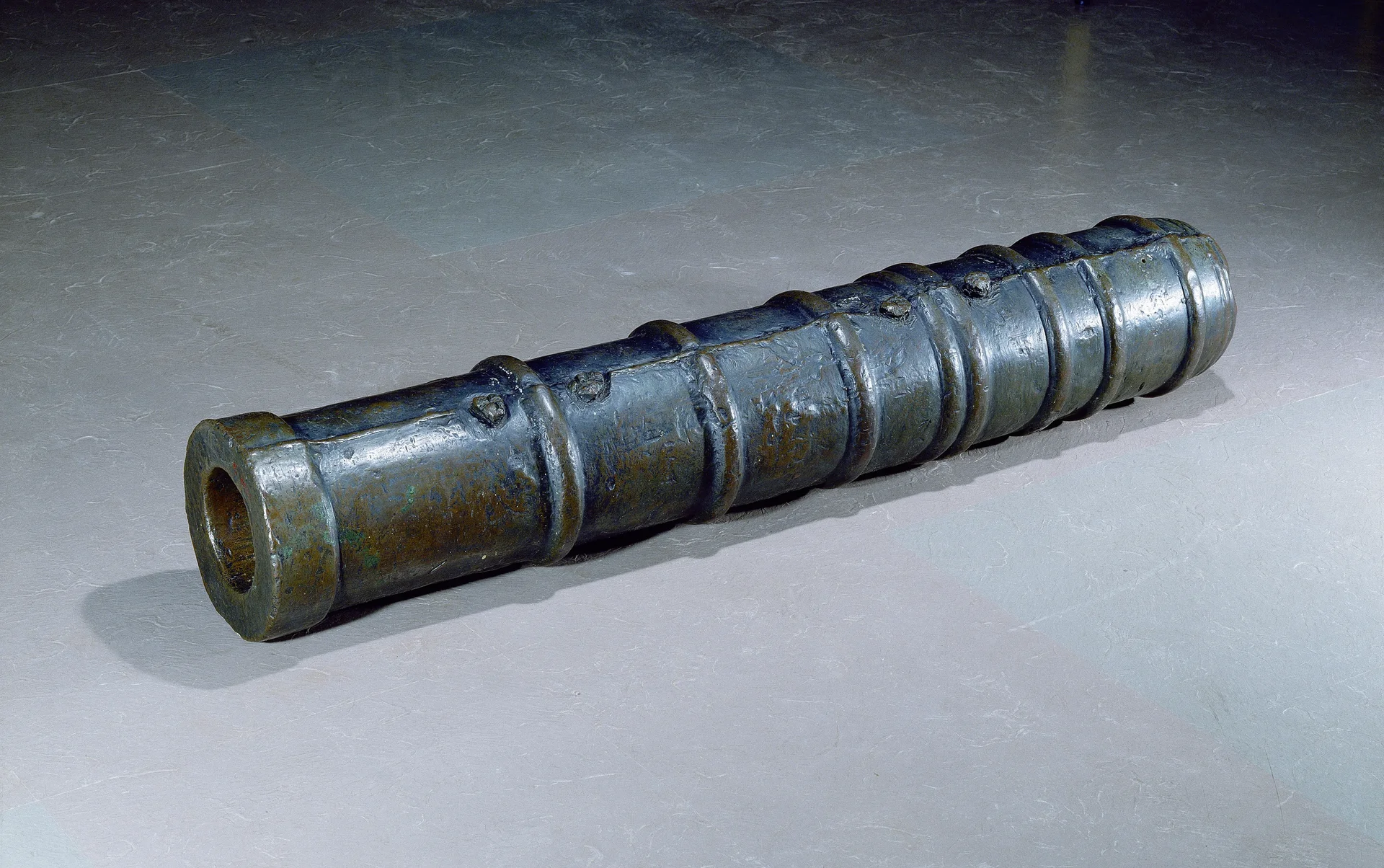
Cheonja Chongtong (Heaven-grade Cannon)
Joseon royal foundries, 16th century
🏛️ Jinju National Museum
The largest of the Joseon bronze cannons, mounted on warships to fire heavy wooden bolts and stone shot. Cannons like this let panokseon ships smash Japanese vessels from a distance instead of letting enemy soldiers board them.
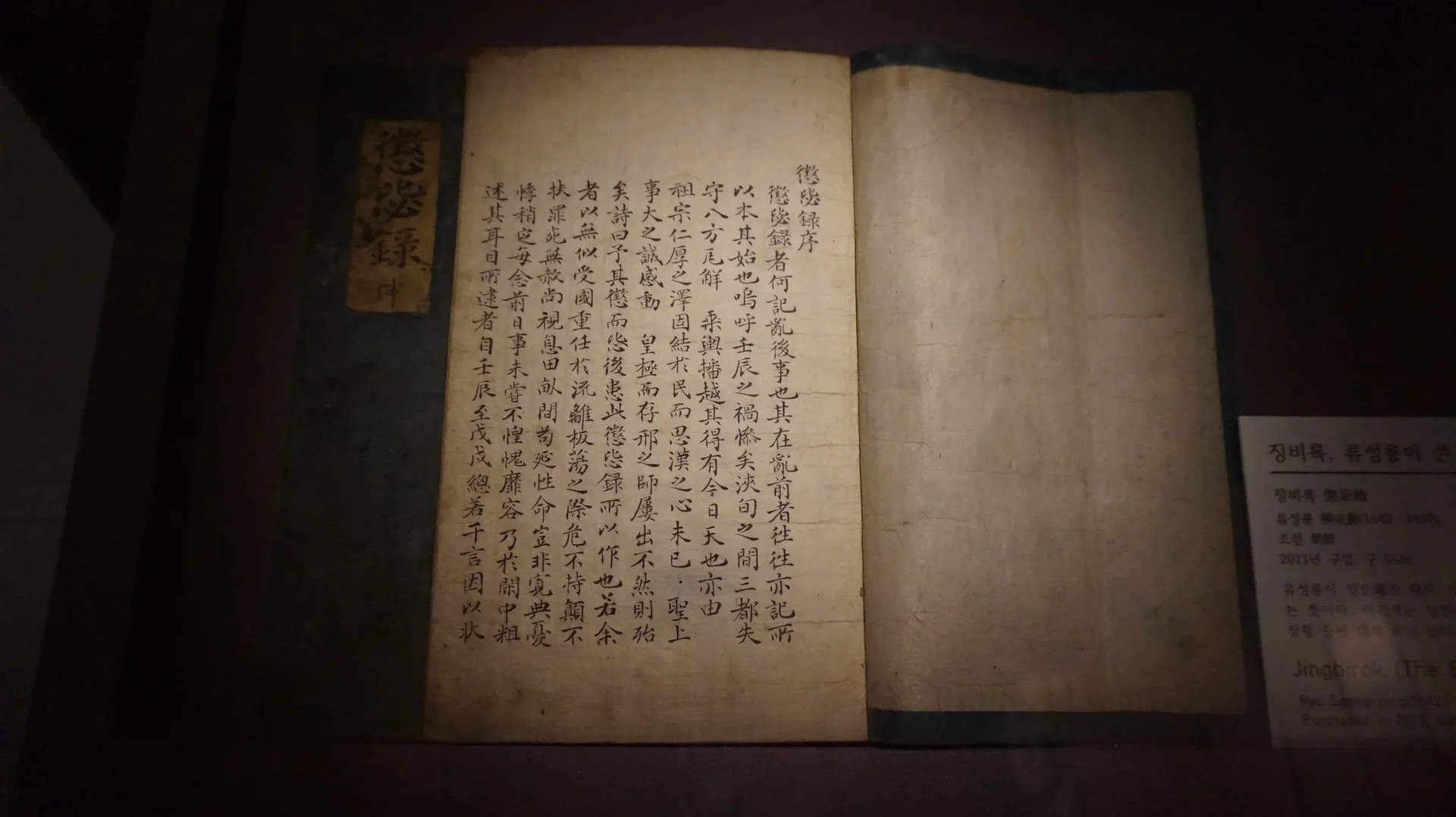
Jingbirok (A Record of Rebuke and Admonition)
Ryu Seong-ryong, c. 1604
🏛️ Advanced Center for Korean Studies, Andong
A memoir written after the war by Ryu Seong-ryong, the chief state councillor who ran Joseon's war effort. Its title means 'a record written so that the same mistakes are not repeated', and it frankly describes how unprepared the kingdom was in 1592.
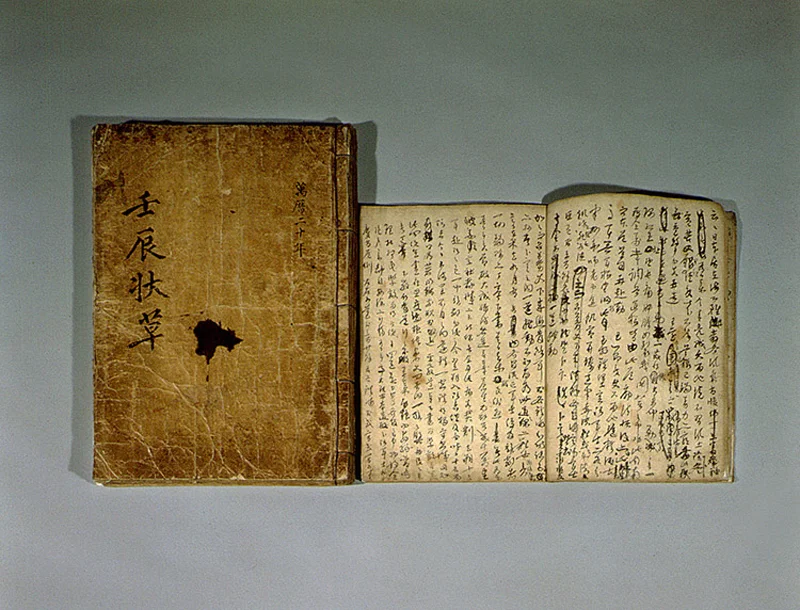
Nanjung Ilgi (War Diary of Yi Sun-sin)
Yi Sun-sin, 1592-1598
🏛️ Hyeonchungsa Shrine, Asan
The handwritten diary Yi Sun-sin kept almost daily for seven years of war. It records fleet movements, weather, supply shortages and his own worries, and is one of the few first-hand accounts written by a commander while the fighting was going on.
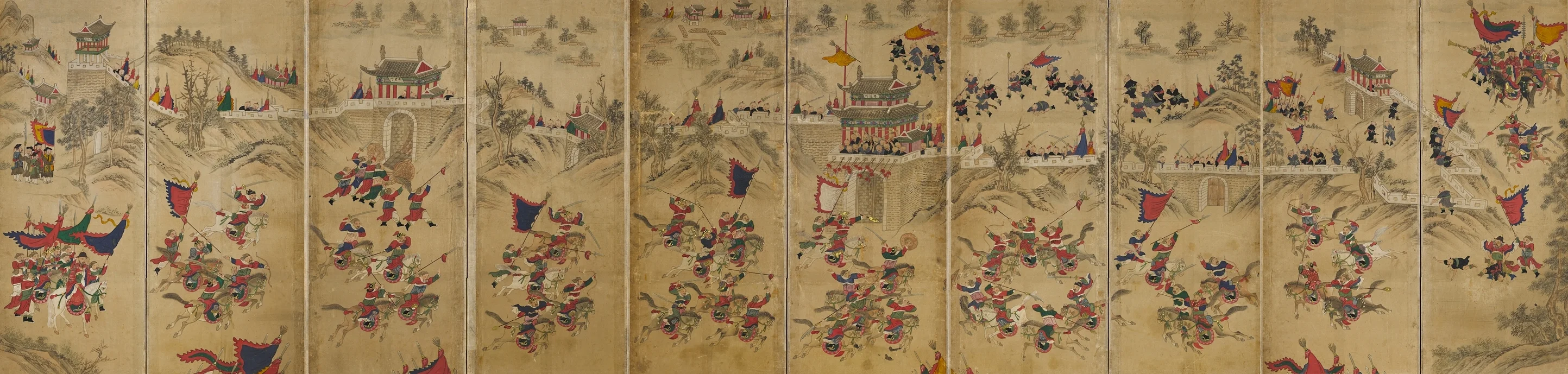
Siege of Pyongyang Screen
Unknown, 18th-19th Century
🏛️ Various (National Museum of Korea)
A folding screen illustrating the 1593 allied Ming and Joseon forces laying siege to the Japanese-occupied Pyongyang Fortress, highlighting massive artillery usage.
Related Videos
Imjin War - Japanese Invasion of Korea 1592-1598 - 4K DOCUMENTARY