The Five Dynasties and Ten Kingdoms - A period of political fragmentation in China between the fall of the Tang Dynasty (907 AD) and the founding of the Song Dynasty (960 AD). During this time, five short-lived dynasties ruled the northern heartland in rapid succession, while ten or more stable kingdoms controlled the south and west. This era was characterized by intense military rivalry, the rise of the Shatuo Turks, and the eventual transition toward a centralized civilian government under the Song. period (907–979 AD) was one of the most volatile and fragmented eras in Chinese history, acting as a bridge between the glorious Tang and Song - The Song dynasty was an imperial dynasty of China that began in 960 and lasted until 1279. It was founded by Emperor Taizu of Song following his usurpation of the throne of the Later Zhou, ending the ... Dynasties. The roots of this chaos lay in the late Tang's inability to control the Jiedushi (military governor - A regional military governor during the Tang Dynasty who eventually held absolute power over their assigned circuits, including administrative, financial, and military authority. The excessive power granted to frontier Jiedushi like An Lushan was the direct cause of the empire's decentralization and eventual collapse.s), who transformed their regional commands into hereditary fiefdoms. The final blow came in 907 when Zhu Wen - A former lieutenant of Huang Chao who betrayed the rebellion to join the Tang, only to eventually usurp the throne and establish the Later Liang Dynasty., a former rebel turned Tang general, forced the last Tang emperor to abdicate. By founding the Later Liang - The first of the Five Dynasties in northern China, founded by Zhu Wen after the fall of the Tang Dynasty. It controlled the Yellow River valley and was eventually overthrown by the Later Tang. in Kaifeng, Zhu Wen officially shattered the unity of China, triggering a chaotic race for supremacy. For the next seven decades, the northern heartland would see five short-lived dynasties rise and fall, while the south and west fractured into ten distinct, though relatively more stable, kingdoms.
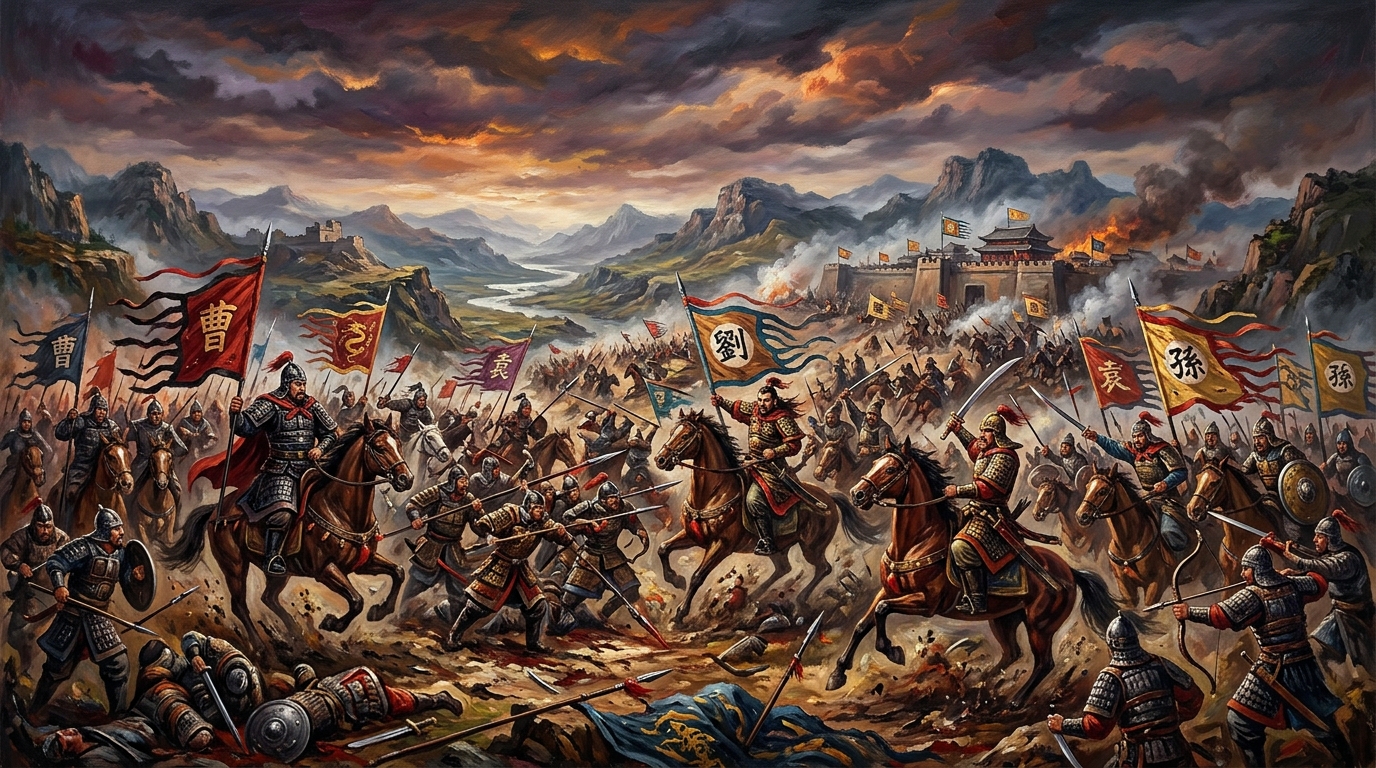
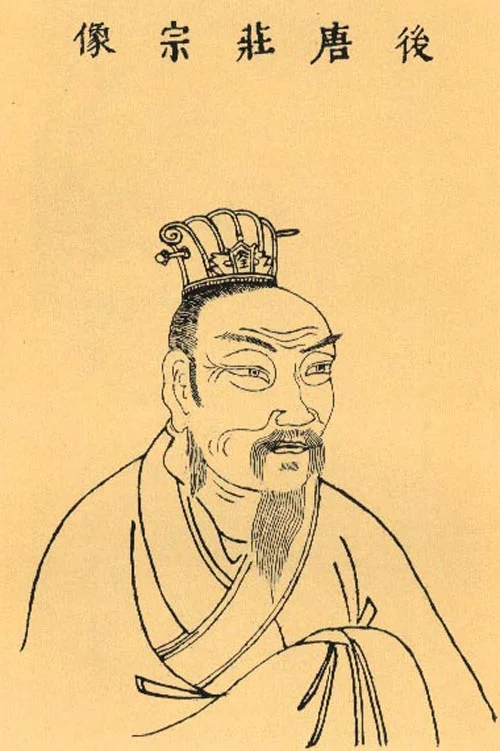
The struggle for the North was initially a personal vendetta between Zhu Wen and the Shatuo - A nomadic Turkic tribe that became a crucial military ally of the Tang Dynasty. Originally from Central Asia, they settled in the Ordos region and provided elite cavalry for the Tang, most notably during the suppression of the Huang Chao Rebellion. They later founded several dynasties during the Five Dynasties and Ten Kingdoms period. Turk leader Li Keyong. This rivalry was inherited by Li Keyong's son, Li Cunxu - The brilliant military founder of the Later Tang Dynasty who destroyed the Later Liang but later became infamous for his obsession with opera and performing arts., a brilliant tactician who fulfilled his father's dying wish by annihilating the Later Liang in 923. He established the Later Tang - The Later Tang (923–937 AD) was the second and perhaps the most militarily formidable of the Five Dynasties that ruled northern China during the chaotic 10th century. Its roots traced back to the Shatuo Turks, a nomadic people whose legendary leader, Li Keyong, was famously known as the 'One-Eyed Dragon'. Li Keyong commanded the terrifying 'Raven Army'—a highly disciplined elite cavalry unit clad entirely in black armor that struck absolute fear into the hearts of their enemies. Though Li Keyong spent his life locked in a bitter, unresolved blood feud with Zhu Wen (the founder of the Later Liang), his legacy was fulfilled by his brilliant son, Li Cunxu. A true military prodigy, Li Cunxu led his Shatuo cavalry to completely annihilate the Later Liang in 923. Upon his victory, he declared himself emperor of the Later Tang, boldly claiming to be the legitimate restorer of the fallen Tang Dynasty. Initially, Li Cunxu's reign was glorious, marked by sweeping conquests that temporarily reunited much of northern China and even expanded into the Sichuan basin by conquering the Former Shu. However, the military genius proved to be a disastrous politician. Obsessed with theater and opera, Li Cunxu began performing on stage himself and elevated his favorite actors to high government positions, ignoring the veteran generals who had bled for his empire. This staggering mismanagement alienated his army, leading to a massive mutiny in 926 where he was tragically killed by a stray arrow. Following his death, his adoptive brother, Li Siyuan (Emperor Mingzong), stabilized the empire and ushered in a brief golden age characterized by peaceful borders, agricultural recovery, and the promotion of the printing press. Yet, after Mingzong's death, the Later Tang rapidly descended into a vicious cycle of succession struggles, ultimately falling when a disgruntled general, Shi Jingtang, rebelled and invited a devastating Khitan invasion to destroy his own dynasty., declaring himself the restorer of the Tang legacy. Li Cunxu's Shatuo cavalry, known as the 'Raven Army,' was the most feared force of the age. However, his military genius was undone by his obsession with theater and opera. He spent more time performin - Min was a state in Fujian during the Five Dynasties and Ten Kingdoms period, established by Wang Shenzhi.g with actors than governing his veteran generals. This neglect led to a widespread mutiny in 926, during which Li Cunxu was killed, and the Later Tang began its slow decline into internal power struggles.
The fall of the Later Tang gave rise to the most controversial regime of the era: the Later Jin - The Later Jin (936–947 AD), the third of the Five Dynasties, holds a uniquely infamous place in Chinese history for setting a devastating geopolitical precedent that would haunt the Central Plains for over four hundred years. The dynasty was born out of treachery when Shi Jingtang, a powerful Shatuo Turk general serving the Later Tang, rebelled against his emperor. Facing imminent defeat, Shi Jingtang made a desperate and highly controversial pact with Yelü Deguang, the emperor of the powerful Khitan Liao Dynasty to the north. In exchange for the massive Khitan military intervention that allowed him to destroy the Later Tang and seize the throne, Shi Jingtang agreed to two humiliating conditions. First, despite being ten years older, he formally submitted to the Khitan ruler as a 'Son Emperor' (Erhuangdi), paying vast annual tributes of silk and wealth. Second, and far more disastrously, he permanently ceded the Sixteen Prefectures of Yanyun (a region encompassing modern-day Beijing and northern Hebei/Shanxi). This cession handed the Khitans control of the strategic mountain passes and the Great Wall, stripping northern China of its natural geographical defenses and leaving the heartland entirely exposed to nomadic cavalry invasions. As long as Shi Jingtang lived, he obediently maintained this servile relationship, keeping his fragile regime afloat. However, upon his death, his fiercely anti-Khitan nephew and successor, Shi Chonggui, foolishly attempted to assert independence, famously declaring himself a 'Grandson' rather than a 'Vassal' to the Khitan emperor and refusing to pay tribute. Enraged by this insolence, the Khitan Emperor launched a series of brutal, large-scale invasions. Stripped of the Sixteen Prefectures' defenses, the Later Jin army was ultimately outmaneuvered and crushed. In 947, Khitan forces swept into the capital of Kaifeng, captured the emperor, and unceremoniously extinguished the Later Jin dynasty, plunging the region into even deeper turmoil.. In 936, the general Shi Jingtang rebelled and secured his throne by forming a humiliating alliance with the Khitan Liao Empire. He famously declared himself the 'Son Emperor' to the Khitan ruler and, most disastrously, ceded the Sixteen Prefectures of Yanyun. This region, encompassing modern-day Beijing, was the natural northern defense of China. By handing it over, Shi Jingtang stripped the Central Plains of its protection against nomadic invasions for the next four centuries. When his successor attempted to defy the Khitans, a massive Liao invasion in 947 swept away the Later Jin, leaving the capital of Kaifeng in ruins and the North in a total power vacuum.
In the wake of the Khitan withdrawal, another Shatuo general, Liu Zhiyuan, founded the Later Han - The Later Han (947–951 AD) holds the distinction of being the shortest-lived of the Five Dynasties in northern China, yet its brief four-year existence was a dramatic microcosm of the era's relentless chaos. The dynasty was founded by Liu Zhiyuan, a seasoned military governor of Shatuo Turk descent who had faithfully served the preceding Later Jin dynasty. When the Later Jin emperor disastrously attempted to break free from the suzerainty of the Khitan Liao Empire, the furious Khitan Emperor Yelü Deguang launched a massive invasion, capturing the capital of Kaifeng and destroying the Later Jin in 947. However, the Khitan occupation of the Central Plains was met with fierce local resistance and logistical nightmares. Unaccustomed to the sweltering southern summer climate and facing continuous guerrilla warfare, Yelü Deguang was forced to abruptly withdraw his forces back to the northern steppes, dying on the journey home. This sudden retreat created a massive power vacuum in the heart of China. Seizing this golden opportunity, Liu Zhiyuan, who had been biding his time and preserving his military strength in his stronghold of Taiyuan, rapidly marched his forces south to the abandoned capital of Kaifeng. Declaring himself emperor, he established the Later Han Dynasty, claiming to be the legitimate continuation of both the Han people and the Shatuo legacy. He sought to quickly restore order by heavily rewarding his veteran generals and attempting to pacify the war-torn provinces. However, fate was cruel; Liu Zhiyuan fell severely ill and died the very next year in 948, leaving his fragile new empire in the hands of his teenage son, Liu Chengyou (Emperor Yin). The young and inexperienced emperor found himself surrounded by powerful, ambitious military commanders whom his father had entrusted with the state's defense. Deeply paranoid and easily manipulated by his close courtiers, Liu Chengyou initiated a bloody purge against these veteran generals to consolidate his absolute power. This paranoid streak proved fatal. When he ordered the execution of the family of his most capable commander, Guo Wei, he ignited a fierce rebellion. Enraged by the senseless slaughter of his loved ones, Guo Wei turned his battle-hardened army toward Kaifeng. In 951, Guo Wei's forces captured the capital, and the young emperor was killed in the chaos. With this, the Later Han was extinguished just four years after it began, replaced by Guo Wei's Later Zhou dynasty. Despite its fleeting lifespan, the Later Han marked the final chapter of Shatuo Turk dominance in the Central Plains and unwittingly set the stage for the rise of Guo Wei and Chai Rong, whose subsequent reforms would finally pave the road for the reunification of China. (947). It was the shortest of all Five Dynasties, lasting only four years. His son, Emperor Yin, was a paranoid teenager who feared his father's veteran generals. In a series of bloody purges, he executed the families of his top commanders, including the family of General Guo Wei. Enraged by the slaughter of his loved ones, Guo Wei led a successful coup in 951, founding the Later Zhou - The Later Zhou (951–960 AD) was the fifth and final dynasty of the turbulent Five Dynasties and Ten Kingdoms period in northern China, yet its brief existence profoundly altered the course of Chinese history. Founded by the Han Chinese general Guo Wei, who seized power through a military coup to topple the short-lived Later Han, the Later Zhou emerged from decades of chaos marked by the rule of Shatuo Turk warlords. Guo Wei, known posthumously as Emperor Taizu, initiated crucial political and economic reforms that began stabilizing the war-torn northern plains. He sought to alleviate the burden on the peasantry, reduced harsh punishments, and began rebuilding the administrative framework that had collapsed after the fall of the Tang Dynasty. However, it was his adopted son and successor, Chai Rong (Emperor Shizong), who transformed the Later Zhou into a formidable military and economic powerhouse. Widely regarded by historians as one of the most capable and visionary monarchs of the era, Chai Rong harbored a grand ambition to conquer the world in thirty years. He systematically reformed the military, establishing a highly disciplined, centralized professional army that pledged loyalty to the state rather than individual generals. Economically, he aggressively promoted agriculture, expanded irrigation, and famously launched a massive campaign to confiscate bronze from Buddhist temples to mint desperately needed currency. Militarily, Chai Rong proved unstoppable. In 954, at the pivotal Battle of Gaoping, he decisively crushed a joint invasion force of the Northern Han and the Khitan Liao Empire, personally charging the enemy lines when his vanguard faltered. He then turned his sights southward, conquering significant territories from the wealthy Southern Tang and Later Shu kingdoms, absorbing their economic resources. He was on the verge of launching a massive northern expedition to reclaim the lost Sixteen Prefectures from the Khitans when he tragically fell ill and died at the age of 38 in 959. He left behind a seven-year-old heir, creating a power vacuum. Less than a year later, his most trusted general, Zhao Kuangyin, was elevated to the throne by his troops in the Chenqiao Mutiny, establishing the Song Dynasty. Zhao Kuangyin inherited the unparalleled military machine and robust economy built by the Later Zhou, allowing him to easily sweep through the remaining Ten Kingdoms and finally reunify China. Thus, while the Later Zhou lasted less than a decade, its visionary leadership and structural reforms were the indispensable bedrock upon which the glorious three-century reign of the Song Dynasty was built.. Unlike its predecessors, the Later Zhou was led by visionary reformers. Guo Wei and his adopted son, Chai Rong (Emperor Shizong - Often called the most capable emperor of the Five Dynasties and Ten Kingdoms period, he laid the military and political foundation for China's unification.), realized that only a professional, centralized army and a stable economy could end the cycle of chaos. They began the arduous task of systematically conquering their neighbors and professionalizing the military.
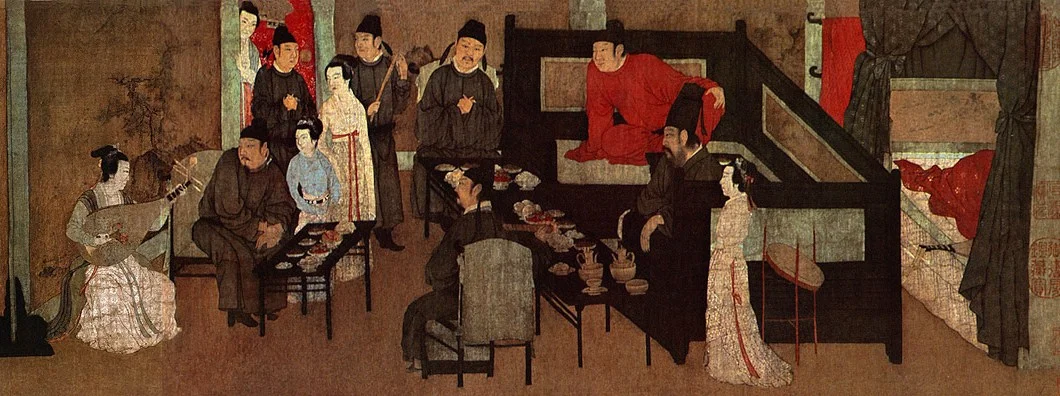
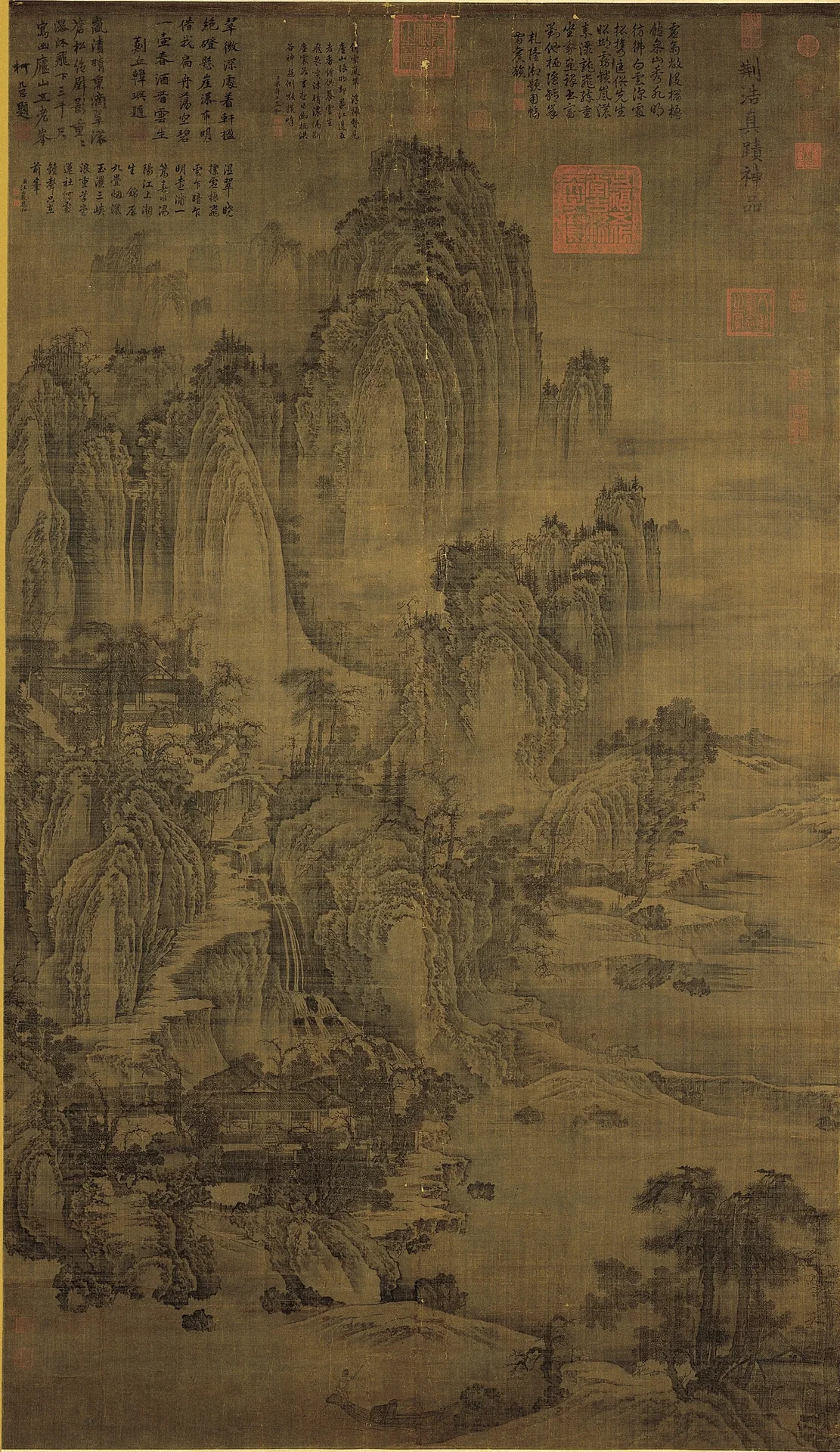
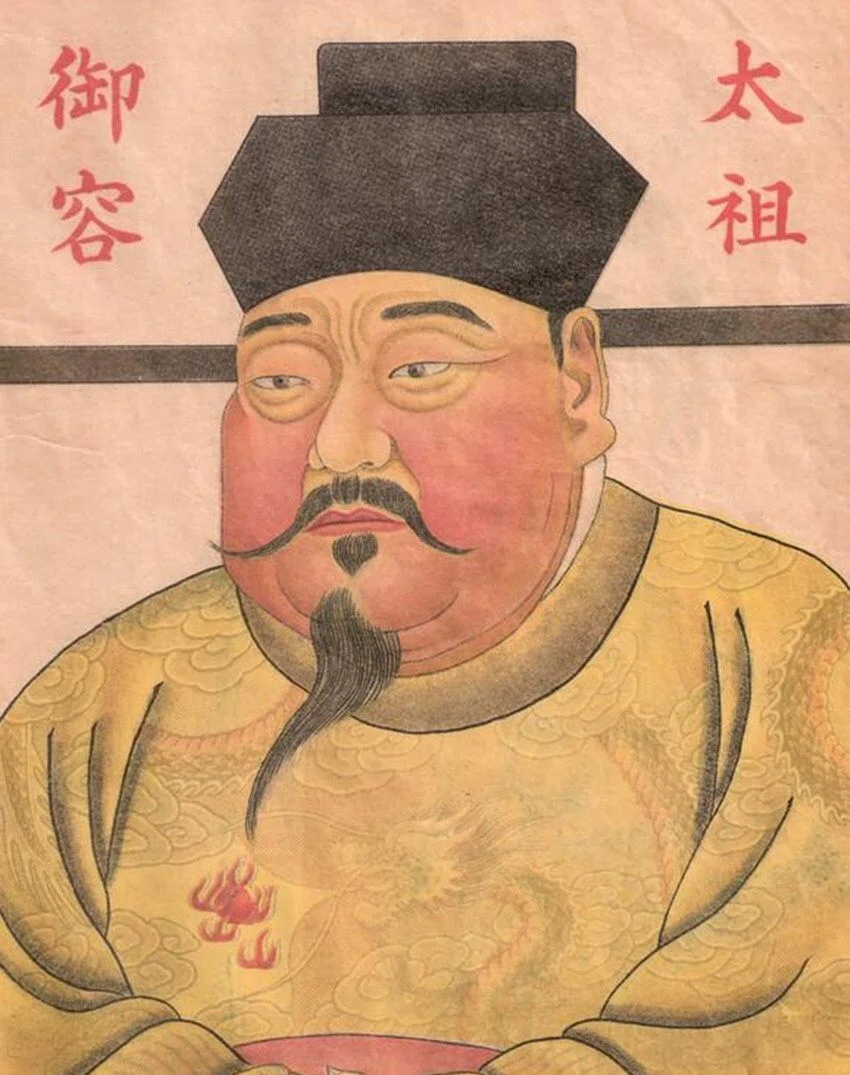
While the North was a rotating door of dynasties, the 'Ten Kingdoms' in the South—such as the Southern Tang - Southern Tang (937–976) was the most successful and influential of the Ten Kingdoms, known for its refined culture and as a successor to the Tang Dynasty's legacy., Wuyue - Wuyue was an independent coastal kingdom during the Five Dynasties and Ten Kingdoms period, known for its economic prosperity and cultural achievements., and Later Shu - Later Shu (934–965) was one of the Ten Kingdoms, located in the Sichuan basin. It was known for its economic prosperity and as a center of culture and arts.—prospered through trade and cultural advancement. Protected by the Yangtze River and rugged mountains, these states became havens for artists, poets, and scholars fleeing the war-torn North. The Southern Tang, in particular, was a center of exquisite poetry and painting. However, their military weakness eventually made them targets. Following the sudden death of Chai Rong in 959, his top general Zhao Kuangyin - The founding emperor of the Song Dynasty who ended the chaos of the Five Dynasties and Ten Kingdoms period through a nearly bloodless coup and military unification. was proclaimed emperor in the Chenqi - Qi was a state in northwestern China during the Five Dynasties and Ten Kingdoms period, ruled by Li Maozhen.ao Mutiny of 960, founding the Song Dynasty. Zhao Kuangyin (Song Taizu) and his brother inherited the Later Zhou's powerful military machine and spent nearly two decades methodically absorbing the southern kingdoms and the northern splinter state of Northern Han - The Northern Han (951–979 AD) was a small but strategically vital state that served as the final holdout of the Five Dynasties and Ten Kingdoms period. Founded by Liu Min (Liu Chong), the younger brother of the Later Han's founder Liu Zhiyuan, it was established in the rugged highlands of Shanxi after the Later Han fell to Guo Wei's Later Zhou. Despite its limited size and meager resources, Northern Han survived for nearly three decades by acting as a loyal vassal to the powerful Khitan Liao Empire, relying on Khitan cavalry to repel repeated southern invasions. Its capital, Taiyuan, was one of the most formidable fortresses in East Asia, famously resisting several massive sieges. The state was a persistent thorn in the side of both the Later Zhou and the rising Song Dynasty, particularly after its involvement in the Battle of Gaoping. It was only in 979 that Emperor Taizong of Song personally led a massive campaign to finally subdue the kingdom, marking the definitive end of the era of fragmentation and the complete reunification of China under the Song., finally reunifying China in 979.
The unification of 979 ended seventy years of internal division, but it left the strategic Sixteen Prefectures in Khitan hands—a problem that would plague the Song Dynasty for its entire existence. The era of Five Dynasties and Ten Kingdoms proved that the traditional model of military governance (Jiedushi) was inherently unstable. In response, the Song Dynasty instituted a policy of 'strengthening the trunk and weakening the branches,' shifting power from military generals to civilian bureaucrats. This profound shift in governance, born from the hard-learned lessons of the 10th-century chaos, would define the Chinese imperial system for the next millennium. Though born in blood and betrayal, this period of fragmentation ultimately paved the way for the sophisticated, civilian-led civilization of the Song.