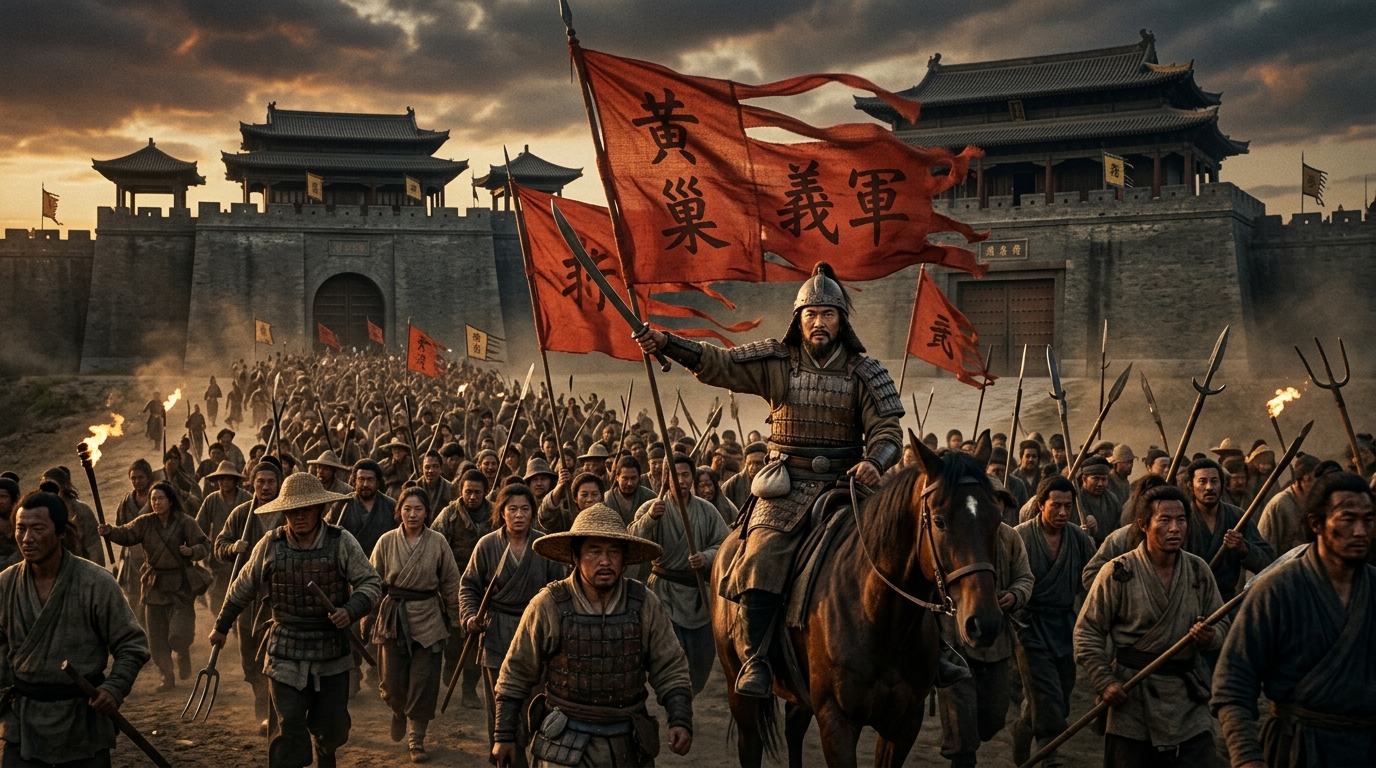
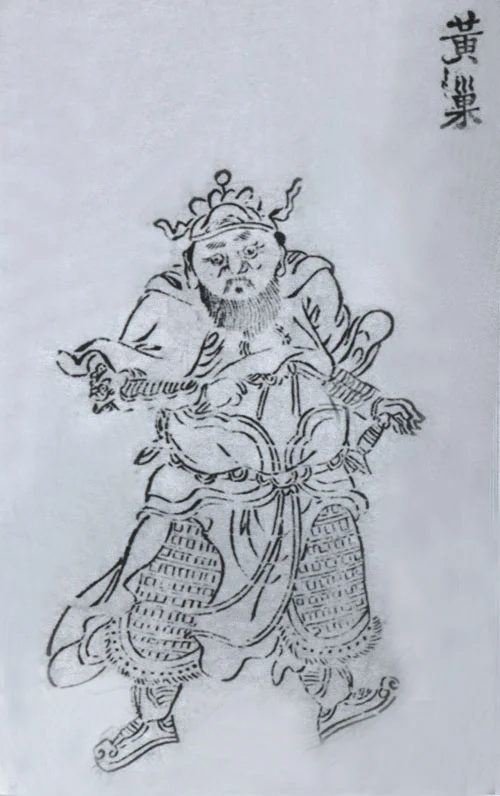
In the late 9th century, the once-glorious Tang Dynasty - The Tang dynasty is often considered the golden age of Chinese civilization. It was a cosmopolitan empire where different cultures and religions met along the Silk Road. Legend says the Tang emperors were descendants of the founder of Taoism, Laozi. This era saw the height of Chinese poetry with masters like Li Bai and Du Fu. The famous 'Journey to the West' (Sun Wukong) is based on the pilgrimage of the monk Xuanzang to India during the Tang dynasty. Its capital, Chang'an, was the most populous and advanced city in the world at the time. was on the verge of collapse. The government's strict salt monopoly and a series of devastating famines led to widespread despair. In 874, Wang Xianzhi and Huang Chao - A failed civil service candidate and salt smuggler who led a massive rebellion that devastated the Tang Dynasty and led to its eventual collapse., both powerful salt smuggler - In the late Tang Dynasty, the government imposed a strict monopoly on salt to increase tax revenue. This led to extremely high salt prices, encouraging illegal salt smuggling by merchants like Huang Chao. These smugglers formed large, well-armed groups that eventually became a base for rebellion.s, raised the banner of rebellion. They led a massive army of displaced peasants and outlaws, sweeping through the southern and central provinces like a tidal wave.
The rebellion reached its peak in 880 when Huang Chao's forces captured the secondary capital, Luoyang, and then advanced to the main capital, Chang'an. Emperor Xizong was forced to flee to Sichuan, echoing the flight of his ancestor Xuanzong during the An-Shi Rebellion. Huang Chao declared himself the emperor of the 'Qi' dynasty, but his rule was marked by extreme violence and a failure to establish a stable administration.
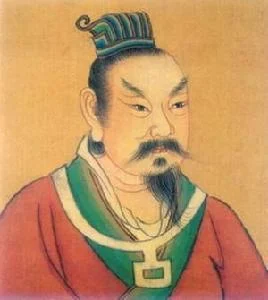
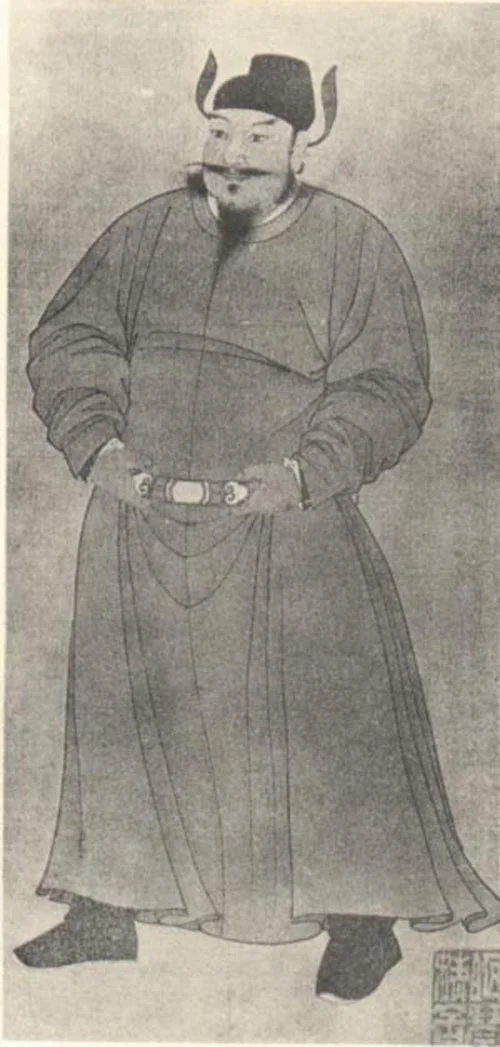
The Tang court turned to Li Keyong - A prominent Shatuo Turk military leader whose 'Black-Clad Army' was instrumental in suppressing the Huang Chao Rebellion and who became a major rival to Zhu Wen., a fierce Shatuo - A nomadic Turkic tribe that became a crucial military ally of the Tang Dynasty. Originally from Central Asia, they settled in the Ordos region and provided elite cavalry for the Tang, most notably during the suppression of the Huang Chao Rebellion. They later founded several dynasties during the Five Dynasties and Ten Kingdoms period. Turk chieftain, for help. Li Keyong's 'Black-Clad Army' proved to be a formidable match for the rebels. During this time, a critical defection further weakened the rebellion. Zhu Wen - A former lieutenant of Huang Chao who betrayed the rebellion to join the Tang, only to eventually usurp the throne and establish the Later Liang Dynasty., one of Huang Chao's most trusted and capable lieutenants who had played a key role in the rebels' southern conquests, realized that the tide was turning. In 882 AD, while defending the strategic post of Tongzhou, Zhu Wen murdered the military supervisor sent by Huang Chao and surrendered to the Tang forces. Emperor Xizong was so delighted by this betrayal that he granted him the name 'Quanzhong,' meaning 'Totally Loyal.' The loss of his most effective general, combined with Li Keyong's relentless pressure, shattered Huang Chao's movement. In 884, Huang Chao died while fleeing, marking the end of the rebellion.
However, the suppression of the rebellion did not save the Tang. The empire was now effectively controlled by independent military governor - A regional military governor during the Tang Dynasty who eventually held absolute power over their assigned circuits, including administrative, financial, and military authority. The excessive power granted to frontier Jiedushi like An Lushan was the direct cause of the empire's decentralization and eventual collapse.s (Jiedushi) who acted as warlords. Among them, Zhu Wen—now a powerful Tang general—became the most dominant. After eliminating his rivals and purging the court of eunuchs - Eunuchs were castrated men who served in the imperial palaces of China, originally as personal attendants to the Emperor and his family. Because they were often the only men allowed in the inner chambers, they gained the Emperor's deep trust and sometimes rose to positions of immense political power. In the late Han Dynasty, powerful eunuch factions clashed with maternal relatives and scholars, causing deep corruption and the ultimate collapse of the empire's administrative system. and officials, Zhu Wen forced the last Tang emperor to abdicate in 907 AD. He established the Later Liang Dynasty, officially ending the Tang rule and ushering in the chaotic period known as the Five Dynasties and Ten Kingdoms - A period of political fragmentation in China between the fall of the Tang Dynasty (907 AD) and the founding of the Song Dynasty (960 AD). During this time, five short-lived dynasties ruled the northern heartland in rapid succession, while ten or more stable kingdoms controlled the south and west. This era was characterized by intense military rivalry, the rise of the Shatuo Turks, and the eventual transition toward a centralized civilian government under the Song..