The Five Dynasties and Ten Kingdoms - A period of political fragmentation in China between the fall of the Tang Dynasty (907 AD) and the founding of the Song Dynasty (960 AD). During this time, five short-lived dynasties ruled the northern heartland in rapid succession, while ten or more stable kingdoms controlled the south and west. This era was characterized by intense military rivalry, the rise of the Shatuo Turks, and the eventual transition toward a centralized civilian government under the Song. period in China provided a unique window for Vietnam to reclaim its sovereignty. After centuries of 'Northern Domination,' local leaders like the Khuc family and later Duong Dinh Nghe - A powerful Vietnamese military leader who played a crucial role in expelling the Southern Han forces and restoring autonomy in the early 10th century. began to govern the region independently. However, the Southern Han - The Southern Han (917–971) was a prominent maritime state during the Five Dynasties and Ten Kingdoms period, ruling over the modern-day Guangdong and Guangxi provinces. It was founded by Liu Yan, who capitalized on the foundation laid by his brother Liu Yin, a former Tang Jiedushi. With its capital at Guangzhou (Panyu), Liu Yan declared himself emperor, initially naming the state 'Great Yue' before changing it to 'Great Han' to claim legitimate descent from the ancient Han Dynasty.Geographically positioned along the southern coast, Southern Han flourished as a global hub for maritime trade. Guangzhou was a bustling international port frequented by Arab and Southeast Asian merchants, dealing in luxury goods such as ivory, rhino horns, and peacock feathers. The state also controlled a lucrative pearl-diving industry, known as the 'Glistening Pools,' which generated immense wealth. This prosperity allowed the emperors to construct lavish palaces adorned with gold and pearls, though it also led to a culture of extreme extravagance.The governance of Southern Han was uniquely characterized by its heavy reliance on eunuchs. Mistrusting traditional scholars, the emperors mandated that many officials be castrated to ensure their loyalty; at its peak, the administration reportedly employed over 20,000 eunuchs. While economically successful, the state was also notorious for the cruelty of its rulers and the implementation of horrific punishments. Internal decay eventually weakened the state, leading to its conquest by the rising Song Dynasty in 971. A popular legend tells of the last emperor, Liu Chang, who prepared a fleet filled with treasures to escape, only to have his trusted eunuchs steal the jewels and leave him behind to face the Song army. Dynasty, one of the ten kingdoms based in Guangzhou, sought to re-assert Chinese control over the 'Annam' region. In 930, Southern Han forces launched a major invasion, capturing the regional capital and taking the Vietnamese leader prisoner.
The resistance was soon taken up by Duong Dinh Nghe, who managed to expel the Southern Han in 931. But internal treachery struck when Kieu Cong Tien assassinated Duong and, fearing a counterattack from Ngo Quyen - The founder of the Ngo Dynasty and the architect of Vietnam's independence from Chinese rule at the Battle of Bach Dang., invited the Southern Han to intervene again. This provided the pretext for the Southern Han Emperor Liu Yan to send a massive naval expedition led by his son, Liu Hongcao. This invasion force was intended to finally crush Vietnamese aspirations for independence.
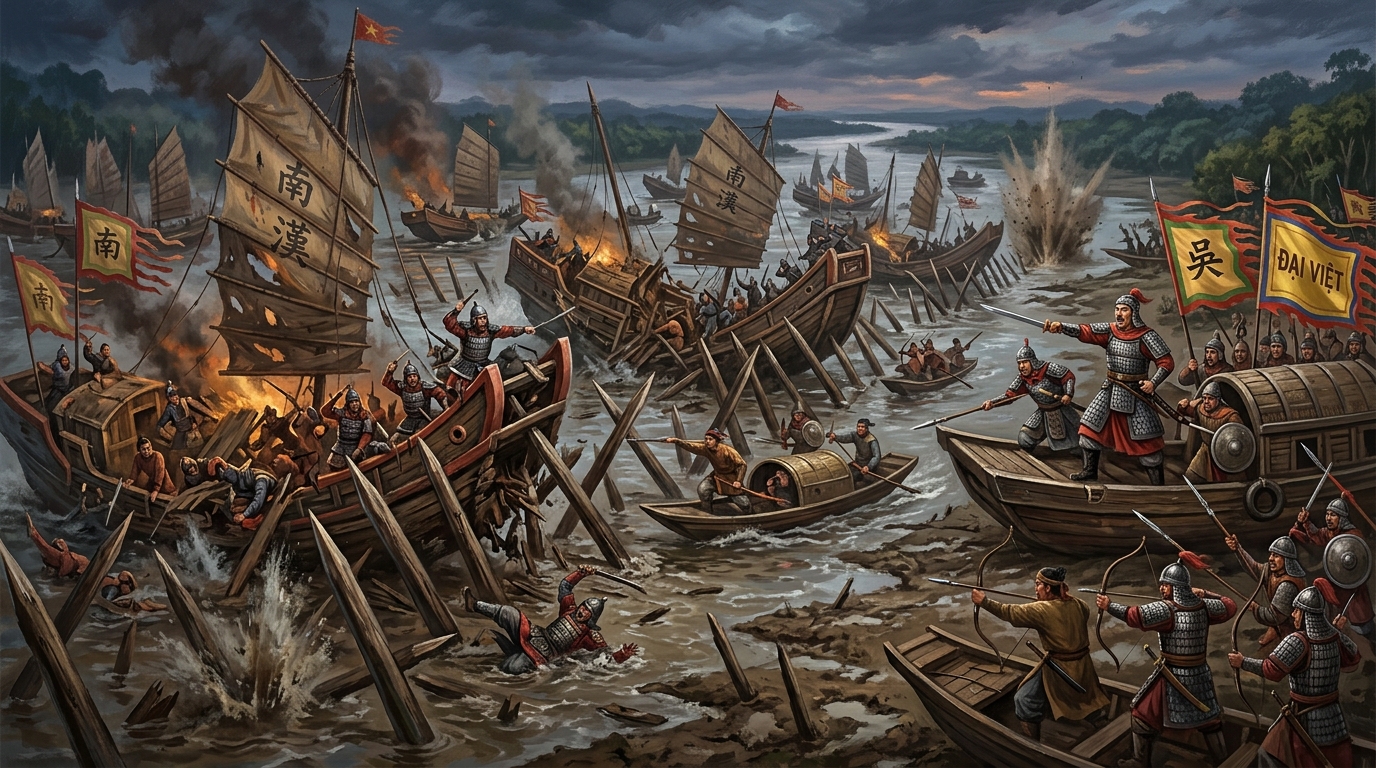
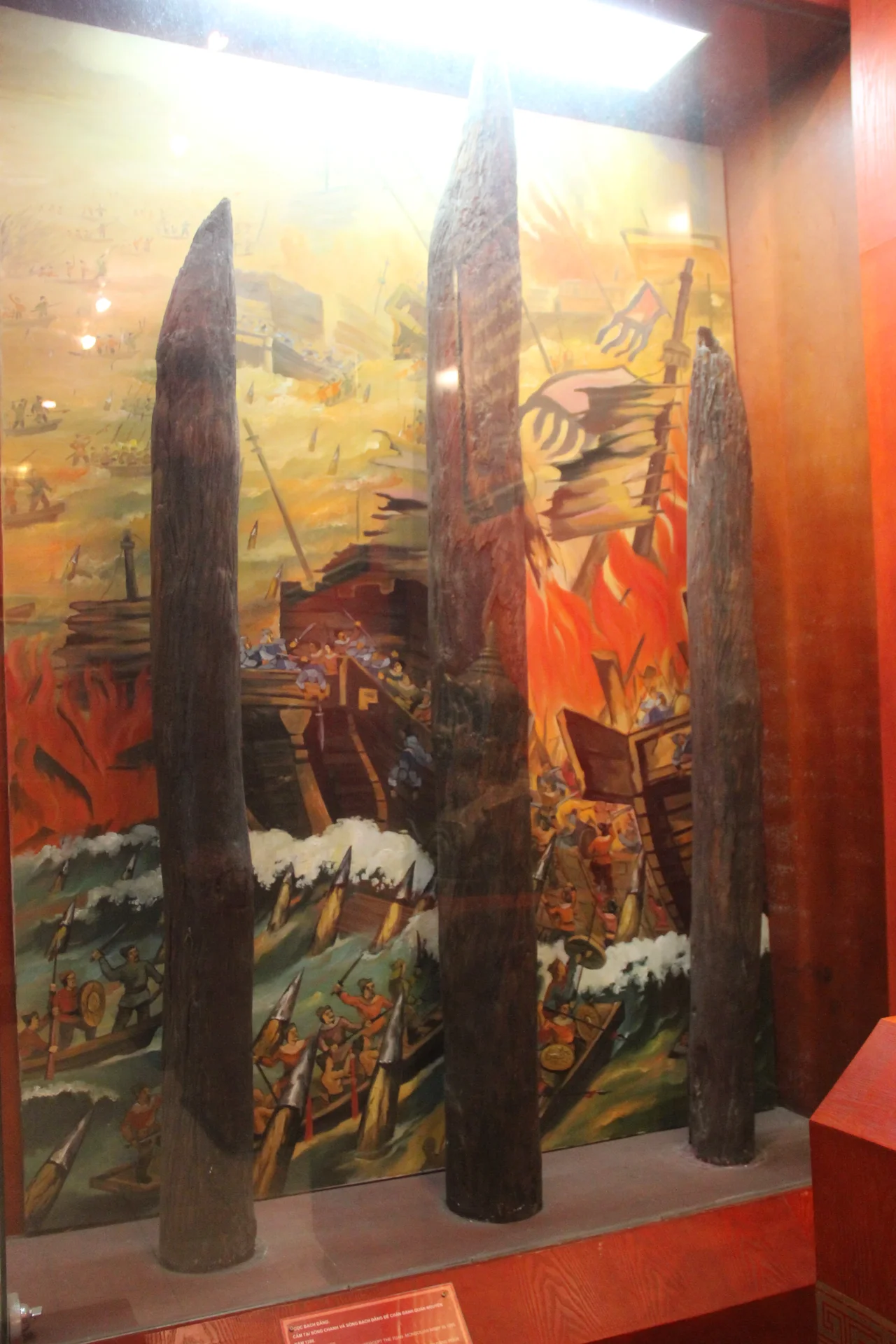
Ngo Quyen, anticipating the naval attack, devised a brilliant defensive plan at the Bach Dang River - A historic river in northern Vietnam, famous for being the site of three major victories against foreign invaders. The most notable was in 938 when Ngo Quyen defeated the Southern Han, securing Vietnam's independence.. He had thousands of heavy, iron-tipped wooden stakes driven into the riverbed, invisible during high tide. As the Southern Han fleet entered the river, Ngo Quyen's small, nimble boats lured them further upstream. When the tide turned, the retreating Southern Han ships were impaled on the stakes and decimated. Liu Hongcao was killed in the battle, and the Southern Han fleet was destroyed. This victory was so decisive that the Southern Han never attempted to invade again. In 939, Ngo Quyen declared himself King, ending 1,000 years of Chinese rule and beginning the era of independent Vietnamese dynasties.