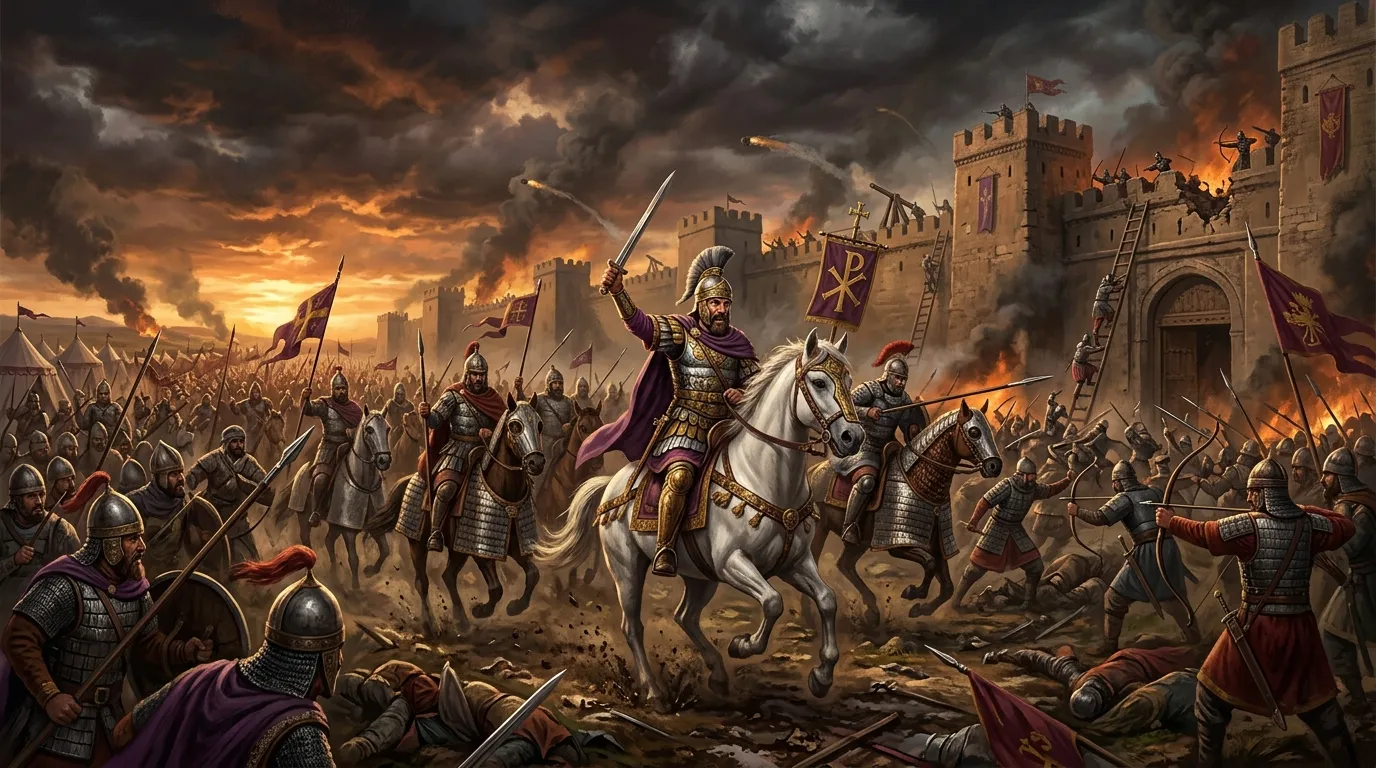
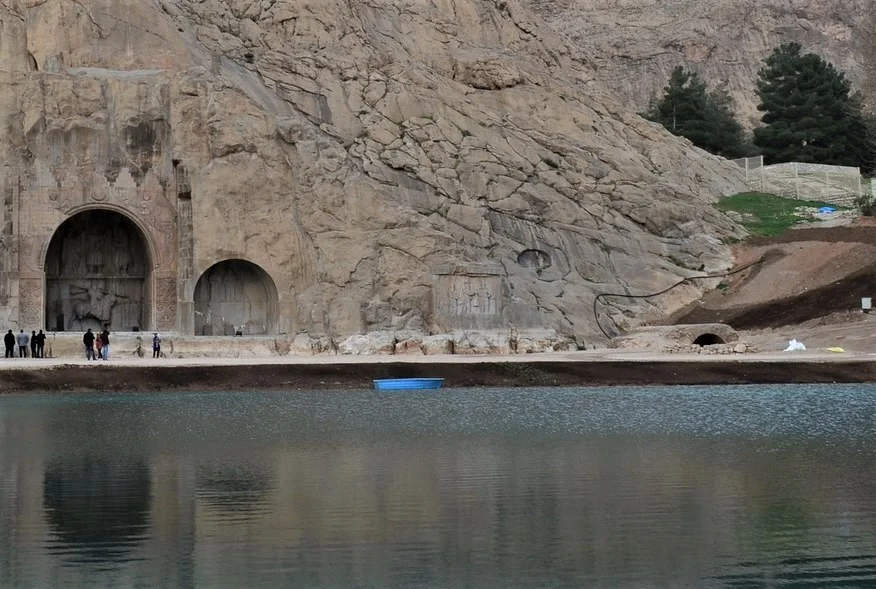
The war erupted in 602 following a violent military coup in the Byzantine Empire - The medieval continuation of the Roman Empire in the East, centered on Constantinople. For over a millennium, it served as a bastion of Christianity and Roman law, preserving ancient knowledge until its fall in 1453.. The army mutinied against Emperor Maurice and elevated Phocas to the throne, leading to Maurice's execution. Khosrow II, the Sasanian King of Kings who had regained his throne with Maurice's help a decade earlier, used the assassination of his 'friend and father' as a casus belli. Declaring his intent to avenge Maurice, Khosrow launched a massive invasion, capitalizing on the internal chaos in Byzantium to capture Syria - Syria was a vital and wealthy region in the Near East. During the Roman and Byzantine periods, it was a crucial province known for its major trade routes, rich agriculture, and important cities like Antioch., Egypt, and many fortified cities.
The Byzantine Emperor Heraclius reorganized the army, cut costs, and led daring counterattacks from Anatolia - Also known as Asia Minor, this large peninsula in West Asia corresponds to modern-day Turkey. Historically, it has been a cradle of civilization and a bridge between East and West, hosting the Hittites, Lydians, Greeks, Romans, Byzantines, and Turks. During the Crusades, it was a treacherous but necessary overland route for European armies marching toward the Holy Land. into Persia - The Sasanian Empire was the last Persian imperial dynasty before the Muslim conquest. Founded by Ardashir I in 224 AD, it revived Iranian traditions and Zoroastrianism, becoming a superpower alongside...n-held lands. Battles and raids turned the tide, and the Persians were pushed back after years of fighting.
By 628, both empires agreed to peace and returned captured territories. The war ended, but the long fighting drained soldiers, money, and supplies, leaving both sides weak just before new conflicts began in the region.