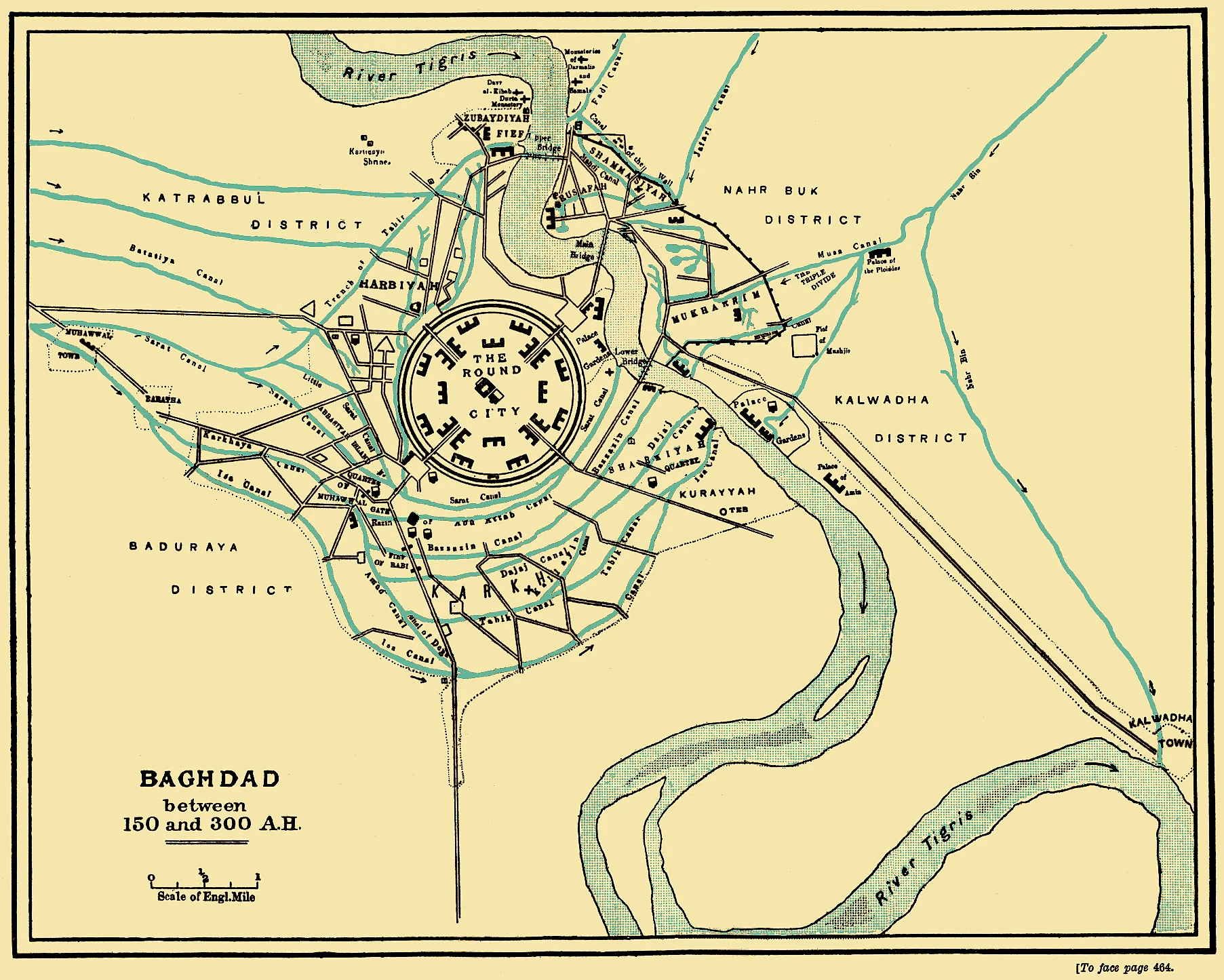
The Abbasid Revolution - A transformative political and military movement (747–750 CE) that ended the Umayyad dynasty and saw the Abbasid Caliphate officially replace the Umayyad Caliphate as the leaders of the Islamic world. It was driven by widespread anger over Umayyad favoritism toward Arab elites and discrimination against Mawali (non-Arab Muslims). The revolution began in Khorasan under General Abu Muslim, and its success led to the shift of the empire's capital from Damascus to the newly built Baghdad in Iraq, ushering in the multicultural Islamic Golden Age. was fueled by deep-seated resentment against the Umayyad dynasty - The second major Islamic caliphate after the First Fitna. Capital: Damascus (661-744), then Harran (744-750). It expanded from Spain to India.. The Umayyads often prioritized Arab elites, treating non-Arab Muslims—known as Mawali - In the early Islamic period, 'Mawali' referred to non-Arab populations who converted to Islam, such as Persians, Egyptians, Berbers, and Arameans. During the Umayyad dynasty, despite being Muslims, the Mawali were often treated as second-class citizens, excluded from high positions, and forced to pay taxes that only non-Muslims were supposed to pay. Their widespread dissatisfaction became one of the major driving forces behind the Abbasid Revolution. (newly converted non-Arab Muslims)—as second-class citizens who still had to pay heavy taxes. This created a perfect environment for a major change. Additionally, many believed the Caliph should belong to the direct family of Prophet Muhammad, a role the Abbasids - The Abbasid Caliphate was the third Islamic caliphate to succeed the Islamic prophet Muhammad. It was established by a dynasty descended from Muhammad's uncle, Abbas ibn Abd al-Muttalib. They overthrew the previous Umayyad Caliphate in the historic Abbasid Revolution. The coup was fueled by widespread dissatisfaction with the Umayyads, who favored Arab Muslims over non-Arab converts. By promising equality for all Muslims regardless of their ethnicity, the Abbasids successfully united various groups and established a new capital in Baghdad, Iraq. Baghdad was designed as a unique, perfectly circular city, often referred to as the Round City, which quickly grew into the cultural and intellectual hub of the medieval world. This era initiated the renowned Islamic Golden Age, a period where science, mathematics, philosophy, literature, and technology flourished dynamically. The caliphs believed that knowledge was the greatest treasure, prompting them to establish the House of Wisdom, a massive library and translation center in Baghdad. Scholars from all over the world, regardless of their religion, gathered here to translate ancient Greek, Persian, Indian, and Chinese texts into Arabic. Through this collective effort, major intellectual breakthroughs were achieved. For instance, the famous mathematician al-Khwarizmi laid the foundations of algebra (a word derived from al-jabr) and his latinized name gave us the word algorithm, which forms the basis of modern computer science. Scholars also accurately calculated the circumference of the Earth, advanced medicine, and introduced paper-making technology from China to the West. A famous legendary figure from this magnificent era is Caliph Harun al-Rashid, whose reign marked the zenith of Abbasid wealth and power. He is prominently featured in the folklore of the One Thousand and One Nights, a collection of Middle Eastern folk tales and magical myths. According to the legends, Harun al-Rashid would frequently disguise himself in the simple clothes of a commoner and roam the night streets of Baghdad alongside his vizier, aiming to witness the true conditions of his subjects and deliver justice directly to those in need. Stories of magical jinns, flying carpets, and hidden caves filled with treasures, such as the adventures of Aladdin and Ali Baba, were inspired by the vibrant, cosmopolitan atmosphere of Baghdad under Abbasid rule. Although the caliphate gradually weakened over centuries and finally came to a tragic end during the Mongol sack of Baghdad in 1258, its legacy remains one of the most brilliant and peaceful chapters in human intellectual history, leaving behind a wealth of knowledge that helped shape the modern world. claimed as descendants of the Prophet's uncle, Abbas.
Before the open fighting broke out, the Abbasids spent decades building a secret network called the Hashimiyya. They sent agents into the eastern province of Khorasan - A vast historical region in Central Asia and the Iranian plateau, spanning parts of modern-day Iran, Afghanistan, Turkmenistan, and Uzbekistan. Its name means 'Land of the Rising Sun.' During the 8th century, it was the primary breeding ground for the Abbasid Revolution, as its diverse population of Persian converts and dissatisfied Arab tribes provided the vital support needed to overthrow the Umayyad dynasty. (a region spanning modern Iran and Afghanistan), where the population was diverse and far from the Umayyad capital in Damascus. This quiet preparation was made easier by internal Umayyad power struggles and constant revolts that exhausted the ruling dynasty's resources.
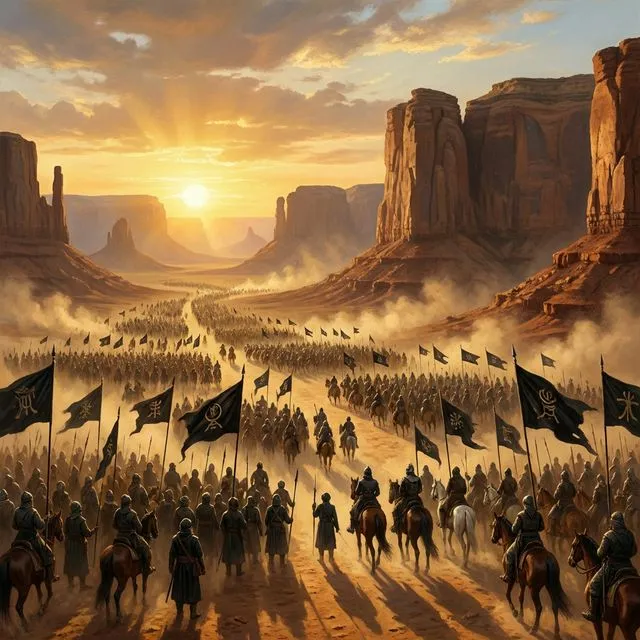
In 747, a charismatic general named Abu Muslim al-Khurasani - Leader of the Abbasid Revolution Abu Muslim al-Khurasani. publicly raised the Black Banners (the symbol of the Abbasid family) in Merv, signaling the start of the rebellion. The revolution quickly gained momentum as Persian elites, dissatisfied Arab tribes, and religious groups joined forces. The Abbasid army marched westward, capturing key cities across Persia and entering Iraq. In 749, Abu al-Abbas (later known as as-Saffah - First Abbasid caliph who overthrew the Umayyads and founded a new dynasty centered in Iraq.) was proclaimed Caliph in the city of Kufa - A prominent city in Iraq that served as the capital of the Rashidun Caliphate under Ali ibn Abi Talib., directly challenging the Umayyad authority.
The final showdown occurred at the Battle of the Zab in 750. Despite having a larger army, the Umayyad Caliph Marwan II - Last Umayyad caliph who fought the Abbasid Revolution and died after defeat in 750. suffered a crushing defeat due to low morale and the disciplined tactics of the Abbasid veterans. Marwan II fled to Egypt, where he was eventually caught and killed. This victory marked the decisive moment when the Abbasid Caliphate officially replaced the Umayyad Caliphate as the leaders of the Islamic world.
The consequences of the revolution were profound. The political center of the Islamic world moved from Syria to Iraq, where the new capital, Baghdad - Founded in 762 CE as the capital of the Abbasid Caliphate, Baghdad became a global center of learning, culture, and trade. Known as the 'City of Peace,' it was home to the House of Wisdom and was one of the largest and most sophisticated cities in the world during the Islamic Golden Age. Its capture and destruction by the Mongols in 1258 marked a profound turning point in Islamic history., would soon be built to replace Damascus. The government became more inclusive, allowing Persians and other non-Arabs to reach the highest offices. This multicultural environment laid the foundation for the Islamic Golden Age, a period of incredible progress in science, philosophy, and art. The Umayyad family was largely eliminated, though one prince, Abd al-Rahman, escaped to Al-Andalus - The historical name for the parts of the Iberian Peninsula (modern Spain and Portugal) under Muslim rule between 711 and 1492. It was a major center of cultural and scientific exchange in medieval Europe. to continue the dynasty there.