For decades, the Kingdom of Armenia had served as a crucial buffer state between the Roman and Parthian Empires. Roman policy required that the Armenian king be a Roman client, or at least approved by Rome. This delicate balance was upset in 54 AD when the Parthian King Vologases I , capitalizing on internal instability in Armenia, invaded and installed his brother, Tiridates I , on the throne. This act was a direct challenge to Roman suzerainty and could not be ignored by the new Emperor Nero.
Rome responded by sending its most capable general, Gnaeus Domitius Corbulo , to the East. He was appointed governor of the Roman province of Syria, the main base for Roman power in the region. After spending valuable time restoring discipline to the demoralized Syrian legions stationed there, Corbulo launched a brilliant offensive in 58 AD. Despite the difficult terrain and Parthian guerrilla tactics, he captured the capital Artaxata and later the second city, Tigranocerta . Tiridates was forced to flee, and Rome seemed to have won a complete victory.
Attempting to solidify control, Rome installed a fully pro-Roman prince, Tigranes VI, as King of Armenia. However, Tigranes proved too aggressive, raiding the Parthian vassal state of Adiabene. This provoked Vologases I to intervene personally with a large army. Confronted with a renewed war on multiple fronts, Rome sent a second general, Lucius Caesennius Paetus, to take military command in Armenia while Corbulo held the Syrian frontier to prevent a direct invasion.
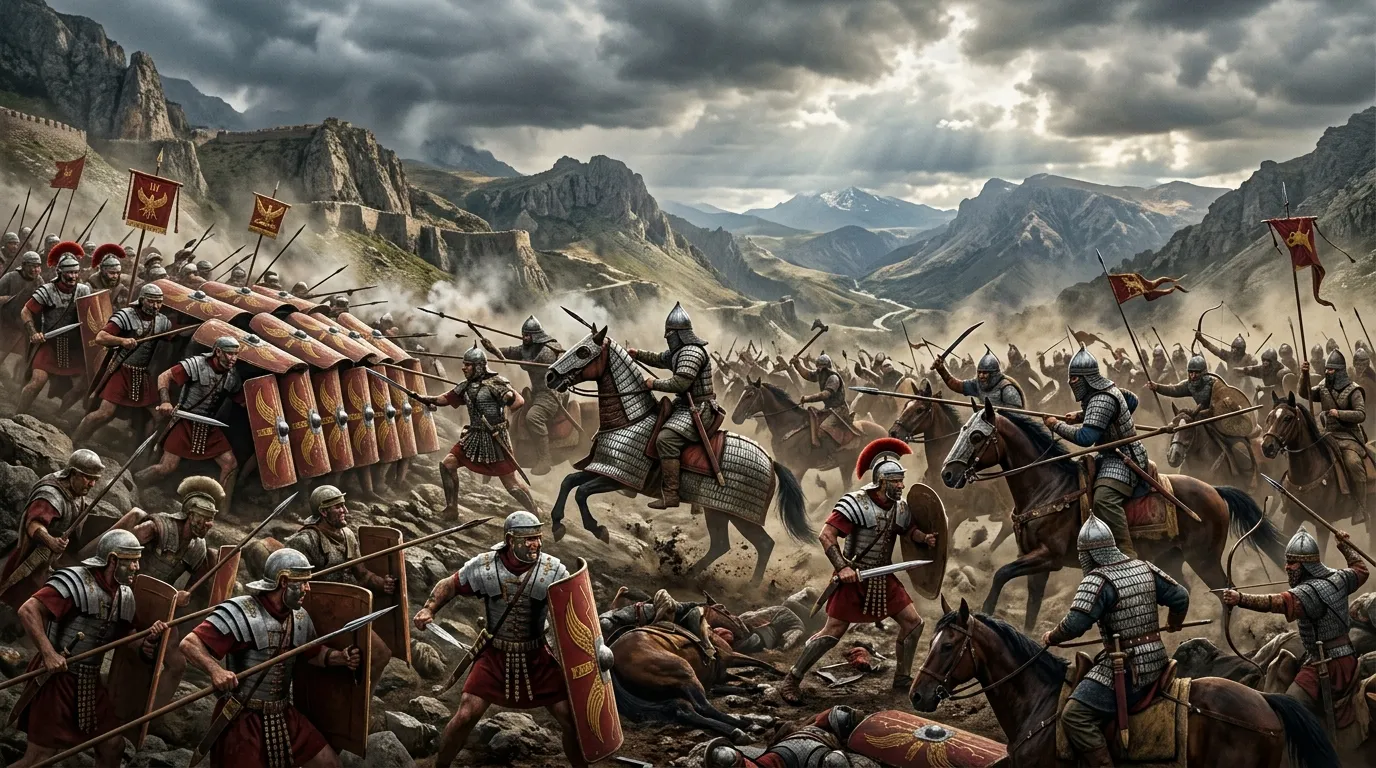
Paetus proved incompetent. In 62 AD, he advanced recklessly and allowed his army to be surrounded by the Parthians at the Battle of Rhandeia . Starving and demoralized, the Roman legions were forced to surrender and pass under the yoke—a humiliating symbol of submission. They evacuated Armenia, leaving it once again under Parthian control.
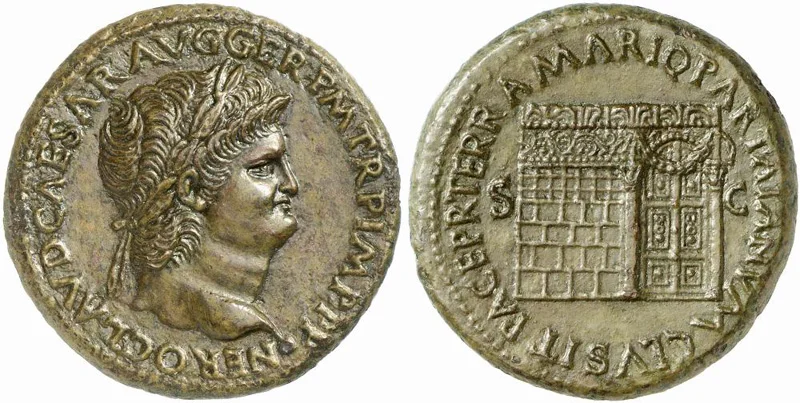
Despite the defeat at Rhandeia, Rome could not accept the loss of prestige. Corbulo was given imperium maius (supreme command) and assembled a massive force to invade again. He crossed the Euphrates and made a show of force, threatening the heart of Parthia. Realizing that a full-scale war would be devastating for both empires, envoys were exchanged, and Vologases I agreed to negotiate. At Rhandeia, the site of the recent Roman defeat, a historic compromise was reached: Tiridates I would remain King of Armenia (satisfying Parthia), but he would travel to Rome to receive his crown from Emperor Nero (satisfying Rome). This 'compromise of Rhandeia' brought peace to the frontier for fifty years.