Historical Map
Font Size
Language
Theme

Loading Map...

Map height
Scroll Sensitivity1.0
247 BC – 238 BC

War for the Foundation of the Parthian Kingdom

The Parni - The Parni were a steppe people who moved south from Central Asia. They formed the core of the Arsacid (Parthian) Kingdom under Arsaces., a nomadic tribe of skilled horse archers led by the charismatic Arsaces I - Arsaces I was the leader of the Parni tribe who conquered Parthia from the Seleucid Empire and founded the Parthian Empire., seized the province of Parthia - A historical region in northeastern Iran. It was the original base of the Parni tribe who founded the Parthian Empire (Arsacid Empire). The region was known for its skilled horsemen and became the heart of a superpower that rivaled Rome. from the crumbling Seleucid Empire - A major Hellenistic state in Western Asia that existed from 312 BC to 63 BC. Founded by Seleucus I Nicator, it controlled vast territories including Anatolia, Persia, the Levant, Mesopotamia, and part.... This bold conquest marked the birth of the Parthian Empire - The Parthian Empire (247 BC – 224 AD), also known as the Arsacid Empire, was a major Iranian political and cultural power in ancient Iran. It was founded by Arsaces I of the Parni tribe after rebellin..., a superpower that would dominate the East and rival Rome for centuries.

LocationParthia - A historical region in northeastern Iran. It was the original base of the Parni tribe who founded the Parthian Empire (Arsacid Empire). The region was known for its skilled horsemen and became the heart of a superpower that rivaled Rome. and Hyrcania - An ancient region located southeast of the Caspian Sea, in present-day northern Iran and Turkmenistan. The name comes from the Old Persian 'Varkana' meaning 'Land of Wolves'. It was a fertile area with dense forests, and served as an important province of the Achaemenid and Seleucid empires before being absorbed into the Parthian Kingdom.
BelligerentsParni (Arsacid followers) - The Parthian Empire (247 BC – 224 AD), also known as the Arsacid Empire, was a major Iranian political and cultural power in ancient Iran. It was founded by Arsaces I of the Parni tribe after rebellin..., Seleucid Empire - A major Hellenistic state in Western Asia that existed from 312 BC to 63 BC. Founded by Seleucus I Nicator, it controlled vast territories including Anatolia, Persia, the Levant, Mesopotamia, and part...

Context & Background

c. 250 BC

The Restless Steppe

The Parni - The Parni were a steppe people who moved south from Central Asia. They formed the core of the Arsacid (Parthian) Kingdom under Arsaces. were a nomadic people, likely one branch of the Dahae - The Dahae were an Iranian nomadic confederation living on the steppe east and northeast of the Caspian Sea. Their core range covered parts of present-day western Turkmenistan and the lower Amu Darya River corridor. Some Dahae tribes, including the Parni, later moved south into Hyrcania and Parthia. confederation, active across the steppe east and northeast of the Caspian Sea before moving south. Unlike the settled Greeks or Persians, they lived in tents and were masters of hit-and-run tactics on horseback.

c. 250 BC

A Distracted Empire

The vast Seleucid Empire - A major Hellenistic state in Western Asia that existed from 312 BC to 63 BC. Founded by Seleucus I Nicator, it controlled vast territories including Anatolia, Persia, the Levant, Mesopotamia, and part... was fighting wars on all sides. Taking advantage of this, Andragoras - A Seleucid satrap of Parthia who rebelled against King Antiochus II Theos and declared independence around 245 BC. His secession weakened the region's defense, allowing Arsaces I and the Parni tribe to invade, defeat him, and establish the Parthian Empire., the Seleucid governor of Parthia - A historical region in northeastern Iran. It was the original base of the Parni tribe who founded the Parthian Empire (Arsacid Empire). The region was known for its skilled horsemen and became the heart of a superpower that rivaled Rome., declared independence and made himself king. But without the Emperor's protection, he was vulnerable.

The Narrative

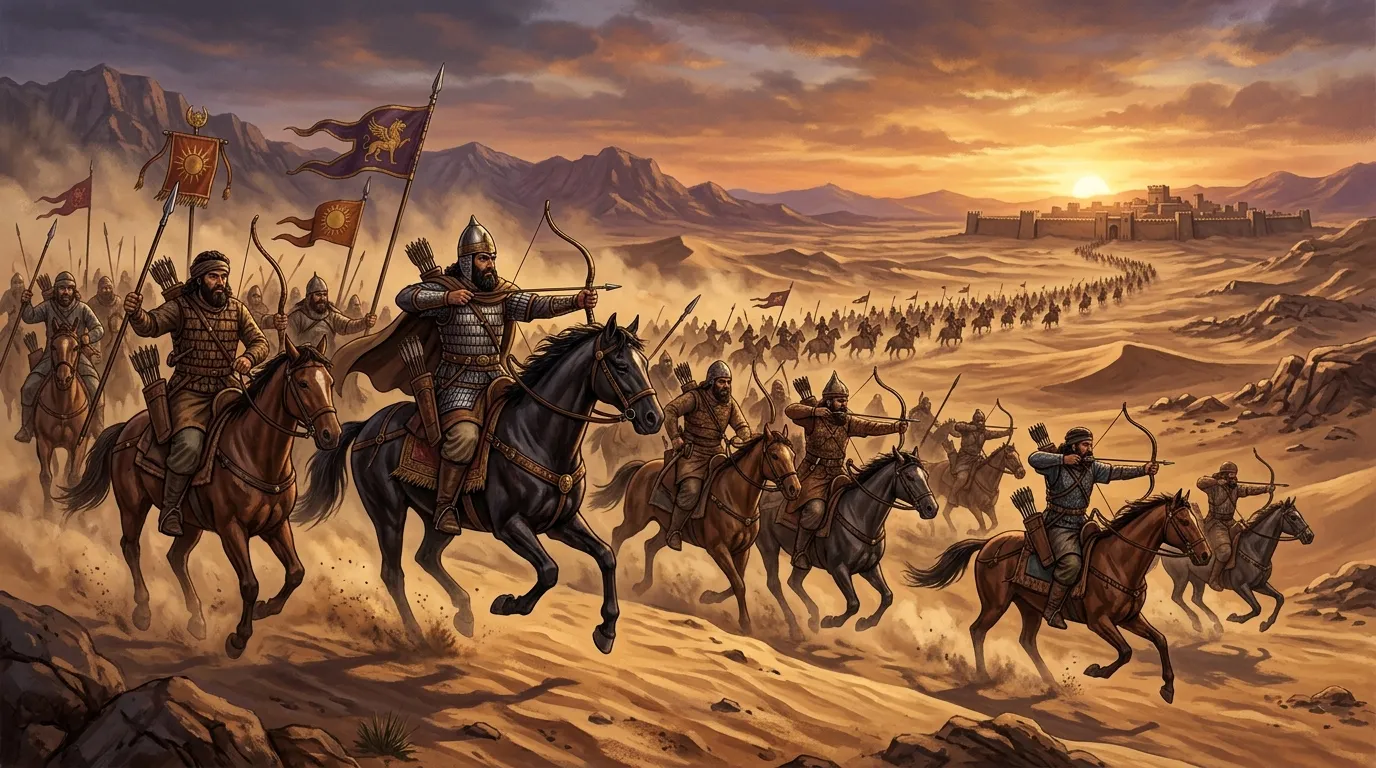
Arsaces - Arsaces I was the leader of the Parni tribe who conquered Parthia from the Seleucid Empire and founded the Parthian Empire., the leader of the Parni - The Parni were a steppe people who moved south from Central Asia. They formed the core of the Arsacid (Parthian) Kingdom under Arsaces., had been watching the chaos in Parthia - A historical region in northeastern Iran. It was the original base of the Parni tribe who founded the Parthian Empire (Arsacid Empire). The region was known for its skilled horsemen and became the heart of a superpower that rivaled Rome. closely. He knew that Andragoras - A Seleucid satrap of Parthia who rebelled against King Antiochus II Theos and declared independence around 245 BC. His secession weakened the region's defense, allowing Arsaces I and the Parni tribe to invade, defeat him, and establish the Parthian Empire. was isolated and weak. In 247 BC, Arsaces led his warriors across the border. These weren't ordinary soldiers; they were 'Cataphract - Heavily armored cavalry used by ancient Eastern empires like Parthia and the Sassanids, and later by Rome and Byzantium. Both the rider and the horse were covered in scale or mail armor, making them like ancient tanks. They charged into enemy lines with long lances to break formations.s' and horse archers who could shoot deadly arrows even while retreating—a skill that would later baffle Roman armies.

The invasion was swift and brutal. Andragoras, who had betrayed his own emperor, found no allies to help him. Arsaces defeated and killed him, seizing the region of Parthia for himself. To legitimize his rule, Arsaces crowned himself king at Asaak - The sacred city where Arsaces I, founder of the Parthian Empire, was crowned king. It was here that the eternal fire of the Arsacid dynasty was kept burning, symbolizing royal power and divine protection., where an eternal fire was lit to honor the new dynasty.

The Seleucid Emperor Seleucus II eventually tried to retake the lost province, but it was too late. The Parni had adopted the name 'Parthians' and fortified their positions in Hyrcania - An ancient region located southeast of the Caspian Sea, in present-day northern Iran and Turkmenistan. The name comes from the Old Persian 'Varkana' meaning 'Land of Wolves'. It was a fertile area with dense forests, and served as an important province of the Achaemenid and Seleucid empires before being absorbed into the Parthian Kingdom.. They used the rugged terrain and their mobile cavalry to outmaneuver the heavy Greek phalanx - An ancient Greek and Macedonian dense infantry formation. Soldiers overlapped shields and presented a forest of spears, forming an impenetrable defensive wall.es. The Parthian victory was complete, and 247 BC was celebrated forever as the beginning of the Arsacid Era.
Chronology

247 BC

Conquest of Parthia - A historical region in northeastern Iran. It was the original base of the Parni tribe who founded the Parthian Empire (Arsacid Empire). The region was known for its skilled horsemen and became the heart of a superpower that rivaled Rome.

📍Parthia (Northern Iran) (Map)

Arsaces I - Arsaces I was the leader of the Parni tribe who conquered Parthia from the Seleucid Empire and founded the Parthian Empire. invades Parthia - A historical region in northeastern Iran. It was the original base of the Parni tribe who founded the Parthian Empire (Arsacid Empire). The region was known for its skilled horsemen and became the heart of a superpower that rivaled Rome., defeats and kills the rebel governor Andragoras - A Seleucid satrap of Parthia who rebelled against King Antiochus II Theos and declared independence around 245 BC. His secession weakened the region's defense, allowing Arsaces I and the Parni tribe to invade, defeat him, and establish the Parthian Empire., and establishes the Arsacid Dynasty. This event marks the official start of the Parthian Empire - The Parthian Empire (247 BC – 224 AD), also known as the Arsacid Empire, was a major Iranian political and cultural power in ancient Iran. It was founded by Arsaces I of the Parni tribe after rebellin.... The Parni - The Parni were a steppe people who moved south from Central Asia. They formed the core of the Arsacid (Parthian) Kingdom under Arsaces. cavalry's mobile tactics, including the 'Parthian Shot' (firing backward while feigning retreat), helped make this conquest possible.

Truce / Interlude (9 years)
238 BC

Annexation of Hyrcania

📍Hyrcania (Caspian Sea coast) (Map)

The Parthians expanded north into Hyrcania - An ancient region located southeast of the Caspian Sea, in present-day northern Iran and Turkmenistan. The name comes from the Old Persian 'Varkana' meaning 'Land of Wolves'. It was a fertile area with dense forests, and served as an important province of the Achaemenid and Seleucid empires before being absorbed into the Parthian Kingdom. and seized the fertile Caspian littoral. By securing farmland, forest resources, and key routes along the southern Caspian corridor, they strengthened supplies and manpower while shielding their rear from raids by the Dahae - The Dahae were an Iranian nomadic confederation living on the steppe east and northeast of the Caspian Sea. Their core range covered parts of present-day western Turkmenistan and the lower Amu Darya River corridor. Some Dahae tribes, including the Parni, later moved south into Hyrcania and Parthia. nomads of the northeastern Caspian steppe. This consolidation provided a stable base for further Arsacid expansion.

Art & Heritage

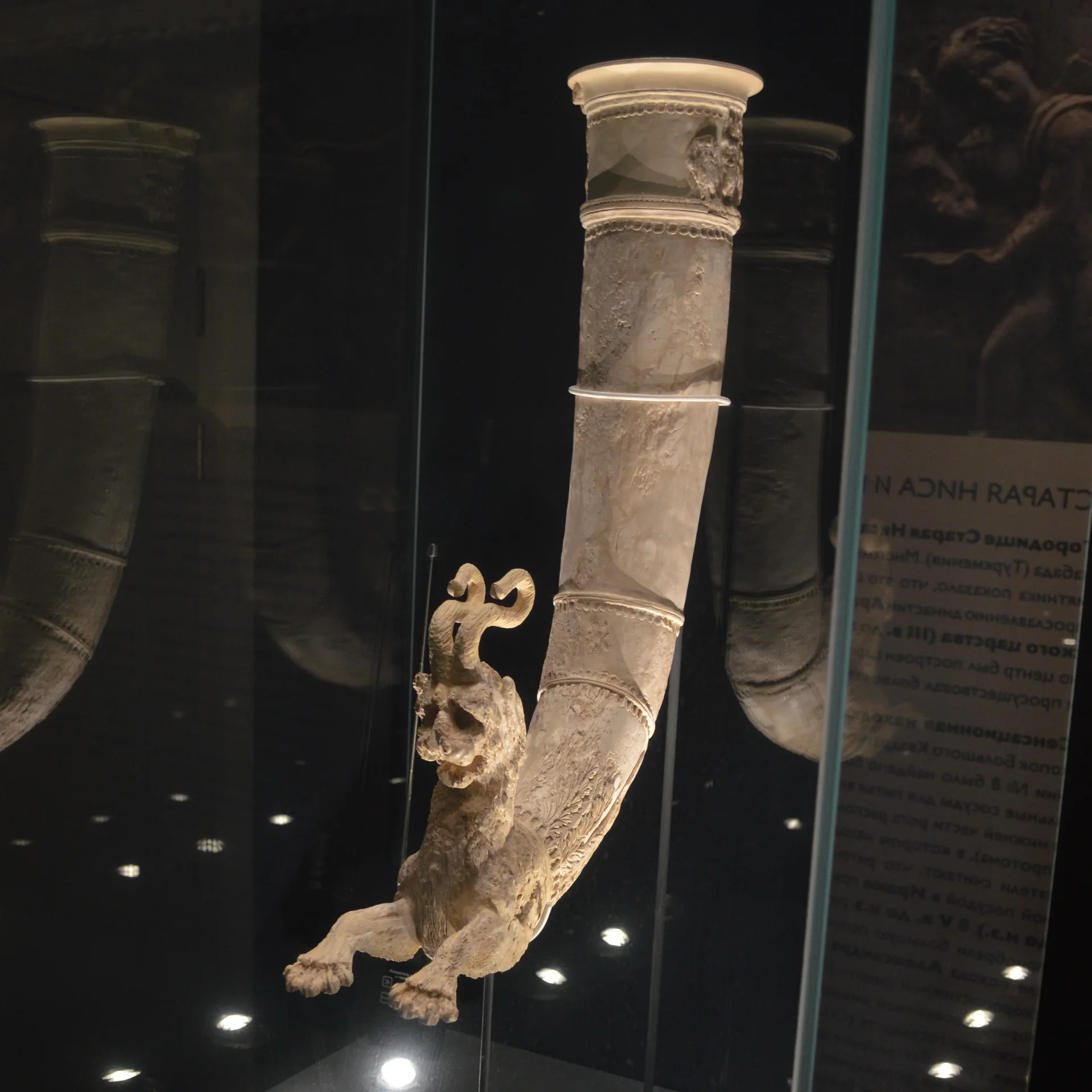
The Ivory Rhytons of Old Nisa

The Ivory Rhytons of Old Nisa

Craftsmen at the Parthian court, 2nd century BC

🏛️ National Museum of Turkmenistan, Ashgabat

Drinking horns carved from elephant ivory, ending in griffins and centaurs and ringed with scenes of Greek gods. More than forty were found in a storeroom at the first Parthian royal centre. They show a court that hunted on horseback like nomads and drank from vessels decorated like Greek ones.

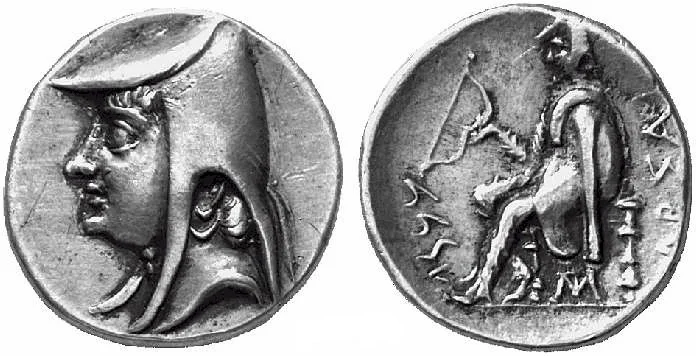
The Drachm of Arsaces I

The Drachm of Arsaces I

Early Parthian mint, c. 238-211 BC

🏛️ British Museum, London, and other numismatic collections

A silver coin showing the founder in a soft steppe cap on one side, and on the other a seated archer holding a bow. That archer stayed on Parthian coins for nearly five centuries. Later kings all took the name Arsaces as a title, the way Roman emperors took the name Caesar.

Related Videos

The Rise and Fall of Parthia - Rome's Greatest Enemy - Ancient Civilizations

History Quiz

1 / 3

Who led the Parni and founded the Arsacid dynasty after seizing Parthia?