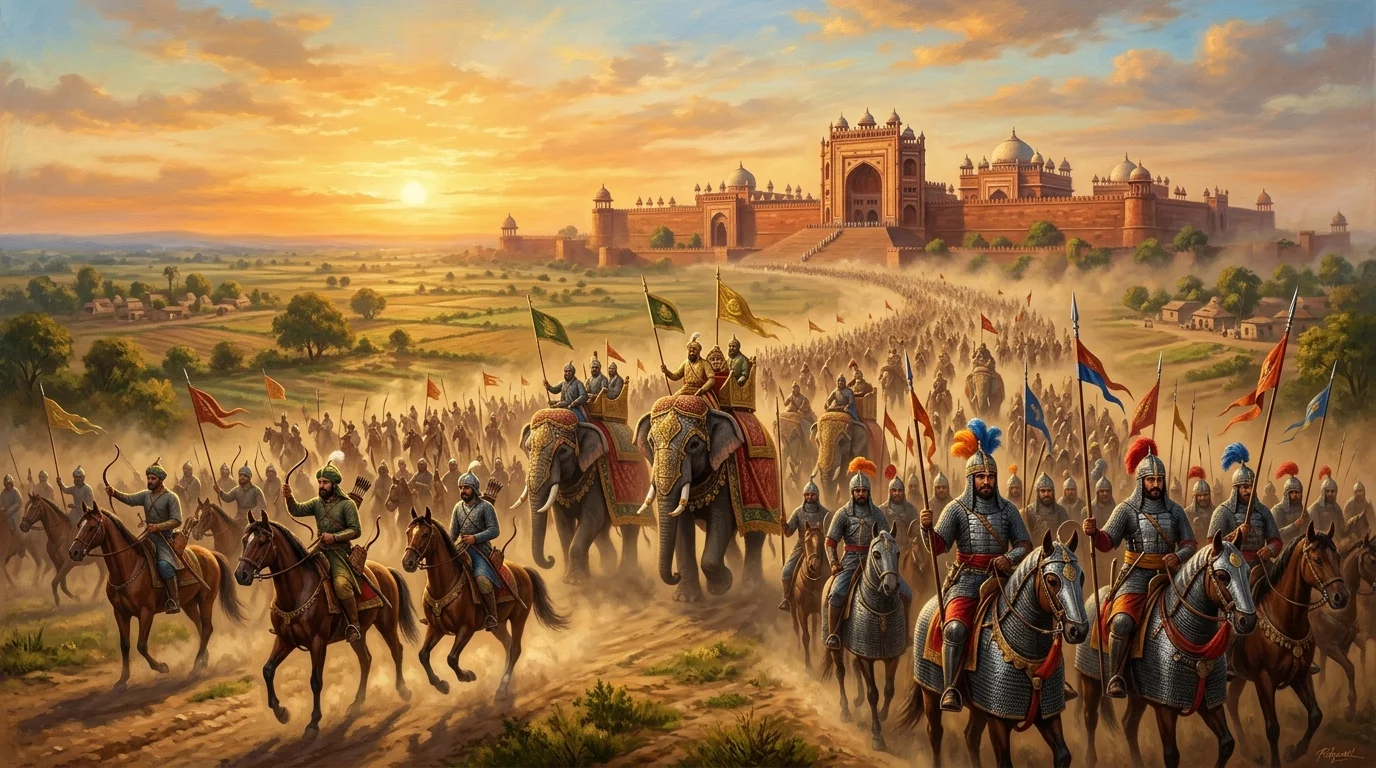
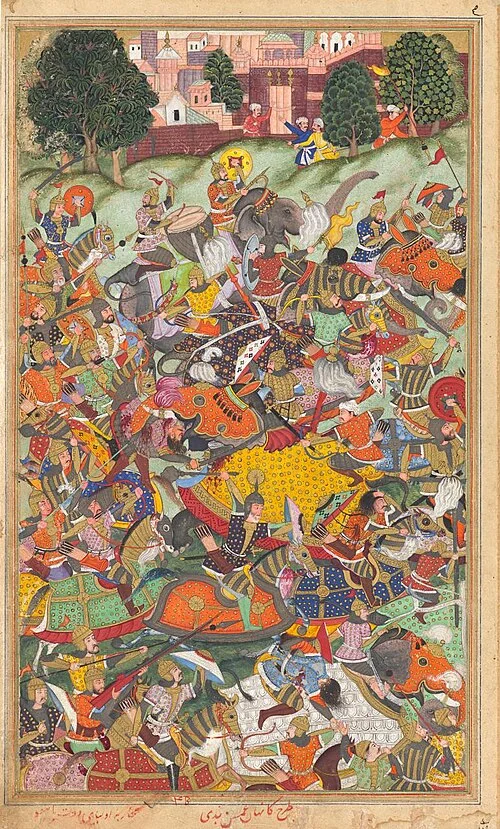
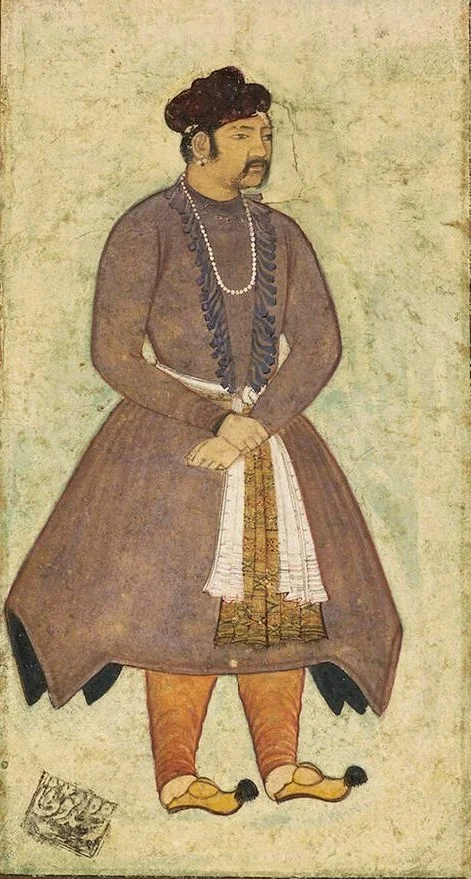
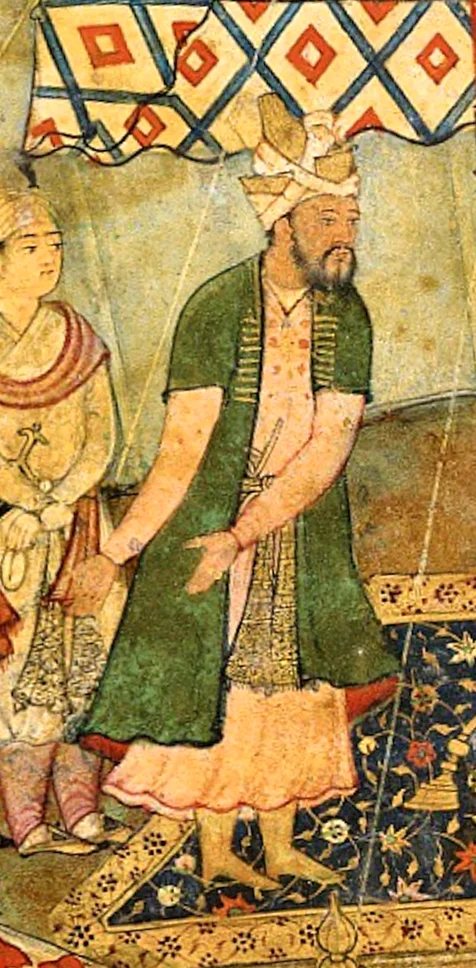
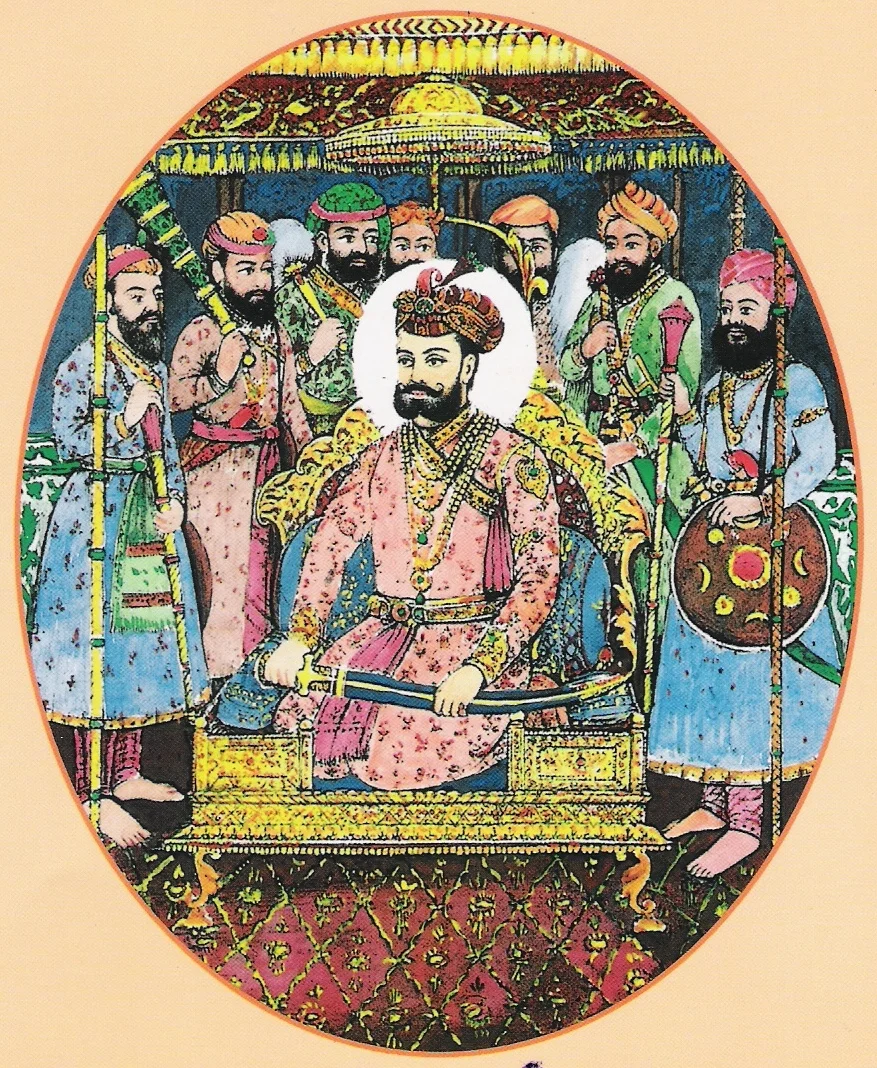
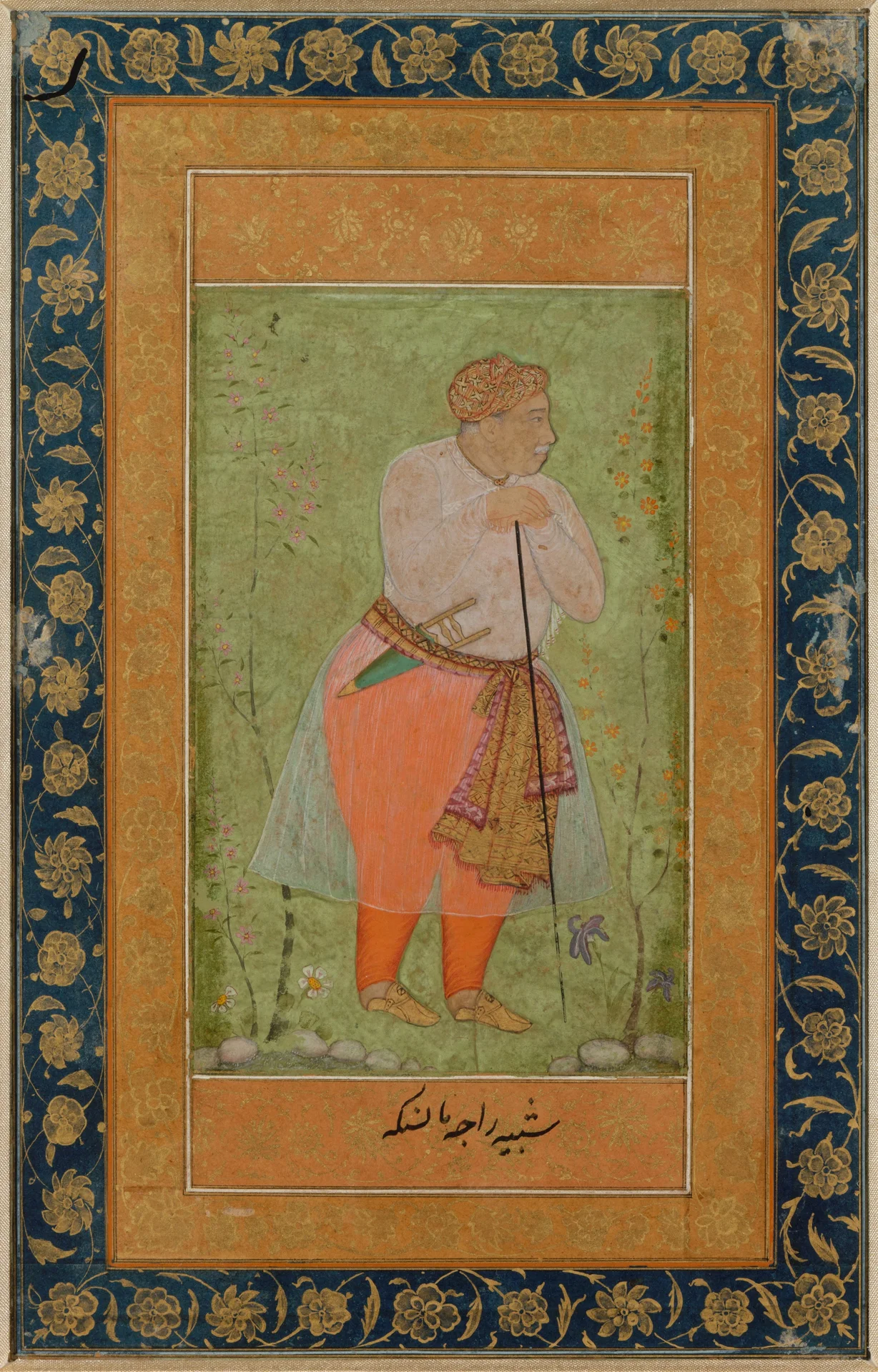
In January 1556, while on an expedition to Punjab - Punjab is a vast, fertile plain region straddling northwestern India and eastern Pakistan. Its name is derived from the Persian words panj ('five') and āb ('water' or 'river'), literally translating to the 'Land of Five Rivers'. Five monumental Himalayan tributaries of the Indus River system—the Jhelum, Chenab, Ravi, Beas, and Sutlej—crisscross this sprawling landscape. Silt and nutrient-rich alluvium carried down from the mountains by these rivers make Punjab one of the most productive agricultural heartlands in Asia. Revered for centuries as the 'breadbasket of the subcontinent', its fertile soil produces abundant yields of wheat, rice, sugarcane, and cotton. The climate features hot summers nourished by monsoon rains, followed by cool, crisp winters. Blessed with agricultural prosperity, major vibrant cities such as Lahore, Amritsar, and Faisalabad have thrived here for centuries. It is the cultural home of the spirited Punjabi people, known for their colorful folklore, high-energy Bhangra music and dance, and rich culinary traditions. Punjab is also the historic birthplace of Sikhism, centered around the revered Golden Temple (Harmandir Sahib) in Amritsar, and remains an indispensable agricultural and economic powerhouse in South Asia. to wipe out the remnants of the Sur Empire - Afghan-led empire that ousted the Mughals from northern India, renowned for monumental infrastructure like the Grand Trunk Road and the creation of the silver Rupee., the thirteen-year-old boy Akbar - Ascending the throne at age 13, he triumphed at the Second Battle of Panipat, annexed Rajputana, Gujarat, and Bengal, and transformed the Mughal realm into a flourishing, cosmopolitan world empire through administrative genius and religious tolerance. was hurriedly crowned emperor on a makeshift throne of mud and bricks. His father, Humayun, had died suddenly after tripping on library stairs, leaving behind an empire that was merely an empty shell. Delhi and Agra had fallen into the hands of Hemu - Rising from a humble saltpetre merchant to prime minister of the Sur Empire, he won 22 consecutive battles, recaptured Delhi, and crowned himself Emperor Vikramaditya, before meeting a tragic defeat at the Second Battle of Panipat when struck by a stray arrow., a brilliant general who claimed the ancient Hindu imperial title 'Vikramaditya - Vikramaditya is an esteemed Sanskrit imperial title translating to the 'Sun of Valor', celebrated as the most honorable title a subcontinental monarch could hold. It originates from the legendary king of Ujjain who repelled foreign invaders and protected his people, enduring in folklore as the paragon of wisdom and chivalric kingship. Celebrated historical monarchs, including Gupta Emperor Chandragupta II and the 16th-century general Hemu, assumed the title after decisive victories to proclaim imperial grandeur and legitimacy.' after 22 consecutive victories, leaving the Mughal generals crying in terror and begging to flee to Kabul - A 3,500-Year-Old Strategic Crossroads beneath the Hindu Kush Kabul is the capital and largest city of Afghanistan, situated in a high-altitude mountain valley (elevation ~1,800 m) south of the Hindu Kush range. As a pivotal crossroad on the southern branches of the Silk Road linking Central Asia and the Indian subcontinent, it has long been known as the historic 'Gateway to India.'Springboard of Conquerors and the Cradle of the Mughal Empire In 1398, Timur utilized Kabul as a vital military staging ground for his invasion of the Delhi Sultanate. In 1504, his descendant Babur, the founder of the Mughal Empire, captured Kabul and made it his principal base of operations. Babur held a lifelong affection for Kabul's temperate climate and lush orchards, and upon his death, he was laid to rest in his beloved terraced park, the Gardens of Babur (Bagh-e Babur).A Natural Fortress of Empires Overlooking the historic city sits the ancient fortress of Bala Hissar, founded in the 5th century as a formidable stronghold against invading armies. Controlling the southern approaches to the Salang Pass and the route eastward to the Khyber Pass, Kabul has always occupied an indispensable geopolitical position in Central and South Asian history.. However, the boy emperor and his regent Bairam Khan - Loyal general who served Babur and Humayun, orchestrated Humayun's restoration, and served as guardian and regent for the young Akbar, winning the pivotal Second Battle of Panipat to rescue the Mughal Empire from the brink of destruction. refused to retreat. In November of that year, a miraculous victory on the plains of Panipat - Panipat is an ancient, historic city situated on the fertile plains along the Yamuna River basin in Haryana, northern India, roughly 90 kilometers north of Delhi. Today, Panipat is internationally renowned as the 'City of Weavers', celebrated as a leading textile and handloom manufacturing capital that produces fine carpets, blankets, and textiles exported worldwide. The city's heritage extends back thousands of years to ancient Indian civilization. According to sacred tradition, it originated as 'Paniprastha', one of the five historic townships requested by the Pandava brothers in the ancient epic Mahabharata. Straddling the historic Grand Trunk Road, the legendary trans-subcontinental trade artery, Panipat developed early into a prosperous commercial crossroad for merchants and master weavers. Because of its strategic gateway position guarding the northern plains leading into Delhi, the expansive open fields surrounding Panipat became the stage for three fateful clashes (the First, Second, and Third Battles of Panipat) between the 16th and 18th centuries that repeatedly redirected the course of South Asian empire. Today, Panipat is a thriving industrial hub where lively textile bazaars harmoniously meet Mughal-era monuments such as the historic Kabuli Bagh Mosque., secured by a single arrow that struck Hemu's eye, allowed Akbar to barely salvage his family's empire.
Yet, when Akbar declared his direct rule at the age of eighteen, the reality before him remained bleak. The Mughals - A magnificent Islamic empire that ruled most of the Indian subcontinent, famous for its incredible wealth and architectural wonders like the Taj Mahal. were merely 'Central Asian foreign invaders' who could be driven out of the vast land of Hindustan - Hindustan is a historic geographic term derived from Persian, originally meaning the 'Land beyond the Indus River' or 'Land of the Hindus'. Historically, it specifically referred to the vast, fertile plains of Northern India—the Indo-Gangetic Plain—stretching between the Himalayas in the north and the Vindhya Range in the south. Nourished by the great Indus and Ganges river systems, this alluvial heartland supported dense populations, abundant agriculture, and great commercial cities. Throughout the medieval and early modern eras, it served as the imperial core of the Delhi Sultanate and the Mughal Empire, distinguished from the southern Deccan plateau. The melting pot of diverse cultures and languages across the region gave rise to Hindustani, the lingua franca that became the parent of modern Hindi and Urdu. Over time, the term also expanded to represent the cultural identity of the entire Indian subcontinent. at any moment. Surrounded by enemies—Afghan remnants in the north, rebellions in the northwest, and fierce Rajput warriors aiming at the throat of Delhi—he realized that the more he oppressed them with the sword, the fiercer the resistance of the natives would become.
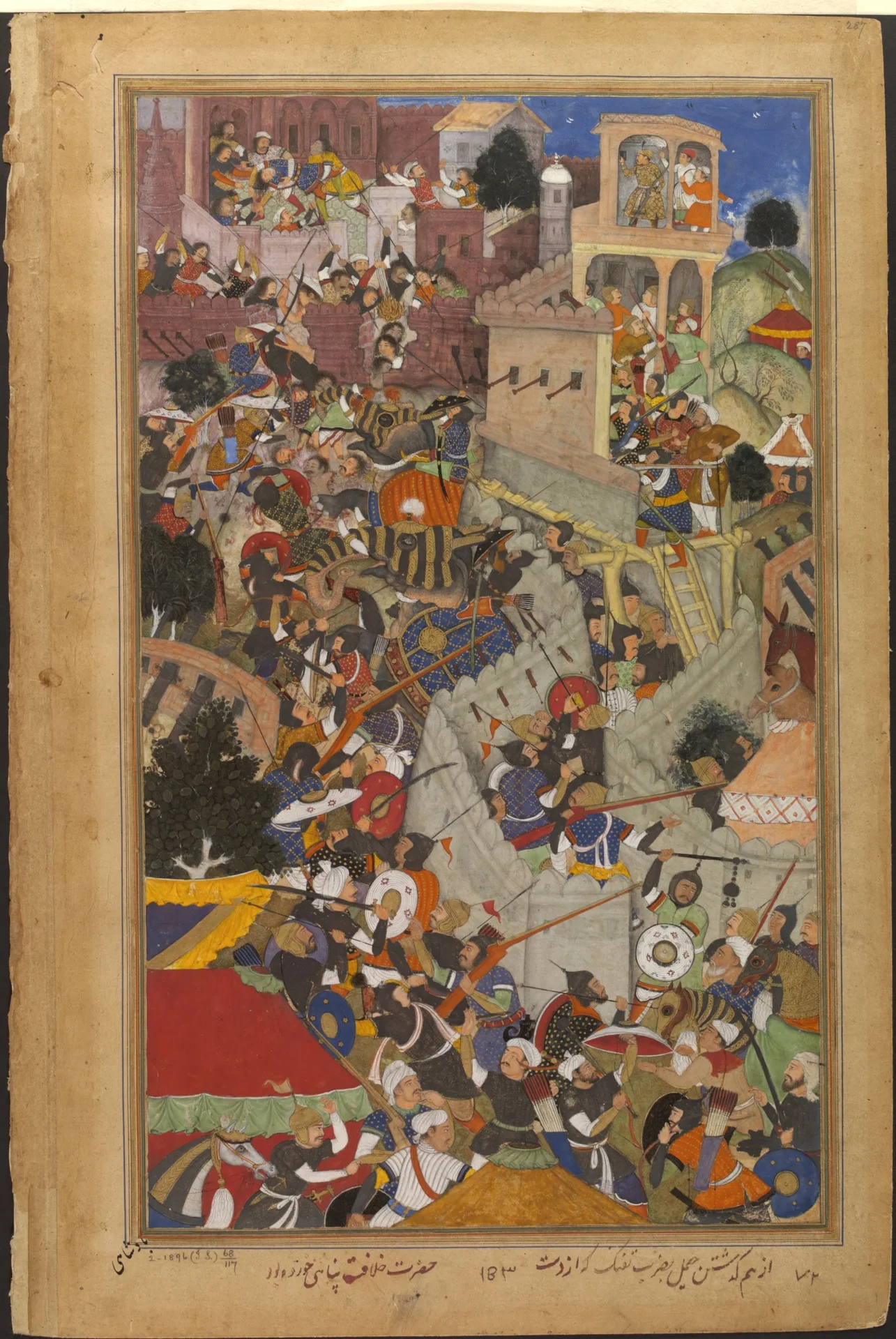
Akbar made a decision. If the Mughals were to become the true masters of India, he had to recognize the limits of military force. In 1567, after a grueling four-month siege, Akbar captured Chittorgarh - Chittorgarh is a historic city located along the Berach River in southern Rajasthan, northwestern India. Rising abruptly more than 150 meters above the surrounding plains to the east of the town is a massive rocky plateau, crowned by the colossal Chittorgarh Fort spanning nearly 2.8 square kilometers (about 700 acres). Resembling an immense ship floating above the open country, it is celebrated as the largest hill fort in India. Today, Chittorgarh is a thriving center for marble, granite, and cement industries, as well as a renowned cultural destination welcoming travelers and pilgrims from around the world. According to ancient legend, the fort's origin traces back to the Indian epic Mahabharata, where the mighty hero Bhima struck the rocky ground with his foot, causing a sacred subterranean spring to burst forth and form the Gaumukh reservoir. Historically, the citadel was founded in the 7th century by Chitrangada Mori of the Mori dynasty, who named it Chitrakut, the root of the modern name Chittor. From the 8th century onward, it served as the venerated capital of the Guhila and Sisodia Rajputs of the Mewar Kingdom, standing for centuries as the proud heart of Rajput honor and chivalry. Beyond its formidable perimeter walls, Chittorgarh is an engineering and architectural marvel. Despite the semi-arid climate, the plateau was designed with an ingenious network of 84 stepwells, reservoirs, and tanks capable of storing roughly 4 billion liters of rainwater—enough to sustain an army of 50,000 soldiers for four years without external supplies. Access to the summit was guarded by seven massive, fortified gateways arranged in a zigzag ascent, including Padan Pol and Ram Pol. Inside stand celebrated masterpieces of Rajput architecture, such as the 37-meter, nine-story Vijay Stambha (Tower of Victory) erected in 1448 by Rana Kumbha, the 12th-century Kirti Stambha (Tower of Fame), and grand historic palaces overlooking tranquil lotus ponds. Throughout its history, Chittorgarh was besieged by powerful external forces, including Sultan Alauddin Khalji of Delhi in 1303, Sultan Bahadur Shah of Gujarat in 1535, and the Mughal Emperor Akbar in 1567–1568. The fort became legendary throughout India for the unwavering resilience of its defenders, whose sacrifices became woven into regional folklore and poetry. In 2013, Chittorgarh Fort was inscribed as a UNESCO World Heritage Site as part of the Hill Forts of Rajasthan, celebrated worldwide for its dramatic landscape, monumental fortifications, and enduring cultural heritage., the impregnable fortress and heart of Rajputana - Rajputana, meaning the 'Land of the Rajputs', is a historic region encompassing modern-day Rajasthan and contiguous territories in northwestern India. Geographically striking and diverse, it is framed by the sprawling golden dunes of the Great Thar Desert to the west and bisected diagonally by the ancient, rugged ridges of the Aravalli Range. The region takes its identity from the Rajputs—a proud martial nobility whose name derives from the Sanskrit rajaputra ('son of a king'). Organized into storied ruling clans across kingdoms such as Mewar, Marwar, and Amber, they crowned sheer clifftops with monumental sandstone citadels including Chittorgarh, Kumbhalgarh, and Jaisalmer, developing a celebrated chivalric ethos centered upon martial honor and steadfast devotion to the land. Despite a semi-arid climate where water was precious, Rajputana fostered architectural wonders such as subterranean stepwells (baoris) and ornate palace complexes, alongside vibrant folk music, painting traditions, and brilliant textile crafts. Today, recognized as one of India's most evocative cultural heartlands, Rajputana endures as a living tapestry of desert chivalry, monumental heritage, and timeless royal pageantry.. As the walls were breached, the women threw themselves into the fire in the tragic ritual of Jauhar - Jauhar was a tragic rite of mass self-immolation in medieval India, practiced by noble women when a fortress was on the brink of falling. In the brutal warfare of the era, the fall of a castle often meant that surviving women were subjected to enslavement, violence, and dishonor. Rather than endure capture and humiliation at the hands of the enemy, they chose to preserve their dignity and honor through death. In Rajput warrior society, personal honor and clan dignity were held above life itself. When defeat became inevitable and defending husbands faced certain death, the women donned their finest wedding finery and stepped into roaring pyres. This heartbreaking choice also freed the warriors from anguish over their families' fate, allowing them to sever all earthly attachments before their final stand. Once the pyres were lit, the men dressed in sacred saffron robes of martyrdom, threw open the gates, and charged into the enemy ranks to fight to the last breath in a charge called 'saka'. The three devastating sieges of Chittorgarh Fortress remain the most renowned examples, remembered in Indian history as a solemn symbol of refusal to surrender., while the warriors donned red saffron robes and rushed out to fight to the death. Akbar had won, but standing atop the ashes of the fortress, he faced profound skepticism. It was a bitter realization that ruthless massacres and subjugation could never eternally rule this land of fierce warriors.
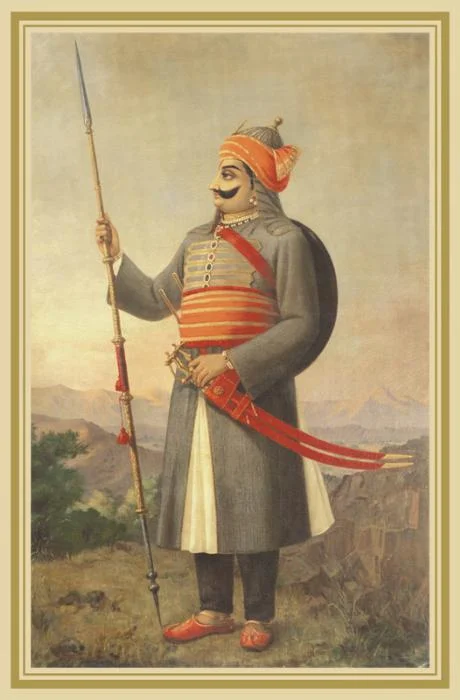
Thereafter, Akbar's blade aimed for 'integration' rather than destruction. Instead of purging defeated Rajput lords, he extended an unprecedented hand of reconciliation. He did not force the Hindu princesses he married into political alliances to convert to Islam, allowing them to freely pray and worship their own deities within the imperial palace. He even appointed Man Singh - Supreme Commander of Emperor Akbar and one of the Nine Gems (Navaratnas), who commanded at Haldighati and expanded the Mughal Empire from Afghanistan to Bengal and Odisha., a former enemy Rajput general, as the supreme commander of the imperial army. Instead of alienating the conquered, he embraced them into the core ruling class of the empire.
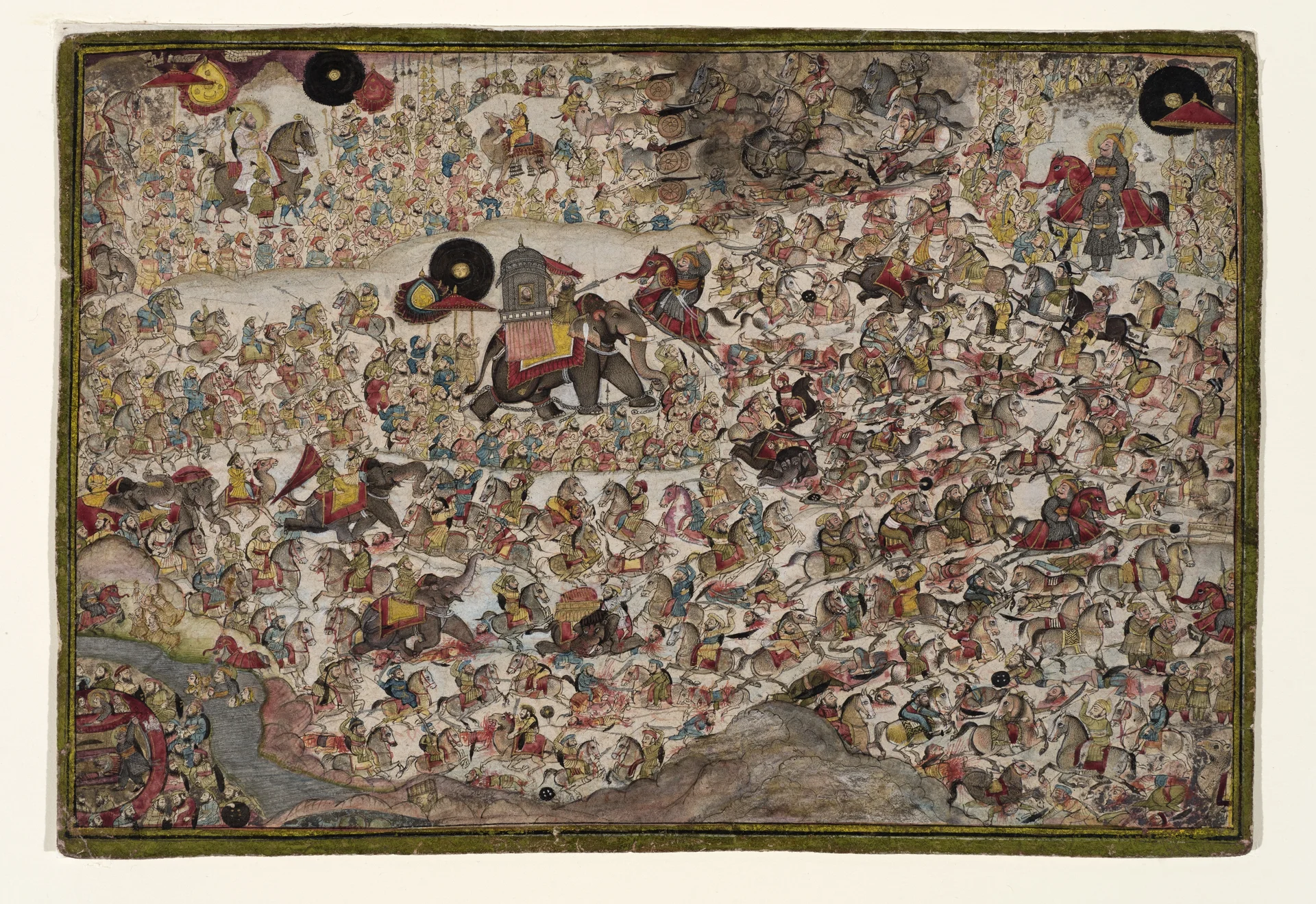
The stage that proved this rule of coexistence was the Battle of Haldighati in 1576. When Maharana Pratap - Grandson of Rana Sanga who steadfastly refused to submit to the Mughal Empire when other Rajput rulers capitulated, heroically fighting at the Battle of Haldighati and waging legendary guerrilla warfare across the Aravalli hills to preserve Mewar's independence., the ruler of Mewar - A legendary Rajput kingdom renowned for its fierce independence and unyielding resistance against foreign empires. who fiercely refused to submit, launched a desperate resistance, Akbar sent a massive army led not by a Muslim general, but by the Hindu Man Singh. The bizarre sight of a Hindu general holding the Mughal emperor's banner to fight his own people was the decisive moment symbolizing that the Mughals had transformed from a 'foreign Muslim conquering army' into a 'multi-ethnic Indian unified empire.'
Having achieved political harmony, Akbar overhauled the empire's veins. After annexing Gujarat, a treasure trove of maritime trade, in 1572 and seizing Bengal to secure vast wealth, he implemented radical reforms to return that wealth to the people. He abolished the 'jizya', a religious poll tax - Jizya was an annual per capita poll tax levied on non-Muslim subjects (dhimmi) residing permanently in an Islamic state. In return for paying the tax, the state guaranteed their physical protection, property rights, and religious freedom, while exempting them from military service. The tax applied strictly to able-bodied adult males capable of bearing arms and was graduated based on personal wealth. Women, children, the elderly, monks, ascetics, and the destitute were universally exempt from payment. In the Mughal Empire, where Hindus constituted the majority population, the tax had long been a source of deep grievance. Mughal Emperor Akbar abolished the discriminatory levy in 1564 to foster universal religious harmony and win the allegiance of Rajput and Hindu subjects. that had humiliated non-Muslims for centuries, along with the Hindu pilgrimage tax - The Hindu pilgrimage tax (Pilgrim Tax) was a religious levy imposed by medieval Islamic rulers in India on Hindu devotees traveling to worship at sacred temples, shrines, and holy rivers. Substantial fees were collected from pilgrims visiting venerated sites such as Varanasi, Prayag (Allahabad), and Mathura. Because even the poorest believers were forced to pay to practice their faith, the tax was deeply resented by the Hindu majority as both an economic burden and a humiliating symbol of religious discrimination. For imperial treasuries and local officials, however, it generated immense revenue. In 1563, Emperor Akbar visited Mathura and, witnessing the distress of ordinary pilgrims, declared that taxing people for worshipping God was inherently unjust. He abolished the tax across the empire, setting a landmark precedent for religious tolerance that culminated in the repeal of the jizya the following year.. Suppressing fierce backlash from Islamic jurists, this measure finally led the Hindu subjects, who made up the majority of the population, to accept the Mughal emperor as 'our monarch.' Furthermore, he established the 'Mansabdari system - The Mansabdari system was a unified administrative and military ranking framework established by Mughal Emperor Akbar around 1571. Derived from 'mansab' (rank or office), it graded every imperial officer into a single hierarchy ranging from commanders of 10 to commanders of thousands. Officials were assigned dual ranks: 'Zat', determining personal precedence and base salary, and 'Sawar', designating the exact number of cavalrymen and warhorses they had to mobilize. To prevent fraud, imperial inspectors branded inspected military mounts with a hot iron mark under the Dagh system. Salaries were paid through temporary land revenue assignments called 'Jagirs', which were periodically rotated to prevent local rebellions. Ranks and assignments were strictly non-hereditary, establishing a meritocratic centralized empire open to both Muslims and Rajput nobles.,' which determined the hierarchy of nobles based on ability and military merit, preventing their hereditary feudalization. Together with his vizier Todar Mal, he settled the 'Zabt system,' which surveyed land production to levy rational taxes.
Ironically, though Akbar was an illiterate man who could not read, he was never confined by any dogma. Establishing the 'Ibadat Khana' (House of Worship) in his capital, Fatehpur Sikri - Red Sandstone Imperial City of Victory and Cultural Synthesis Fatehpur Sikri is an extraordinary imperial capital situated west of Agra in Uttar Pradesh, India, founded and meticulously planned by Akbar the Great in 1571. Following his triumphant annexation of the wealthy maritime Gujarat Sultanate in 1573, Akbar bestowed upon it the prefix Fatehpur ('City of Victory').The Prophecy of Salim Chishti and Buland Darwaza Long despondent over the lack of a male heir, Akbar visited the renowned Sufi mystic Sheikh Salim Chishti in the hamlet of Sikri. Following the saint's blessing, three sons were born to Akbar, including Prince Salim (the future emperor Jahangir). In gratitude, Akbar built a magnificent palace city around the saint's hermitage. To celebrate his Gujarat conquest, he erected the awe-inspiring 54-meter-high Buland Darwaza ('Gate of Magnificence') at the grand Jama Masjid.Ibadat Khana and Interfaith Dialogue At Fatehpur Sikri, Akbar established the Ibadat Khana ('House of Worship'), where scholars from Islam, Hinduism, Jainism, Zoroastrianism, and Jesuit Christianity engaged in spirited theological debates. This intellectual crossroads laid the foundation for Akbar's universal peace doctrine (Sulh-i-kul). However, acute water shortages and imperial campaigns in the northwest forced the court to abandon the sandstone city in 1585, preserving its pristine Mughal architecture as a timeless monument., he brought together Sunni and Shia Islamic scholars, Hindu Brahmins, Jain monks, Zoroastrian priests, and even Catholic Jesuit priests for all-night debates. His thirst to find a universal truth that bound all humans beyond fanaticism and prejudice sublimated into his governing philosophy of 'Sulh-i-Kul' (Absolute Peace). The destination reached by the young boy of Panipat, past the bloodbath of Chittorgarh, was not mere territorial expansion. It was a system fortified by institutions and tolerance, breaking down the barriers of religion and bloodline. Upon this backbone of coexistence that Akbar planted in the Indian subcontinent - From Drifting Island to Mountain Builder: The Birth of a Subcontinent A subcontinent is a vast, distinct landmass that forms part of a continent (Asia) yet is geographically demarcated by colossal mountain barriers and seas, giving it a unique climate, geography, and cultural character. Today, this vast region encompasses India, Pakistan, Bangladesh, Nepal, Bhutan, and Sri Lanka. Tens of millions of years ago, the prehistoric tectonic plate of India drifted across southern oceans and violently slammed into the Eurasian landmass. This colossal geological collision buckled the Earth's crust into the sky, creating the highest mountain ramparts on the planet: the Himalayas and the Hindu Kush.Natural Bastions and the Historic Gateways Guarded by soaring, snow-capped ranges to the north and embraced by the Arabian Sea, the Bay of Bengal, and the Indian Ocean to the south, the subcontinent functioned as a gigantic natural fortress. This geographic isolation allowed rich, indigenous civilizations to take root and flourish undisturbed for millennia. Yet the subcontinent was never completely isolated. Through narrow alpine clefts in the northwest—chiefly the legendary Khyber Pass and Bolan Pass—waves of Indo-Aryan migrants, the Macedonian phalanxes of Alexander the Great, and Central Asian conquerors like Timur and Babur surged into the river plains, reshaping political destinies. Meanwhile, seasonal monsoon winds propelled vibrant maritime trade networks connecting the subcontinent with Rome, Arabia, Southeast Asia, and China.Cradle of Faiths and Empires: The Legacy of Bharat Ancient texts referred to this expanse as Bharatavarsha (the realm of the legendary King Bharata), while Persian, Greek, and Arab travelers named it after the mighty western lifeline, the Indus River (Sindhu), giving rise to the names 'India' and 'Hindustan'. It served as the cradle of the urban Bronze Age Indus Valley Civilization, and as the birthplace of major world religions and philosophies including Hinduism, Buddhism, and Jainism. Successive imperial dynasties—from the ancient Maurya and Gupta Empires to the medieval Delhi Sultanate and the magnificent Mughal Empire—strove to unite the immense subcontinent under a single canopy, leaving an enduring tapestry of architectural wonders, languages, and cultural traditions., the Mughals could finally advance into the most brilliant golden age of multicultural prosperity in human history.