History
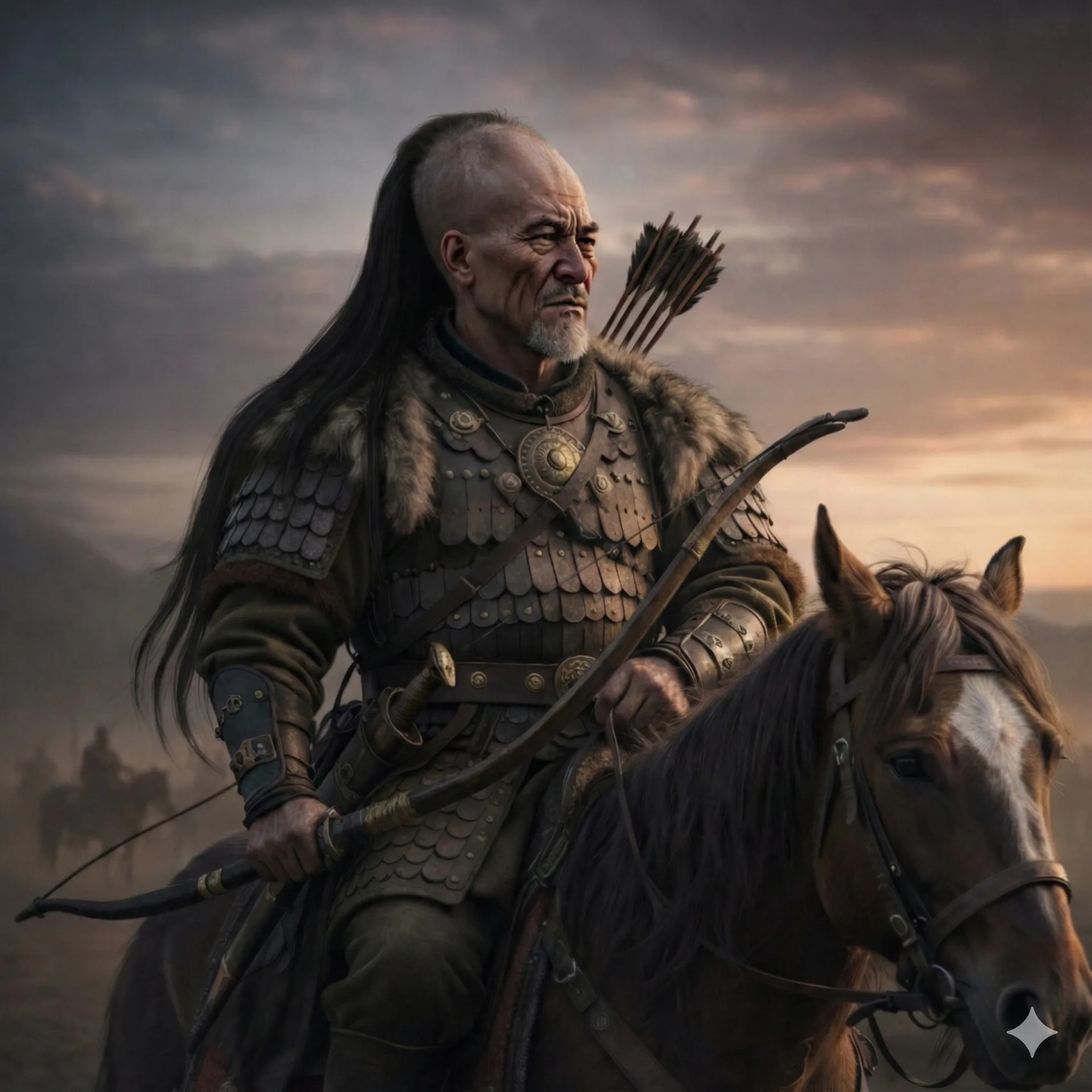
The Huns were a nomadic people from the Eurasian Steppe who appeared in Europe in the late 4th century. Their origins remain the subject of scholarly debate, with some linking them to the Xiongnu who had earlier threatened China.
A horse-archery culture with a lifestyle distinct from sedentary Europeans, they were known for their cranial deformation practices and terrifying battlefield effectiveness. Their arrival in the region north of the Black Sea - The Black Sea is a marginal mediterranean sea of the Atlantic Ocean lying between Europe and Asia. It was a critical region for trade and migration, and the Huns appeared in the region north of the Black Sea around 370 AD, triggering the Great Migration. around 370 AD catalyzed the Great Migration Period.
By subjugating the Alans and the Greuthungi Goths, they forced the Thervingi Goths to flee across the Danube into the Roman Empire in 376 AD. This domino effect destabilized the Roman frontier and permanently altered the demographic landscape of Europe.
Under the leadership of Attila (r. 434–453), the Huns established a vast but loose empire centered in the Pannonian Basin - The Pannonian Basin is a geologically distinct region in Central Europe, enclosed by the Carpathian Mountains, the Alps, and the Dinarides. Its vast, flat plains (the Great Hungarian Plain) resemble the Eurasian Steppe, making it an ideal western terminus for nomadic horse cultures. It served as the heartland of Attila's Hunnic Empire, the Avar Khaganate, and later the Kingdom of Hungary..
Attila, known as the 'Scourge of God,' united the Hunnic tribes and extorted massive tributes from the Eastern Roman Empire. He then turned his ambitions westward, invading Gaul in 451 AD, where he was checked at the Battle of the Catalaunian Plains, and later ravaging Italy.
However, the Hunnic Empire was structurally fragile, relying on the personal charisma of its leader and plunder. Following Attila's sudden death - In 453 AD, while planning a renewed invasion of the Eastern Roman Empire, Attila married a young woman named Ildico. During the wedding feast, he drank heavily. The next morning, he was found dead in his bed, having suffered a massive hemorrhage—likely a nosebleed or esophageal varices rupture—that choked him in his sleep. His sudden death created a power vacuum that led to the rapid disintegration of his empire. Some contemporary accounts and later legends speculated that Ildico assassinated him, but most historians favor natural causes exacerbated by alcohol. in 453 AD, his sons fought over the succession, leading to internal chaos.
Subject Germanic peoples, such as the Gepids and Ostrogoths, revolted and defeated the Huns at the Battle of Nedao - The Battle of Nedao took place in 454 AD in Pannonia (modern-day Hungary). Following Attila's death, his sons fought over the succession, prompting subject Germanic tribes to revolt. Led by Ardaric, king of the Gepids, a coalition including Ostrogoths and others defeated the Hunnic forces managed by Attila's son Ellac. The victory dismantled the Hunnic Empire; the Huns were expelled from Pannonia, and independent Germanic kingdoms, such as the Gepid and Ostrogothic Kingdoms, assumed control of the region. in 454 AD. The Hunnic hegemony collapsed as quickly as it had risen, and the Huns dissolved into the surrounding populations.