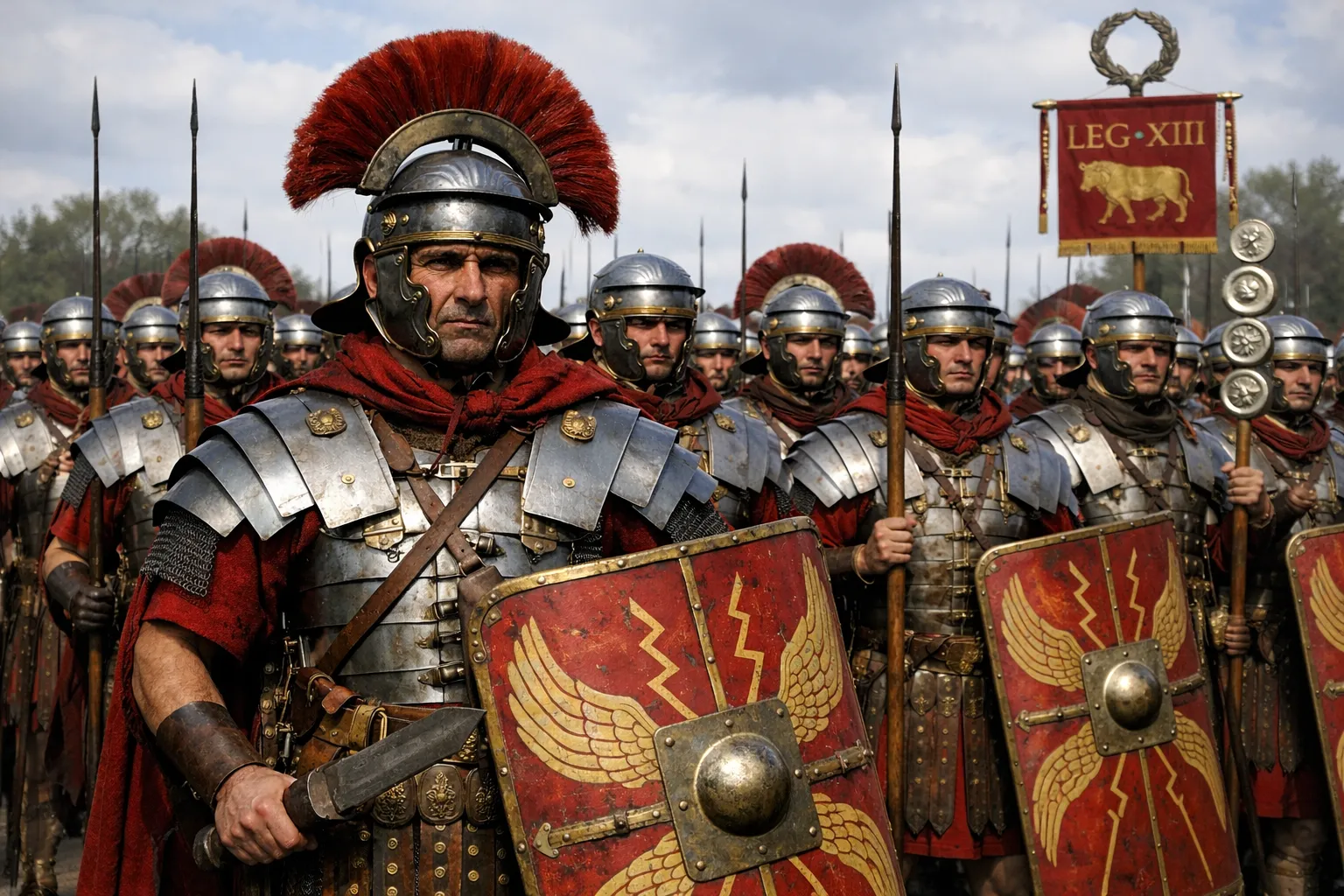
For centuries, the Macedonian Phalanx was the supreme military formation of the ancient world. Yet, it was ultimately superseded by the Roman Legion. This article explores the tactical nuances, equipment differences, and the decisive factors that led to Rome's military dominance.
Tactical Comparison
The Macedonian Phalanx: A Forest of Spears
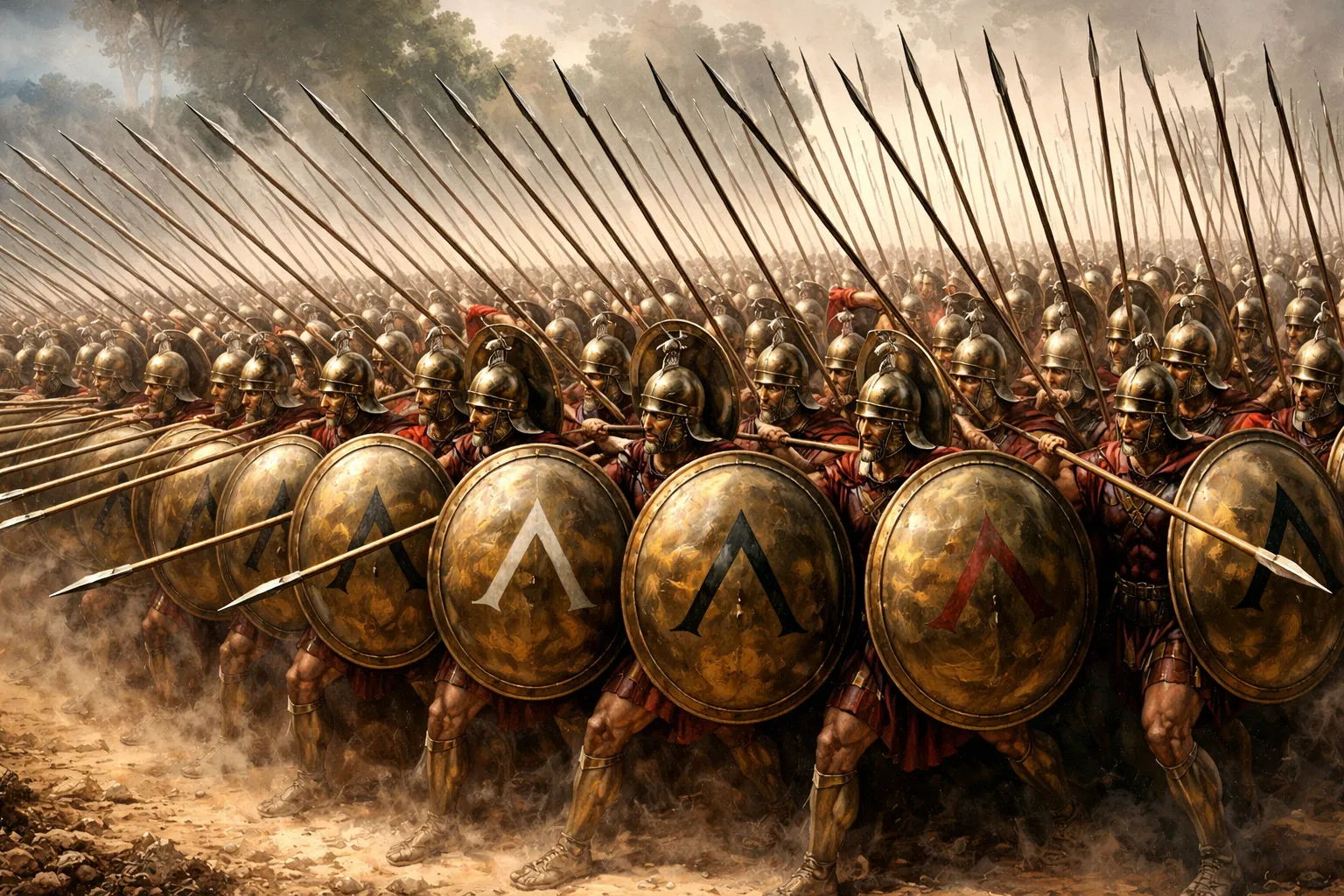
The Phalanx operated as a single, massive entity. Soldiers stood shoulder-to-shoulder, wielding the 'sarissa', a heavy pike up to 6 meters long. The first five rows projected their spear points beyond the front line, creating an impenetrable wall of iron.
Tactically, the phalanx was designed to pin the enemy in place with its terrifying frontal pressure. While the enemy struggled against the sarissas, elite cavalry would strike the flanks to deliver the killing blow (Hammer and Anvil tactics). On flat, open ground, a fully formed phalanx was virtually invincible frontally.
The Roman Way: The Pilum and the Charge
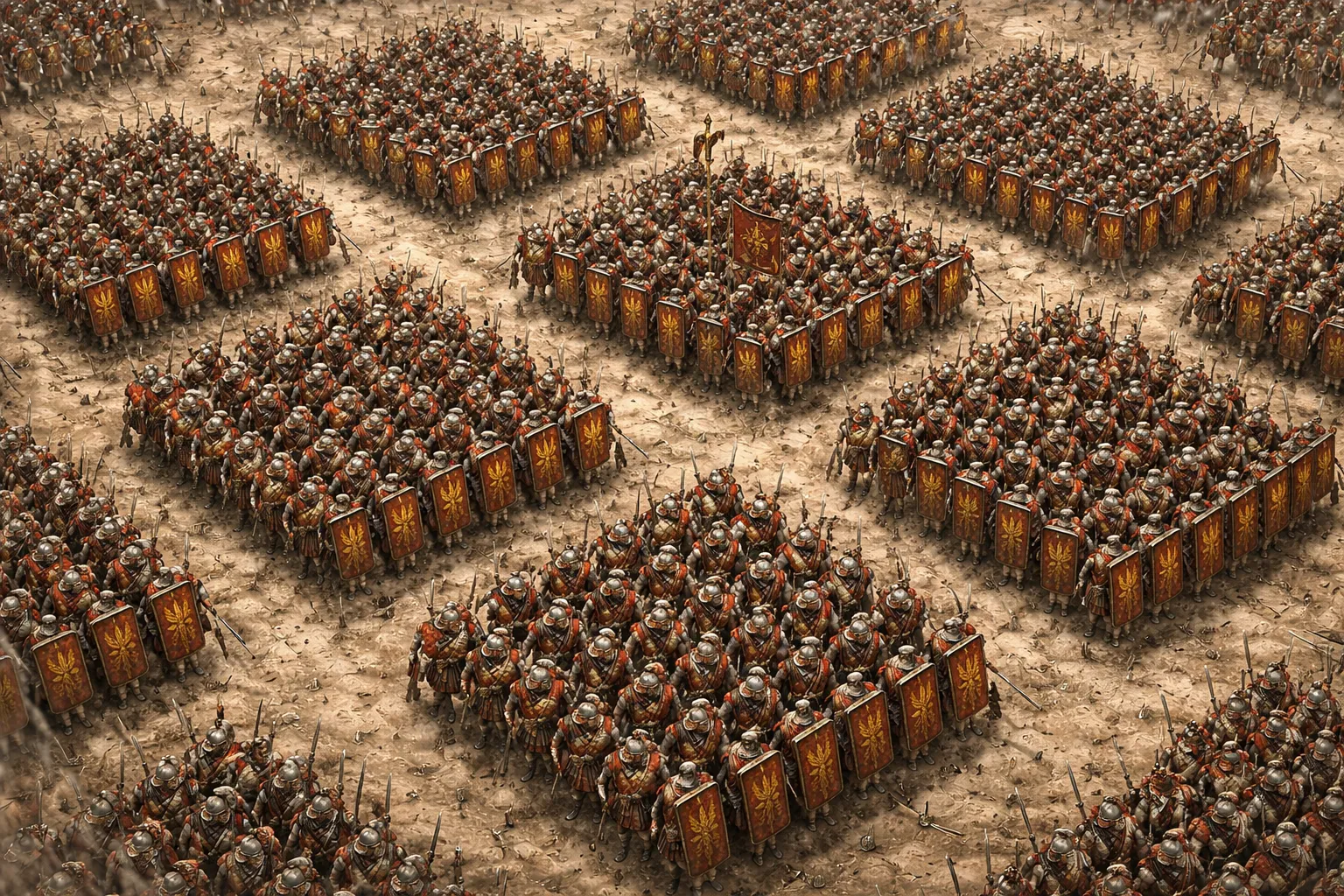
Unlike the phalanx, the Roman Legion was built for flexibility. The 'manipular' system divided the legion into small, independent units called maniples. Typically composed of 120 men (60 for the veteran Triarii) formed from two Centuries, these units could maneuver independently, making them effective even on rough terrain where the phalanx struggled. Deployed in a checkerboard pattern (Quincunx), this formation allowed fresh troops to step forward through gaps to relieve exhausted lines—a tactical fluidity the rigid phalanx could never match.
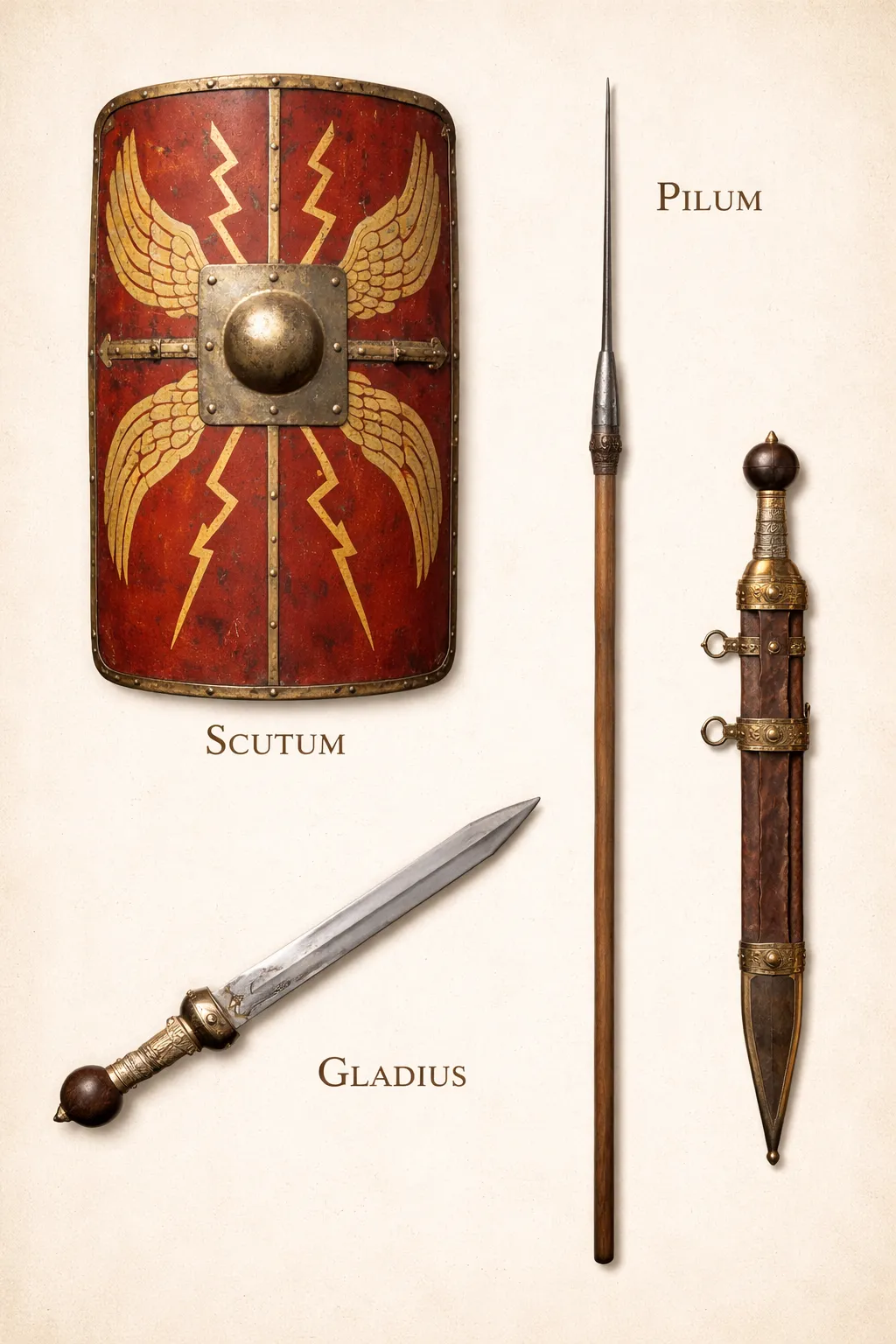
Known for their tactical fluidity, the Romans' most unique tactical opener was the 'pilum'. The pilum was a heavy javelin designed with a long, soft iron shank. Before charging, legionaries would unleash a volley of pila at the enemy. The soft iron would bend upon impact, making the javelin impossible to throw back. More importantly, if a pilum struck an enemy shield, it would bend and weigh it down, forcing the enemy to discard their protection. Following this disruption, the legionaries would draw their short swords (gladius) and charge into the gaps, engaging in the brutal close-quarters combat where they excelled.
Why Rome Won: Exploiting the Gaps
The decisive factor was flexibility versus rigidity. A phalanx requires perfect cohesion; if a single gap opens, the entire formation is at risk. At the Battle of Pydna (168 BC), uneven terrain fractured the Macedonian line. The Romans infiltrated these gaps, turning the battle into close-quarters combat where they held a massive advantage. Protecting themselves with large 'Scutum' shields, legionaries used their stabbing Gladius swords to decimate the phalangites, who were helpless with their small shields and unwieldy pikes in a 1-on-1 fight. Furthermore, the mass use of disposable Pila—made possible by Rome's superior logistics and supply system—had already disabled many enemy shields before the lines met. Rome proved that an army of adaptable units backed by industrial-scale logistics could defeat a singular, rigid block.